
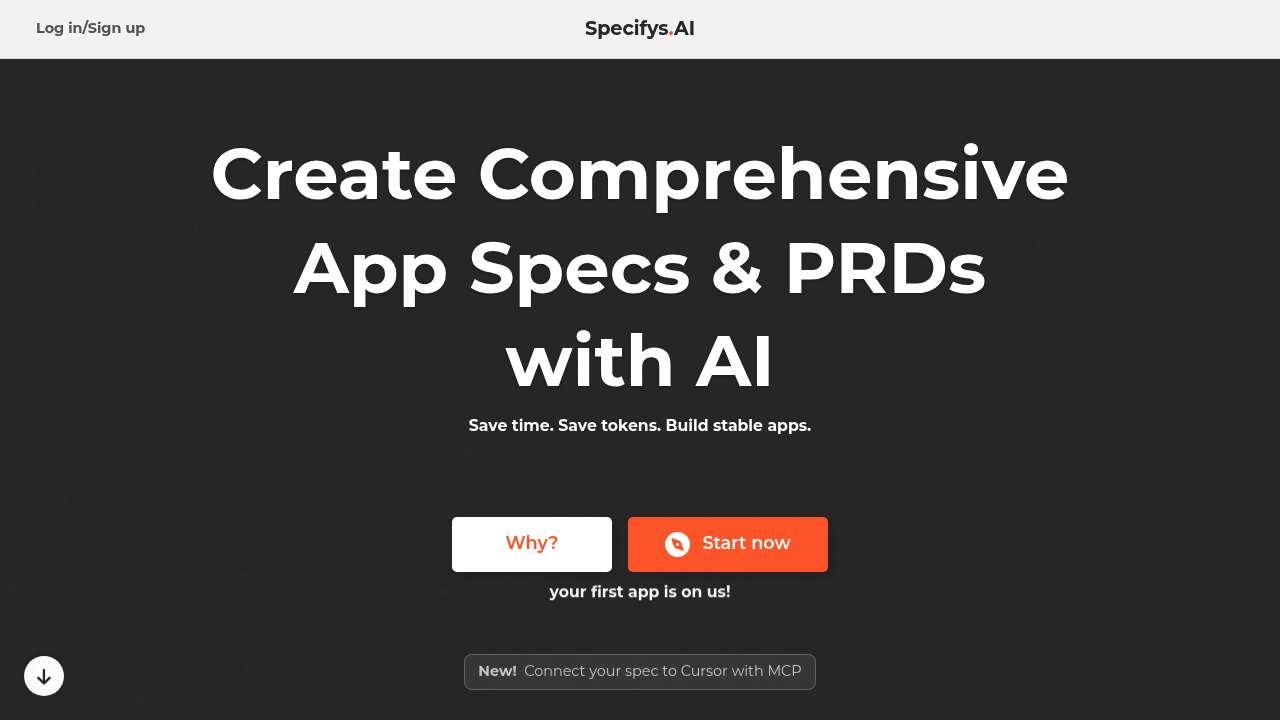
Developers who've watched AI coding assistants generate messy implementations from vague prompts get a different starting point with Specifys.ai. This platform builds detailed product requirement documents and app specifications through an AI-guided questionnaire before any code gets written. Users answer structured questions about their project, and the system generates detailed specifications covering data structures, function definitions, logic flows, and system architecture.
The questionnaire approach ensures nothing gets overlooked. This platform asks about features, user flows, technical requirements, and business goals, then compiles responses into organized documentation. This spec-first methodology addresses a common problem with AI coding tools that jump straight to implementation without understanding the full picture, leading to constant re-prompting and wasted tokens when requirements weren't clear from the start.
Generated specifications include multiple sections beyond basic feature lists. Data structure definitions map out entities and relationships. Function and logic flow documentation describes how different parts of the system interact. System architecture diagrams provide microservices overviews for complex applications. Technical specifications cover implementation details. Market research sections contextualize the product. Design sections outline interface considerations. This platform also generates diagrams and includes a prompts section.
Once created, specs can be exported and edited. The MCP integration with Cursor means specifications feed directly into coding workflows, giving AI assistants the complete context they need to generate cleaner code on the first attempt.
First-time users get one app specification free. After that, pricing splits into tiers. Single Spec costs $4.90 as a one-time purchase for one additional specification. The 3-Pack runs $9.90 one-time for three additional specs with all free features plus editing capabilities. A Pro plan exists but details weren't fully visible in source materials.
The free tier limitation means serious product teams working on multiple projects hit the paywall quickly. Single Spec and 3-Pack plans suit small teams or individual developers working on a few projects annually, but organizations building continuous streams of products would need Pro-level access. The one-time pricing structure for lower tiers differs from typical subscription models, making it easier to justify for specific projects.
Product managers planning mobile apps, web developers starting new projects, and development teams wanting structured documentation before implementation represent the core audience. Anyone tired of AI assistants generating code that doesn't match actual requirements finds value here. This platform works best when project scope is clear enough to answer detailed questions but not yet defined enough to code.