
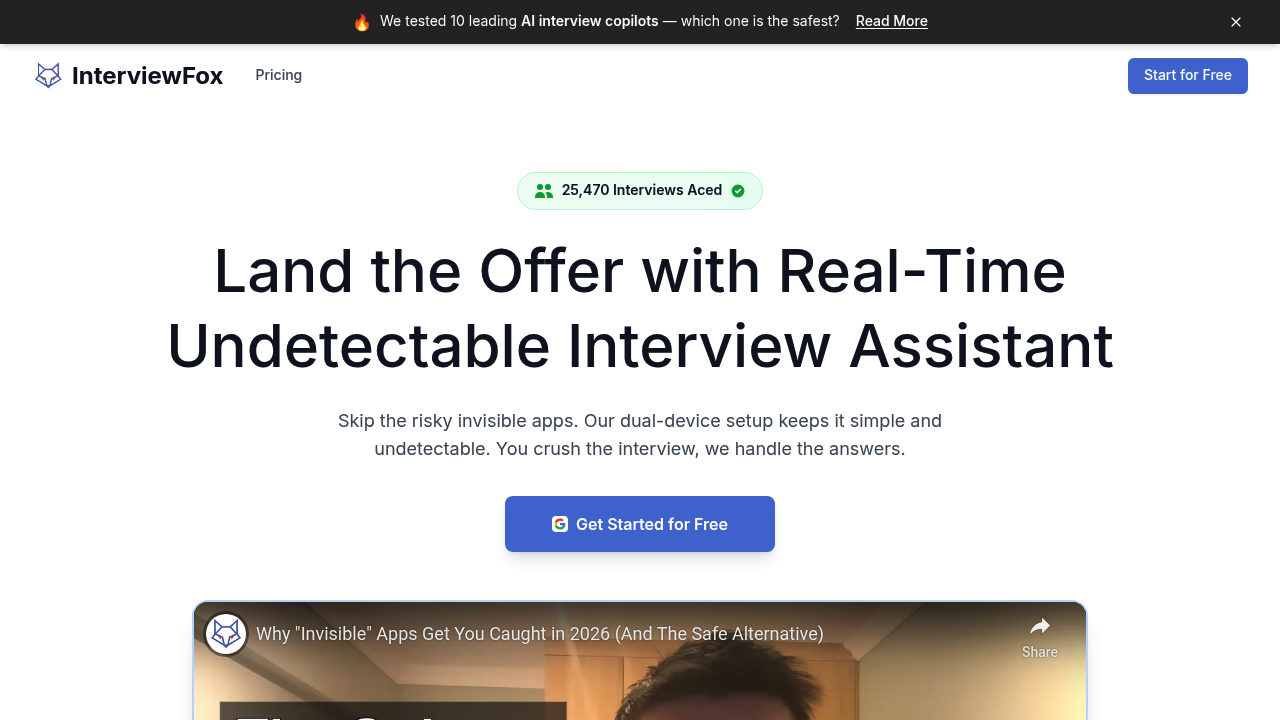
Real-time AI feeds answers into your ear while you're interviewing. The setup splits across two devices—your computer runs the video call, your phone delivers the AI assistance through headphones. The company claims 15,423 interviews completed using this approach.
The dual-device architecture tries to solve detection anxiety. Interviewers see you on camera with headphones (common enough in remote interviews). Meanwhile your phone analyzes questions and generates responses you can hear privately. Works across video platforms and coding interview tools without downloads.
The AI recognizes question intent rather than just matching keywords. Ask about leadership philosophy or algorithmic complexity, and it pulls from your uploaded resume to craft personalized answers. The code assistance handles debugging scenarios and algorithm challenges during technical screens. Response speed matters here—lagging answers kill the natural conversation flow, though actual latency numbers aren't provided.
Every job type supposedly works. Sales, engineering, product management, whatever. That's a big claim. Generic AI can stumble on niche industry terminology or highly specialized roles. How well it handles a compliance officer interview versus a React developer interview isn't detailed.
The invisible operation angle raises obvious questions while companies increasingly use AI detection tools during interviews. Some platforms monitor eye movement, typing patterns, or response consistency. InterviewFox doesn't address what happens when proctoring software flags unusual behavior. No data on detection rates or platform-specific risks.
Resume-based personalization only works if you've uploaded detailed background information. Thin resumes produce thin answers. The system can't invent experience you don't have—it just reformulates what's there. If your actual background doesn't match the role requirements, AI rephrasing won't bridge that gap.
The headphone mode assumes interviewers accept candidates wearing audio devices. Some companies explicitly prohibit headphones during interviews. Others might ask you to remove them mid-call. No fallback mentioned for those scenarios.
Testing against 10 other AI interview tools provides comparison context, but the methodology isn't shared. What metrics? Which tools? Over how many interviews? Without specifics, it's just a marketing number.
A free plan exists but features aren't broken down. Can't tell what you actually get without paying or what limitations apply. The gap between free and paid tiers remains unclear.
The ethics here sit in gray territory. Some view this as interview prep assistance. Others see it as misrepresenting your actual capabilities. That's a personal call, but worth considering before your name gets attached to AI-generated responses in a recorded interview.