
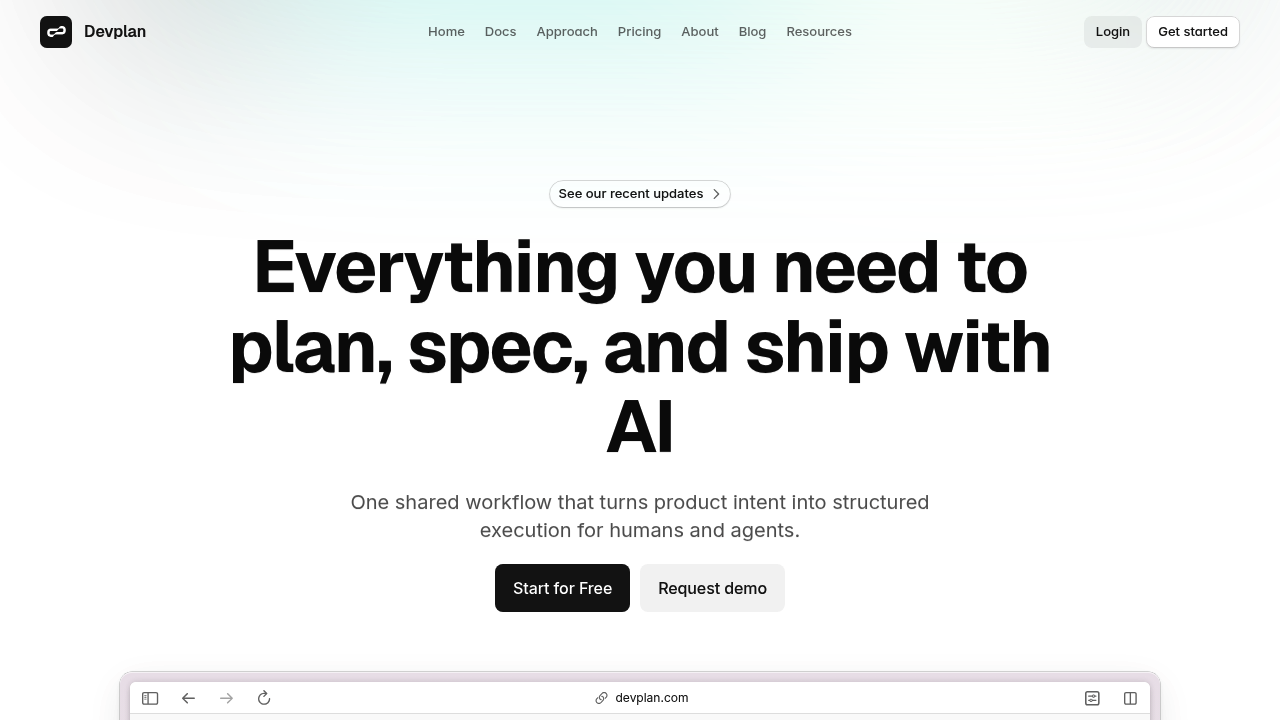
Product development often stalls between the initial spark of an idea and the structured execution needed to build it. Devplan bridges that gap by transforming rough concepts into actionable development plans. This software takes unformed product intent and generates complete user stories, identifies edge cases teams might overlook, and produces detailed PRDs and GUI specifications. It operates through a conversational interface where teams refine requirements collaboratively, then converts those discussions into structured tasks that sync directly with Linear. Devplan handles the full spectrum from idea to PRD, PRD to tasks, and tasks to GUI specs, with options to fine-tune and regenerate outputs until they match the team's vision.
This tool serves product leaders, tech solutions architects, and agency owners who need to move fast without getting bogged down in documentation. Founders at YC-backed startups use it to maintain momentum when they're building with limited resources. Technical program managers and tech leads rely on it to translate strategic direction into developer-ready tasks. It's particularly valuable for solo entrepreneurs and small teams operating without dedicated product managers—one 15-person VC-backed company runs their entire product function through Devplan. Principal designers working across multiple projects use it to maintain consistency in specifications without manual overhead.
Teams facing tight deadlines find Devplan compresses planning cycles that traditionally consumed days into under an hour. Agencies managing multiple client projects use it to standardize how they capture requirements and generate specifications across accounts. Startups in early stages apply it to validate ideas quickly by seeing them structured as actual development plans before committing engineering resources. The Linear integration means development teams can work within their existing workflow while product thinkers operate in Devplan's conversational environment. Software shops without formal PM roles use it to ensure nothing falls through the cracks between stakeholder conversations and sprint planning, maintaining the discipline of proper requirements without hiring specialized staff.