
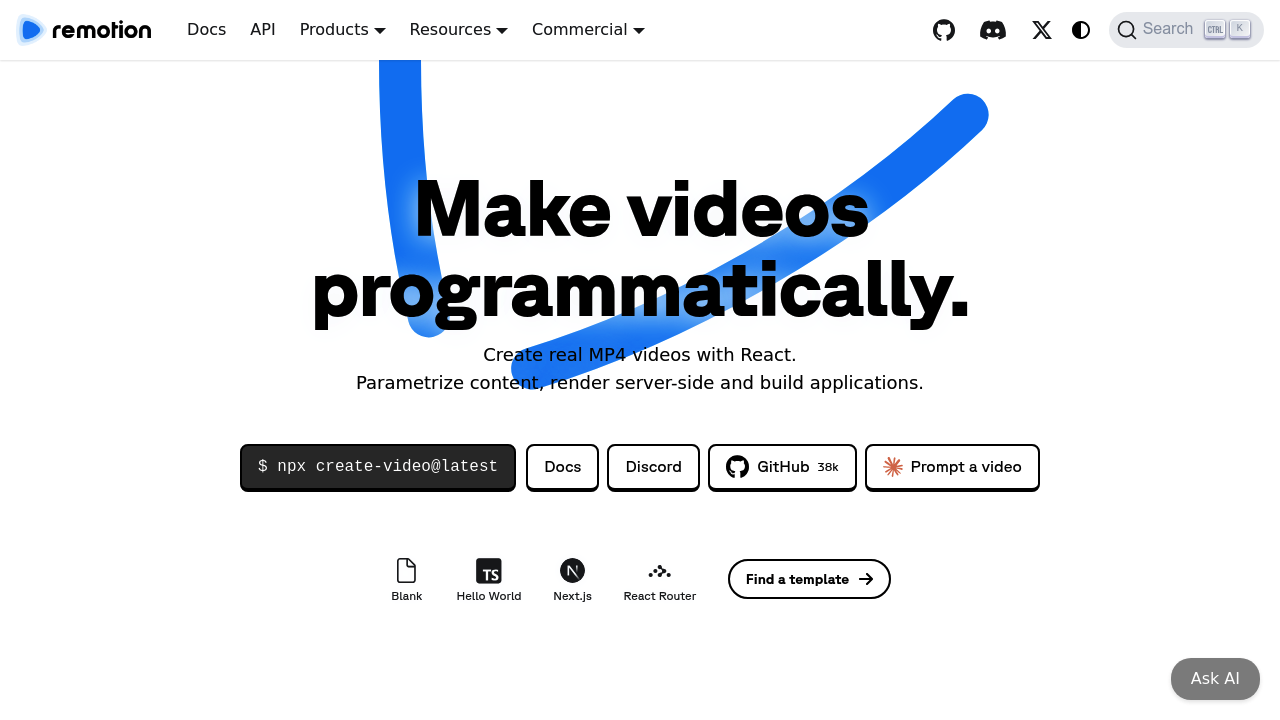
Developers wanting to generate videos programmatically now have a React-based solution that treats video creation like building a web application. Remotion lets you write React components that compile into real MP4 files, bringing frontend development patterns into video production. This framework handles everything from local rendering to serverless deployment, with the flexibility to parametrize content just like passing props to components.
The core workflow centers on writing React code that defines video compositions. You can create music visualizations that respond to audio frequencies, generate captions automatically, produce screencast recordings, or build year-in-review videos that pull data from APIs. Content adjusts dynamically based on parameters you pass in, so switching between light and dark modes or changing text and images doesn't require re-coding the entire composition. The system renders these React components frame by frame into video formats.
Remotion Studio provides a visual editing environment where you can preview compositions and adjust timing without touching code. Remotion Player embeds rendered videos into web applications as interactive elements. For production environments, Remotion Lambda enables serverless rendering on AWS infrastructure, processing videos at scale without managing servers. The Editor Starter package gives teams a foundation for building custom video editing applications with drag and drop interfaces.
The rendering flexibility matters for different deployment scenarios. Local rendering works for development and small batches. Server rendering fits applications with consistent video generation needs. Serverless rendering through Lambda handles unpredictable workloads and high-volume automation. All three approaches produce the same video outputs from identical React code.
Documentation spans 700 pages covering implementation details, with 35 templates and examples demonstrating common patterns. The project has accumulated 38,000 GitHub stars and contributions from over 300 developers. Monthly installs reach 900,000, and a Discord community of 6,000-plus members exchanges troubleshooting advice and techniques.
The free license covers commercial use for individuals and companies up to three people, with no signup requirement and unlimited rendering. Once your team hits four people, you'll need a paid license. Remotion for Creators costs $25 monthly per seat, targeting professionals making videos for their own use. It includes prioritized support and $250 in Mux credits for video hosting and streaming. Remotion for Automators charges one cent per render with a $100 monthly minimum, designed for companies building video automation tools where render volume varies. Enterprise licenses start at $500 monthly and add private Slack or Discord channels, monthly consulting sessions, custom contract terms, compliance documentation, and prioritized feature requests.
The three-person threshold on the free license creates a clear upgrade point for growing teams. The $100 minimum on the Automators plan means you're committing to at least 10,000 renders monthly regardless of actual usage, which could feel steep during early product development phases.
This platform targets developers comfortable with React who need video generation capabilities in their applications. Companies building SaaS products with automated video features fit naturally. Content creators with coding skills can template their video production workflows. Artists exploring generative video work with code get programmatic control over every frame. Marketing teams needing personalized video at scale can parametrize templates with customer data.
Remotion integrates with Next.js for server-side rendering frameworks and React Router for navigation patterns. Mux integration handles video hosting and streaming infrastructure.