
Canny logo

Canny

A product manager at a SaaS company spends three hours every week sorting through Zendesk tickets, Intercom messages, and scattered email threads trying to figure out which feature requests keep co...

35 views
Visit canny.io
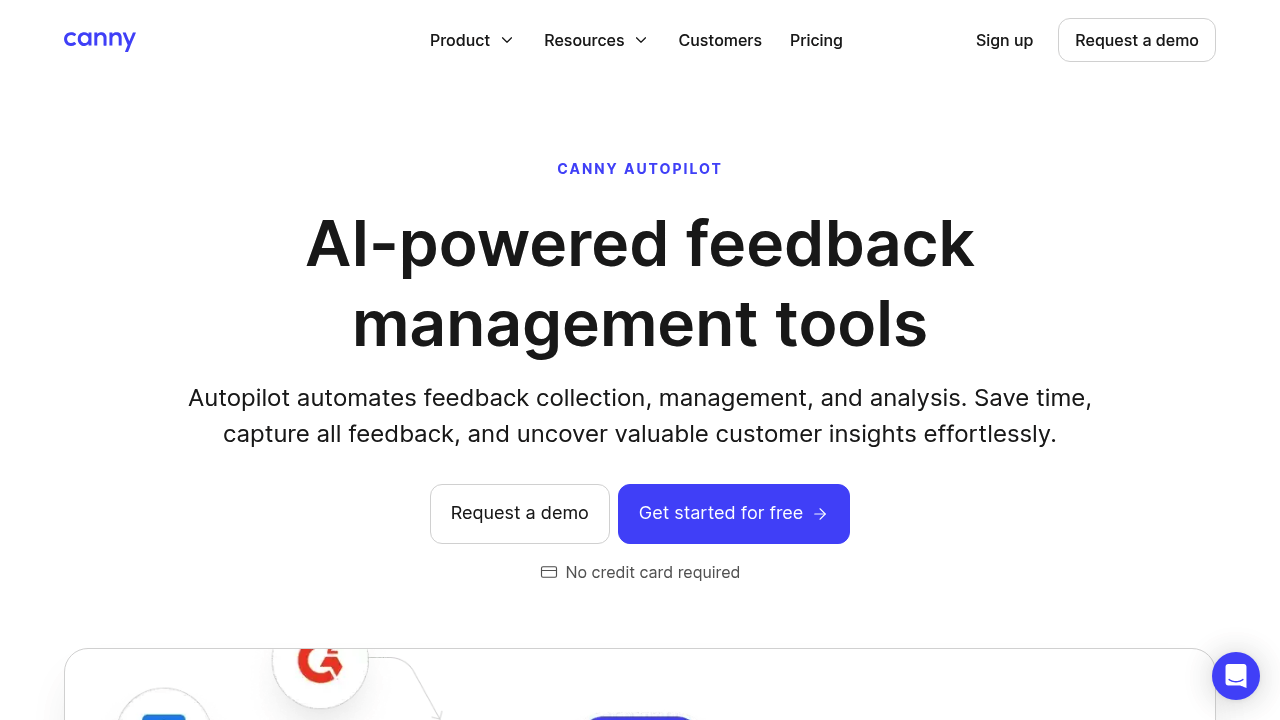
Canny screenshot

A product manager at a SaaS company spends three hours every week sorting through Zendesk tickets, Intercom messages, and scattered email threads trying to figure out which feature requests keep coming up. She copies feedback into spreadsheets, tags duplicates manually, and still misses patterns because the volume's too high. Canny pulls all that feedback automatically from those support channels, spots duplicates without human review, and groups similar requests so she sees what actually matters. The Autopilot feature discovers feedback as it arrives, asks follow-up questions through Smart Replies when context is missing, and generates summaries of long comment threads so she doesn't read hundreds of words to get the main point.

A customer success team at a B2B platform gets the same feature requests from different customers using different words. One calls it "bulk export," another wants "mass data download," and a third asks for "batch file generation." They're all asking for the same thing, but without automatic deduplication, the team treats them as separate issues and prioritization gets messy. Canny's AI recognizes these as duplicates and merges them, showing the real demand behind each request. The system connects to Gong calls too, so even feedback buried in sales conversations gets captured and categorized. Companies report an 80% increase in requests logged after turning on Autopilot, not because customers suddenly got more vocal but because Canny actually catches what was always there.

The feedback analysis works across all incoming sources. A support engineer doesn't manually tag and route every piece of feedback anymore. Automatic capture handles that. Canny creates a central view where product teams see everything in one place instead of jumping between tools. Roadmaps get built from this consolidated data, and when features ship, release notes go out to the exact users who requested them. That closes the loop without spreadsheet archaeology.

Here's where it gets tight. The free plan caps at 25 tracked users, which works for tiny teams testing the waters but not much else. Most companies need Core at $19 monthly or Pro at $79 monthly, both billed yearly. Core starts at 100 tracked users and adds custom domains plus translations. Pro brings PM integrations and advanced privacy controls. Business tier handles 5,000-plus users and includes SSO plus CRM integrations, but pricing's custom. If you're tracking thousands of users, you're negotiating. The tracked user limit matters because it's not about your team size but how many customers you're monitoring feedback from.

Autopilot includes unlimited feedback discovery and unlimited sources across all plans, even free. That's unusual. The deduplication and Smart Replies don't get paywalled.

This doesn't work if you need lightweight internal task tracking without customer feedback loops. A dev team just managing bugs doesn't need feedback analysis from support channels. It's overkill. Companies wanting pure project management without customer-facing roadmaps should look elsewhere. Canny assumes you're collecting external feedback and want to show customers what's coming. If your roadmap stays internal only, half the features go unused.

The integration list matters. It connects to Intercom, Help Scout, Zendesk, and Gong right away. PM integrations come at Pro level. No mobile app or browser extension shows up in the specs, so everything happens in the web interface. API access exists for custom builds.

Works best when customer feedback volume overwhelms manual sorting and you need public roadmaps that customers actually see.

Frequently asked

7 questions
Does Canny automatically detect duplicate feature requests?
A customer success manager at a B2B platform gets requests for "bulk export," "mass data download," and "batch file generation" from different customers. Canny's AI recognizes these as the same request despite different wording and merges them automatically without manual tagging. The automatic deduplication runs across all feedback sources including support tickets, Intercom messages, and even Gong sales calls. This shows real demand instead of treating identical requests as separate issues. Companies see an 80% increase in requests logged after enabling Autopilot because it catches feedback that was always there but never properly captured.
How much does Canny cost per month?
Canny offers a free plan for 25 tracked users with unlimited posts and automatic feedback capture. Paid plans start at $19 monthly for Core (100+ tracked users, custom domains, translations) and $79 monthly for Pro (PM integrations, advanced privacy controls), both billed yearly so you're paying $228 or $948 upfront. Business tier handles 5,000-plus tracked users with SSO and CRM integrations but requires custom pricing negotiation. The yearly billing gives 20% off compared to monthly rates. The tracked user count refers to customers you're monitoring feedback from, not your internal team size.
Can Canny pull feedback from Zendesk and Intercom automatically?
A product manager drowning in Zendesk tickets and Intercom messages doesn't manually copy feedback into spreadsheets anymore. Canny connects directly to Zendesk, Intercom, Help Scout, and Gong to pull feedback automatically as it arrives. The Autopilot feature discovers feedback across all connected sources, asks follow-up questions through Smart Replies when context is missing, and generates summaries of long threads. This automatic capture works on all plans including free. Support engineers don't tag and route every piece of feedback manually because the system handles categorization and creates a central view where product teams see everything consolidated.
What's the limit on Canny's free plan?
The free plan caps at 25 tracked users, which means 25 customers whose feedback you're monitoring, not your internal team size. This works for tiny teams testing the system but most companies outgrow it fast. Core plan starts at 100 tracked users for $19 monthly (billed yearly), and Pro starts at the same 100 users for $79 monthly. A growing SaaS company with hundreds of active customers providing feedback needs paid plans from day one because the free tier won't track enough users to be useful. Autopilot's unlimited feedback discovery and automatic deduplication work even on the free plan, but the user tracking limit is the real constraint.
When shouldn't you use Canny for product management?
A dev team just managing internal bugs and sprint tasks doesn't need feedback analysis from customer support channels. Canny assumes you're collecting external customer feedback and want to show customers public roadmaps of what's coming. An internal product team that keeps roadmaps private and doesn't need customer-facing feature voting wastes half the platform's capabilities. Companies wanting lightweight task tracking without feedback loops from Zendesk or Intercom should use pure project management tools instead. Canny's built for customer feedback volume that overwhelms manual sorting, not internal-only product planning. The public roadmap and release notes features go unused if customers never see your plans.
Does Canny work for prioritizing product roadmaps?
A product manager at a SaaS company sees which feature requests actually matter because Canny consolidates feedback from all sources and shows real demand after deduplication. The system groups similar requests automatically so "bulk export" and "mass data download" count as one popular item instead of two separate things. Roadmaps get built from this consolidated data showing what customers want most, not what's loudest in one channel. When features ship, release notes go out to the exact users who requested them through the feedback loop closure. The prioritization works because you're seeing patterns across hundreds of support tickets and sales calls that were invisible when scattered across tools.
Can Canny capture feedback from sales calls?
A customer success team misses product feedback buried in Gong sales calls because nobody transcribes and tags those conversations manually. Canny integrates with Gong to pull feedback from recorded calls automatically, so feature requests mentioned during sales demos get captured alongside support tickets and Intercom messages. The Autopilot feature discovers this feedback across all connected sources and categorizes it without human review. Companies report a 10x increase in feedback captured because conversations that never made it into formal requests now show up in the central system. This matters most for B2B companies where sales teams hear requests that support never sees.

Traffic

Estimated monthly website visits · last 3 months

556.3K visits/mo
Monthly visits
556.3K
↓ 11.8% MoM
Global rank
#80,335
US #56,009
Category rank
#27
Business & Marketing
630.8K 612.2K 593.6K 574.9K 556.3K Dec 2025: 602.7K visits Dec 2025 Jan 2026: 630.8K visits Jan 2026 Feb 2026: 556.3K visits Feb 2026

Data from SimilarWeb · Updated monthly.

Reviews (0)

Write review

No reviews yet. Be the first to share your experience.

Similar tools

See all →