Voiceslab logo
AI Voice Cloning FREEMIUM from $4/mo

Voiceslab

The voice cloning process starts with a user recording themselves reading a short script

This system analyzes the audio sample and builds a neural model of the speaker's voice characteristics. This happens in seconds rather than hours. The system captures vocal patterns, pitch variations, breathing…

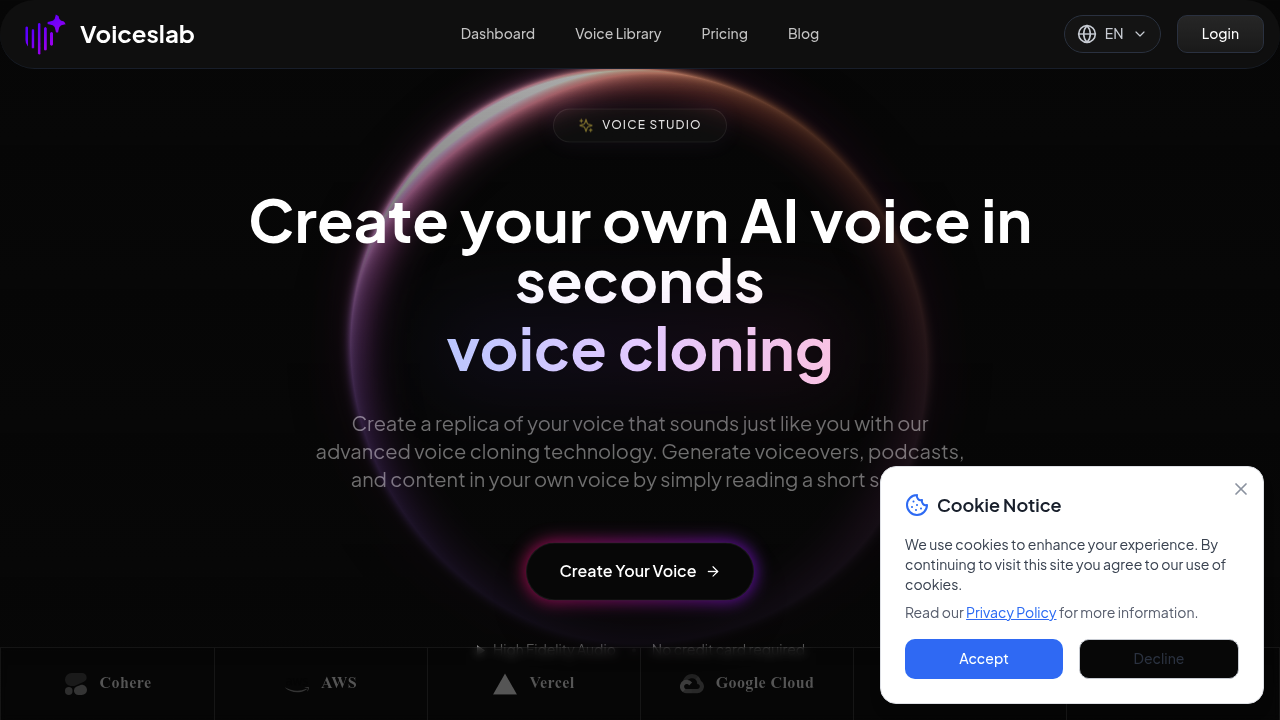
Voiceslab screenshot

The voice cloning process starts with a user recording themselves reading a short script. This system analyzes the audio sample and builds a neural model of the speaker's voice characteristics. This happens in seconds rather than hours. The system captures vocal patterns, pitch variations, breathing patterns, and emotional undertones from the input recording.

Once the voice model is created, users can generate new audio content by providing text. The AI synthesizes speech that mimics the original voice's qualities. This system processes these requests with 0.5 second latency, making it viable for near real-time applications. The output maintains the speaker's natural accent and linguistic characteristics across different content types.

The architecture supports 12 major languages including English and Spanish. When generating speech in these languages, the system preserves the authentic pronunciation patterns and regional accent features of the original voice sample. This works through language-specific acoustic models that adapt the cloned voice to different phonetic systems.

Voice data gets encrypted end-to-end throughout the pipeline. This service maintains SOC2 compliance and uses enterprise-grade security protocols. User recordings and generated audio are protected both in transit and at rest.

The Voice Studio lets users create custom AI voices with specific characteristics. The Voice Library stores these created voices for repeated use across projects. Users can switch between different voice profiles without re-recording source material each time.

This service integrates with Cohere, AWS, Vercel, Google Cloud, Runway, and Lovable. These connections let developers embed voice generation capabilities into existing workflows or applications. The API structure allows programmatic access to the cloning and synthesis functions.

Content creators use this for podcast production and audiobook narration. Marketing teams generate voiceovers in a consistent brand voice. Customer support operations create automated responses that sound like real agents. Learning and development teams produce training materials without booking studio time.

No credit card is needed to create an initial voice clone. This removes the barrier to testing the technology before committing to production use.

The system's speed and quality depend on the input recording quality. Background noise or inconsistent microphone levels in the source script will affect the clone's accuracy. The 0.5 second latency works for most use cases but might not suit applications requiring instant response times under 100 milliseconds. The multi-language support covers major languages but doesn't extend to all global languages or rare dialects.

Voiceslab alternatives

See all →

Frequently asked

7 questions
How does Voiceslab voice cloning work?
The system requires users to read a short script, which it analyzes to build a neural model of voice characteristics including pitch, breathing patterns, and emotional undertones. This analysis completes in seconds and creates a voice profile that can generate new speech from text input. The architecture processes synthesis requests with 0.5 second latency by running text through the trained vocal model. Quality of the clone depends directly on the input recording quality, so background noise or inconsistent microphone levels will degrade accuracy.
Does Voiceslab have a free plan?
Voiceslab doesn't require a credit card to create an initial voice clone, letting users test the technology before committing to paid usage. Specific pricing tiers aren't publicly documented, so the scope of what's included without payment isn't clear. This approach removes the financial barrier to trying the voice cloning process with your own voice.
What languages does Voiceslab support for voice cloning?
The platform handles 12 major languages including English and Spanish through language-specific acoustic models. When generating speech in these languages, the system adapts the cloned voice to different phonetic systems while preserving the original speaker's accent and pronunciation patterns. This works because the architecture maintains linguistic nuances from the source recording and applies them to the target language's sound patterns. Coverage doesn't extend to all global languages or rare regional dialects.
Can you use Voiceslab for podcasts and audiobooks?
Content creators use this specifically for podcast production and audiobook narration by generating episodes or chapters from text scripts in their cloned voice. The Voice Library stores multiple voice profiles, so producers can switch between different character voices or narrator styles without re-recording source material. The 0.5 second latency and high fidelity output make it practical for long-form content where studio time would otherwise be expensive. Marketing teams, learning and development departments, and customer support operations also deploy it for voiceovers, training materials, and automated responses.
How secure is my voice data on Voiceslab?
Voice recordings and generated audio get encrypted end-to-end throughout the processing pipeline, protecting data both in transit and at rest. The service maintains SOC2 compliance and implements enterprise-grade security protocols for handling biometric voice data. These measures meet regulatory requirements for organizations handling sensitive audio information, though users should verify their specific compliance needs against the platform's current certifications.
What are Voiceslab's limitations?
The 0.5 second latency works for most applications but won't suit systems requiring instant response times under 100 milliseconds, like real-time conversation simulators. Clone accuracy depends on input recording quality, so poor microphone setup or background noise in the source script directly degrades output quality. Language support covers 12 major languages but doesn't include all global languages or rare dialects, limiting use for less common linguistic markets.
Does Voiceslab have an API?
The service integrates with Cohere, AWS, Vercel, Google Cloud, Runway, and Lovable through API connections that allow programmatic access to cloning and synthesis functions. Developers can embed voice generation capabilities into existing workflows or applications using these integration points. The API structure lets teams automate content production pipelines without manual intervention for each voice generation request.

Traffic

Estimated monthly website visits · last 9 months

41.1K visits/mo
Monthly visits
41.1K
↑ 11.5% MoM
Global rank
#779,804
IN #239,474
Category rank
#33
AI Voice Cloning
102.1K 85.8K 69.5K 53.2K 36.9K Dec 2025: 102.1K visits Dec 2025 Jan 2026: 101.1K visits Jan 2026 Feb 2026: 75.2K visits Feb 2026 Mar 2026: 98K visits Mar 2026 Apr 2026: 94K visits Apr 2026 May 2026: 52.2K visits May 2026 Jun 2026: 42.8K visits Jun 2026 Jul 2026: 36.9K visits Jul 2026 Aug 2026: 41.1K visits Aug 2026

Reviews (0)

Write review

No reviews yet. Be the first to share your experience.