
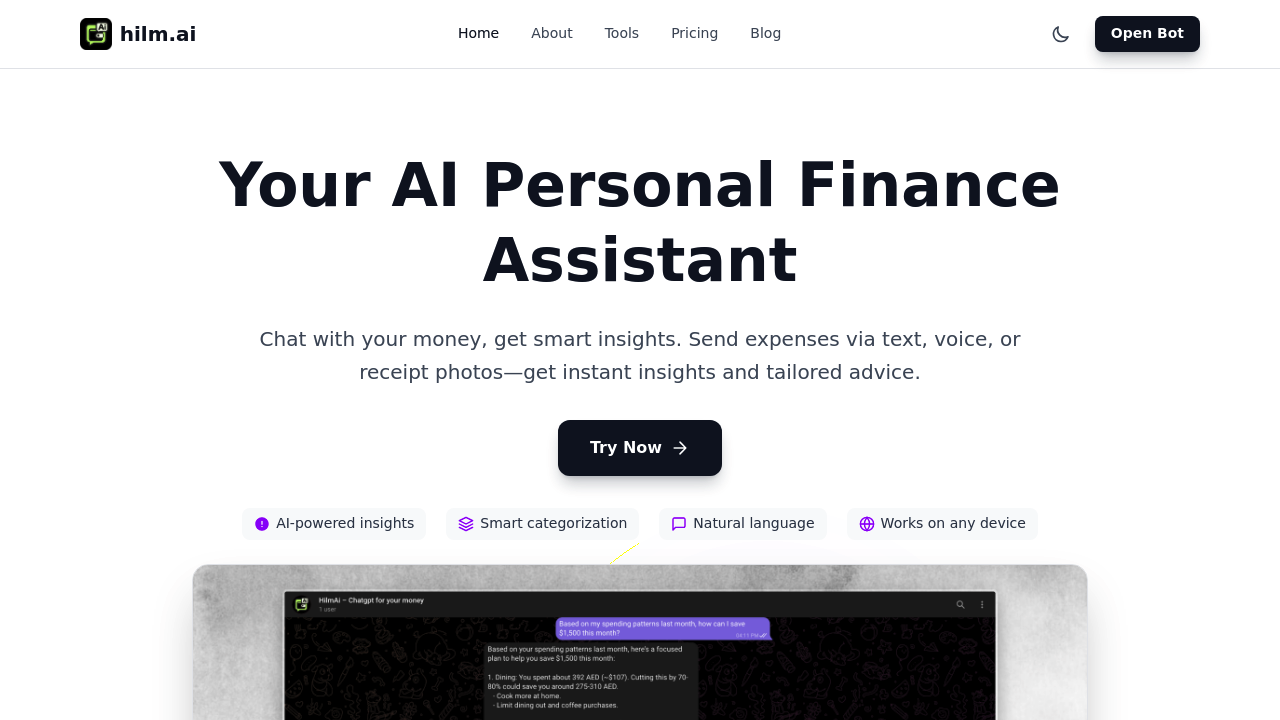
Personal finance tracking through Telegram. You send expenses as text, speak them as voice notes, or snap a photo of your receipt. The AI logs everything and tells you what your spending patterns mean.
The interface lives entirely in a Telegram chat. No separate app to open. You could text "coffee $4.50" or record "paid forty bucks for groceries" or photograph a restaurant bill. All three methods work. The system categorizes transactions automatically and handles multiple currencies without you specifying which one you're using.
What makes this different from traditional expense trackers is the conversational analysis. You can ask questions around your spending and get personalized financial advice based on your actual behavior. The founder built this after reading Morgan Housel's work on spending psychology. He wanted to answer questions like "do I have enough saved?" and "am I ready to invest?" using his own data. That philosophical angle shows in the product's three insight modes that go beyond simple budget tracking.
Does it actually help? The voice-to-transaction feature saves time if you're tracking expenses throughout the day. Receipt photo scanning removes manual entry entirely. The spending analytics show trends you might miss when you're just looking at individual purchases. But several promised features aren't ready yet. Daily summaries, weekly reports, budget creation, and real-time alerts are all marked "coming soon." You're getting core tracking and AI insights now. The rest is roadmap.
The Telegram-only approach creates real limitations. Can't use this if you don't have Telegram. No desktop app. No web dashboard. Everything happens in one chat thread. Some people will love the simplicity. Others will want more viewing options. And because the product is in early access, you're helping shape what it becomes. That's appealing if you want influence over development. Less so if you need a fully built solution today.
You get five free messages to test all the features. That's enough to log a few expenses and see how the AI responds to questions. The paid tier runs $16 monthly with a seven-day trial. That's pricier than some expense trackers but cheaper than most financial advisory tools. Whether it's worth it depends on if you actually want the conversational insights versus just a place to log numbers.
Who should consider this? People already living in Telegram who hate opening separate finance apps. Anyone curious about their spending psychology beyond basic categories. Users comfortable with products still being built. If you need mature budget alerts or detailed reporting right now, wait. Those features exist on the roadmap but not in the product.
The multi-currency support matters for frequent travelers or anyone earning and spending across borders. Not every expense tracker handles that smoothly. And the natural language processing means you don't learn a specific syntax. Just describe the transaction however makes sense to you.
This isn't trying to replace your bank's transaction history or accounting software. It's positioned as a thinking partner for financial decisions. The AI analyzes patterns and answers questions about readiness to spend or invest. That positioning explains why some traditional budgeting features aren't priorities yet. The founder is building something more reflective than reactive. Whether that philosophy matches your needs determines if Hilm AI fits your workflow.