
#3 in AI For Finance Resistant AI logo

Resistant AI

Fraud fighters face a mounting challenge as synthetic identities, AI-generated documents, and sophisticated transaction patterns evolve faster than traditional detection systems can adapt

Resistant AI addresses this through a unified system that screens documents and transactions simultaneously, catching fraud that single-layer systems miss. The document fraud detection component processes any document…

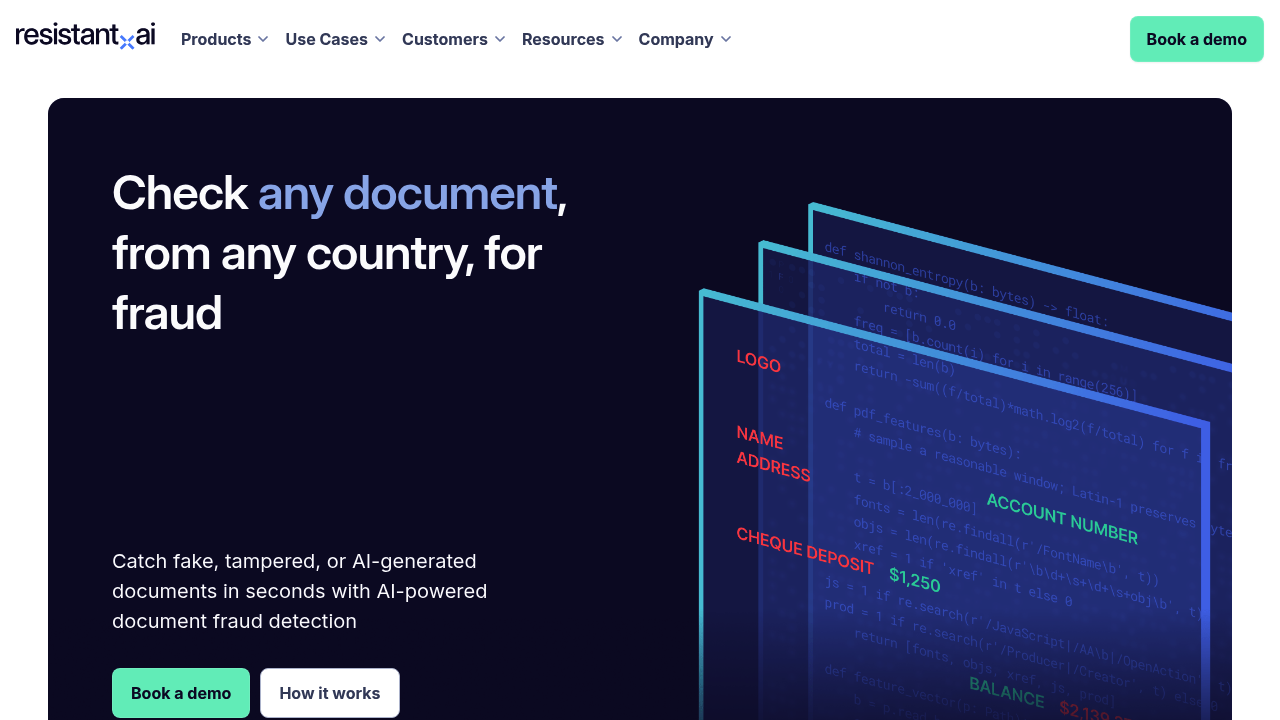
Resistant AI screenshot

Fraud fighters face a mounting challenge as synthetic identities, AI-generated documents, and sophisticated transaction patterns evolve faster than traditional detection systems can adapt. Resistant AI addresses this through a unified system that screens documents and transactions simultaneously, catching fraud that single-layer systems miss.

The document fraud detection component processes any document type from any country, identifying fake credentials, tampered files, and AI-generated forgeries in under 20 seconds per document. This matters when processing loan applications, tenant screenings, or insurance claims where forged paychecks, manipulated bank statements, or synthetic identity documents regularly slip through manual reviews. The system doesn't just flag suspicious documents. It provides fully explainable AI models that show analysts exactly why a document got flagged, making the difference between actionable intelligence and vague risk scores.

Transaction monitoring works differently than traditional rules-based systems. Rather than replacing existing infrastructure, Resistant AI enhances current transaction monitoring setups with 80-plus off-the-shelf models targeting specific fraud types. These models detect authorized push payment fraud where customers get tricked into sending money to scammers, Buy Now Pay Later fraud exploiting installment payment schemes, mule accounts used to launder stolen funds, and synthetic identities built from real and fabricated information. Detection happens in under 100 milliseconds, fast enough for real-time payment screening without creating customer friction.

The defense-in-depth approach combines document verification, transaction patterns, behavioral signals, and identity checks into a single analysis. A fraudster might present a legitimate-looking document but exhibit transaction behaviors inconsistent with the stated income, or create a synthetic identity that passes document checks but fails behavioral analysis. This layered detection catches three times more fraud than single-method systems according to performance metrics.

Productivity gains reshape analyst workflows substantially. Manual review volume drops by over 90 percent as the system handles obvious legitimate cases and clear fraud automatically. Analysts work five times faster and cover three times more risk scenarios compared to legacy tooling. The 8,000-plus fraud and compliance analysts using this system work across lending institutions, banks, payment processors, insurance companies, marketplaces, tenant screening services, employment verification firms, and investment platforms.

Integration happens through AWS and connects with existing transaction monitoring systems without requiring full replacement. Organizations keep their current tech stack while layering in advanced detection capabilities. Real-time operation means decisions happen during transactions, not hours later during batch processing when fraudulent payments already cleared.


Resistant AI alternatives

See all →

Frequently asked

7 questions
How much does Resistant AI cost?
Resistant AI doesn't publish pricing information publicly, which means potential customers need to contact their sales team for quotes. This enterprise-focused pricing model typically reflects custom implementations based on transaction volume, document processing needs, and specific fraud detection requirements. Organizations evaluating the platform should expect pricing negotiations based on their scale and which detection modules they need, whether that's document verification, transaction monitoring, or the full defense-in-depth suite. The lack of transparent pricing and absence of a free trial means businesses need to commit to sales conversations before testing the system.
Can Resistant AI detect AI-generated fake documents?
Resistant AI specifically detects AI-generated documents alongside traditional forgeries and tampered files, processing any document type from any country in under 20 seconds. This capability matters increasingly as generative AI tools make it trivial to create convincing fake paychecks, bank statements, tax returns, and identity documents that fool manual reviewers and basic verification systems. The system doesn't just flag suspicious documents but provides explainable AI models showing analysts exactly what triggered the alert, whether that's inconsistent metadata, suspicious generation patterns, or manipulation artifacts. Detection works in real-time during application processing for loans, tenant screenings, insurance claims, and employment verification rather than requiring separate batch analysis.
What types of fraud does Resistant AI catch in transactions?
The transaction monitoring system targets specific fraud schemes using 80-plus off-the-shelf models, including authorized push payment fraud where victims get socially engineered into sending money to scammers, Buy Now Pay Later fraud exploiting installment payment vulnerabilities, mule accounts used for money laundering, and synthetic identities constructed from mixed real and fake information. Detection happens in under 100 milliseconds, fast enough for real-time payment screening without delaying legitimate transactions. The system catches three times more fraud than traditional methods by combining transaction pattern analysis with document verification, behavioral signals, and identity checks rather than relying on single-layer detection. Anti-money laundering detection runs alongside fraud screening, covering both compliance and loss prevention in one system.
Does Resistant AI require replacing existing fraud detection systems?
Resistant AI explicitly integrates with existing transaction monitoring systems rather than requiring full replacement, which addresses a major barrier for organizations with established fraud infrastructure. The system enhances current tooling by adding 80-plus specialized detection models and real-time document verification without forcing migration off legacy platforms. Integration happens through AWS and connects to existing tech stacks, letting organizations layer advanced AI detection onto their current rules-based systems. This approach means businesses keep their historical data, existing workflows, and compliance configurations while gaining detection capabilities that catch fraud their current systems miss.
How fast can Resistant AI process fraud checks?
Document fraud detection completes in under 20 seconds per document, while transaction monitoring operates in under 100 milliseconds, both fast enough for real-time decision-making during customer interactions. This speed matters when processing loan applications, payment authorizations, or account openings where delays create friction that drives customers to competitors. Analysts themselves work five times faster than with legacy tooling because the system reduces manual review volume by over 90 percent, automatically handling clear legitimate cases and obvious fraud. The combination of fast automated screening and accelerated analyst workflows means organizations process three times more risk coverage without proportionally increasing headcount.
What industries and use cases work best with Resistant AI?
The system serves fraud and compliance analysts across lending institutions, banks, payment processors, insurance companies, marketplaces, tenant screening services, employment verification firms, and investment platforms. These industries share common fraud challenges like forged income documents, synthetic identities, payment fraud schemes, and money laundering that Resistant AI's defense-in-depth approach addresses. Specific use cases include loan application screening where fake paychecks and bank statements appear, tenant verification where fraudsters present forged employment letters, insurance claims with manipulated damage photos or medical records, and payment processing where authorized push payment fraud and mule accounts operate. The 8,000-plus analysts using the platform work across these sectors, indicating broad applicability wherever document verification and transaction monitoring intersect.
What happens if Resistant AI can't detect certain fraud types my business faces?
The platform provides 80-plus off-the-shelf models targeting common fraud schemes, but businesses with unusual fraud patterns or emerging threats might find gaps in coverage since the system focuses on well-documented fraud types like synthetic identities, payment fraud, and document forgeries. Organizations dealing with highly specialized fraud unique to their industry or new attack methods not yet incorporated into the model library would need to work with Resistant AI to develop custom detection rules. The explainable AI approach helps analysts understand what the system catches and what it misses, but there's no public information about how quickly new models get developed or whether customers can train custom models themselves. Businesses should verify during sales conversations that their specific fraud challenges align with the available detection models before committing.

Traffic

Estimated monthly website visits · last 8 months

69.1K visits/mo
Monthly visits
69.1K
↑ 11.1% MoM
Global rank
#473,851
US #281,180
Category rank
#3
AI For Finance
84.9K 78.4K 72K 65.5K 59.1K Dec 2025: 76.7K visits Dec 2025 Jan 2026: 84.9K visits Jan 2026 Feb 2026: 59.1K visits Feb 2026 Mar 2026: 71.4K visits Mar 2026 Apr 2026: 64.9K visits Apr 2026 May 2026: 64.1K visits May 2026 Jun 2026: 62.2K visits Jun 2026 Jul 2026: 69.1K visits Jul 2026

Reviews (0)

Write review

No reviews yet. Be the first to share your experience.