
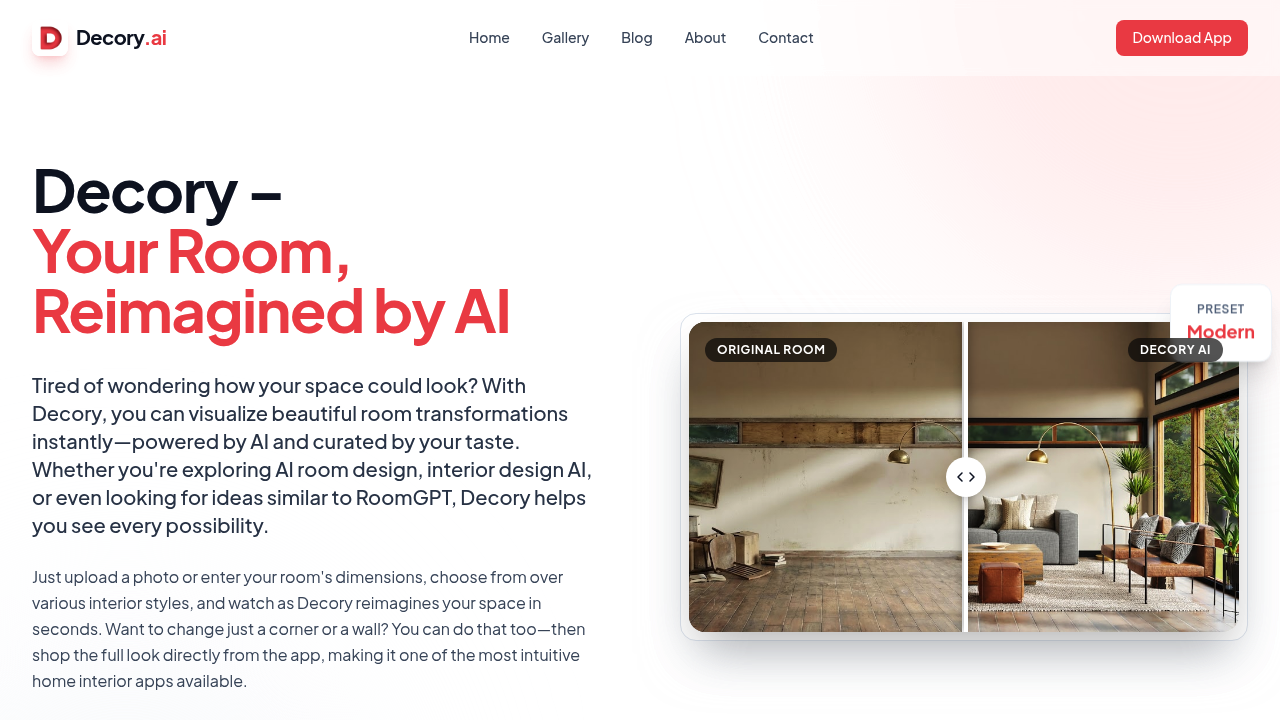
Decory processes uploaded room photos through a computer vision pipeline that identifies spatial boundaries, existing furniture, and architectural elements. Users can either upload images or input room dimensions manually, then select from eight predefined interior styles ranging from Modern to Art Deco. The system generates redesigned versions in seconds by applying style transfer algorithms to the existing space.
This platform's data flow separates into distinct editing modes. Object replacement swaps individual furniture pieces while maintaining spatial context and lighting conditions. Object removal uses inpainting techniques to fill gaps left by deleted items, reconstructing background elements based on surrounding pixels. The flooring module generates ten style variations instantly, with additional custom options available through text prompts.
Wall transformation works through prompt-based generation. Users describe desired paint colors or wallpaper patterns, and the system applies these to detected wall surfaces while preserving shadows and depth cues. The furniture search feature combines product database lookup with placement visualization, showing how specific items would fit within the uploaded space's dimensions and lighting.
Style reference applies visual characteristics from one image to another room. This uses feature extraction to identify color palettes, texture patterns, and spatial arrangements from the reference, then maps them onto the target space.
Output quality depends heavily on input photo clarity. The system generates high-resolution images suitable for download, though results work best with well-lit photos taken from standard angles. Corner and wall-specific editing lets users modify portions of rooms rather than requiring full redesigns.
The shopping integration links generated designs to purchasable products. Users can browse items shown in their redesigned spaces and complete transactions without leaving the application. A mobile app exists for on-device use.