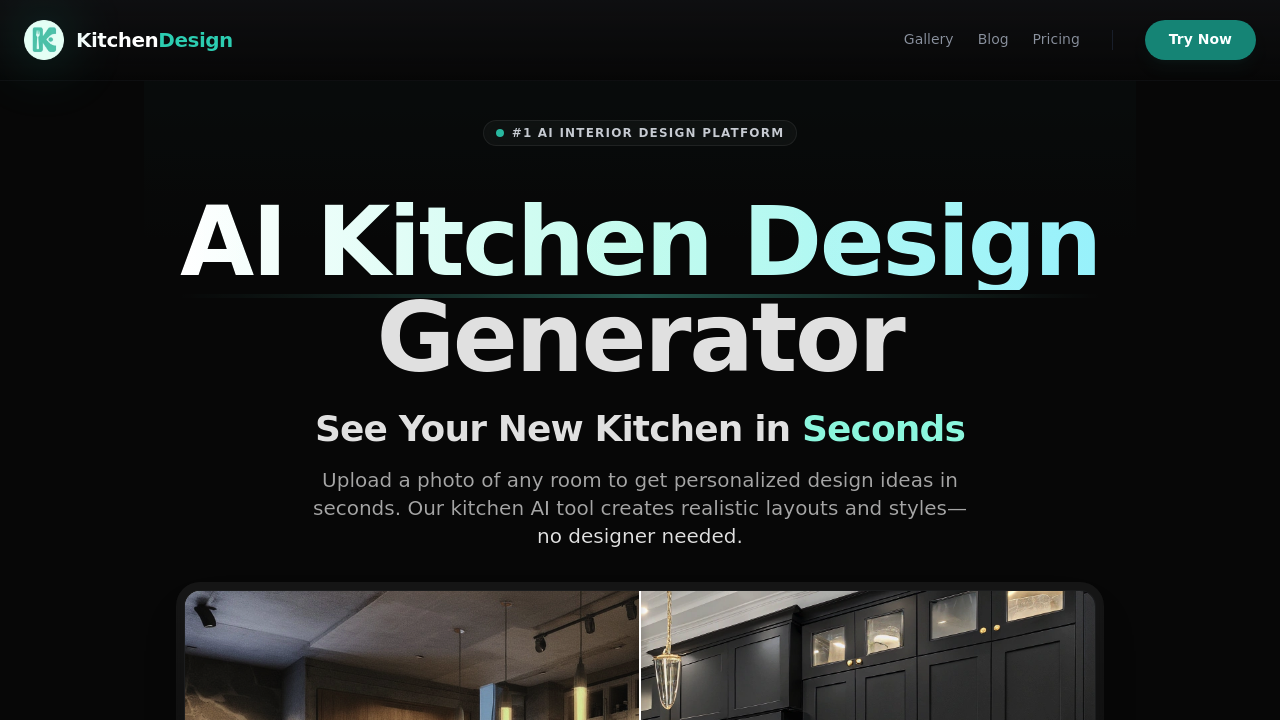
AI Kitchen Design processes uploaded room photos through computer vision algorithms to generate photo-realistic interior redesigns in seconds. Users upload a current photo of any space, select a desired style from the available options, and the system renders a transformed version showing how that room would look with different layouts, finishes, and design elements. This software supports kitchens, living rooms, bedrooms, and bathrooms.
The generation pipeline analyzes the spatial structure of uploaded images to understand room dimensions, existing fixtures, and architectural elements. It then applies style transfer techniques combined with rendering algorithms to produce realistic visualizations that maintain the room's core geometry while transforming surfaces, materials, and design aesthetics. The output includes proper lighting simulation and compositional elements that mimic professional interior photography.
Style options range from modern and minimalist to traditional, coastal, and industrial aesthetics. The number of available styles scales with subscription tier, from 30-plus options on the entry level to 70-plus on premium plans. Users can generate multiple variations of the same space with different style applications, allowing side-by-side comparison without additional photo uploads. The system handles all room types without specialization requirements.
Generated images can be saved and downloaded for reference or presentation purposes. Commercial usage rights are included across all paid tiers, meaning users can incorporate the renderings into client proposals, marketing materials, or portfolio work. The style transfer feature lets users apply the aesthetic from one room to another space, creating consistency across multiple areas.
This service has produced over 75,000 designs since launch. According to user testimonials, traditional designers were quoting over $2,500 just for initial concept work, while this application delivers comparable visualizations for monthly subscription costs. The time savings are substantial compared to weeks of back-and-forth communication typical with conventional design services.
Design generation operates on a credit system. The Mini plan provides 25 designs monthly for $14. The Personal plan increases capacity to 75 designs for $18 per month. Premium subscribers get 200 designs monthly at $36, plus email support and the ability to request specific features. Credits reset monthly rather than rolling over.
The main technical constraint is the monthly design limit tied to each subscription tier. Users cannot generate unlimited variations within a billing period. Style availability also depends on plan level, with lower tiers accessing fewer aesthetic options. There is no indication of API access for programmatic integration or batch processing capabilities.
The system doesn't connect with CAD software, project management tools, or e-commerce platforms for direct material ordering. It functions as a standalone visualization application rather than part of a broader design workflow. No team collaboration features are documented, so multiple users can't work together on shared projects within a single account.
Output quality depends heavily on input photo characteristics. The algorithms need clear views of the space with adequate lighting to accurately map room geometry. Extreme angles, poor lighting, or cluttered spaces might produce less accurate transformations. The system generates static images rather than interactive 3D models, so users can't explore the redesigned space from multiple viewpoints or adjust individual elements post-generation.