
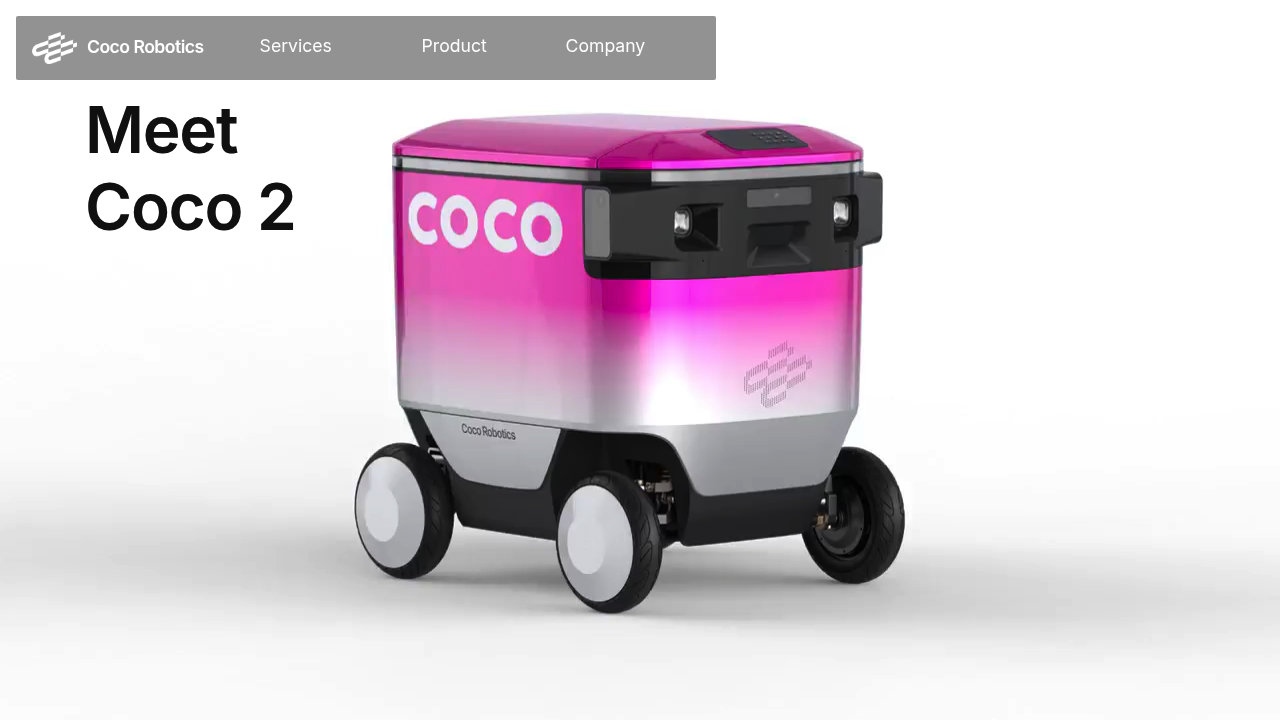
Autonomous delivery robots that handle last-mile runs through crowded city streets. Coco Robotics built these to maneuver through the chaos of urban environments where typical self-driving tech struggles. The system uses end-to-end neural networks combined with precision mapping that updates in real time, tracking construction zones and obstructions as they pop up.
The hardware setup covers most delivery scenarios. These robots hit 21 kph with a 32 km range and can climb grades up to 30%. The cargo space fits four 18-inch pizzas. Quick swappable tires and batteries mean minimal downtime between runs. A 360-degree camera system works alongside solid state LiDAR for movement control, while a 360 light ring signals the robot's intentions to pedestrians and drivers.
Here's what makes the approach different: human operators work alongside the AI through something called Pilot Terminal. When a robot encounters a tricky situation it can't solve alone, a human steps in with full context — ETA, turn-by-turn directions, what obstacle triggered the issue. The robots don't get completely stuck waiting for some centralized command center to notice a problem. The map annotation tools let these operators mark issues for future runs too.
The routing handles citywide access across sidewalks, roadways, and pathways. Air blade technology appears in the specs but without detail on what problem it solves. That 360 turn-in-place capability matters in tight urban spaces where delivery bots need to pivot without a wide turning radius.
Does this actually work in dense cities? The system's designed specifically for places like Los Angeles where delivery conditions get complex fast. Real-time map intelligence adapts to changing street conditions rather than relying on static route planning.
What's missing from the picture is cost structure. No details on how merchants pay for delivery service or whether there's a per-delivery fee versus subscription model. For businesses evaluating delivery options, that's a pretty crucial gap. You can't compare this against traditional couriers or competitors without knowing the economics.
The target market is clear though. Merchants who need reliable last-mile delivery in challenging urban markets where pedestrian traffic, construction, and dense street layouts complicate logistics. Fast casual restaurants and retail businesses that already handle high delivery volumes would see the most immediate application. The cargo capacity limits this to smaller orders — not replacing delivery vans but supplementing courier networks for specific use cases.