
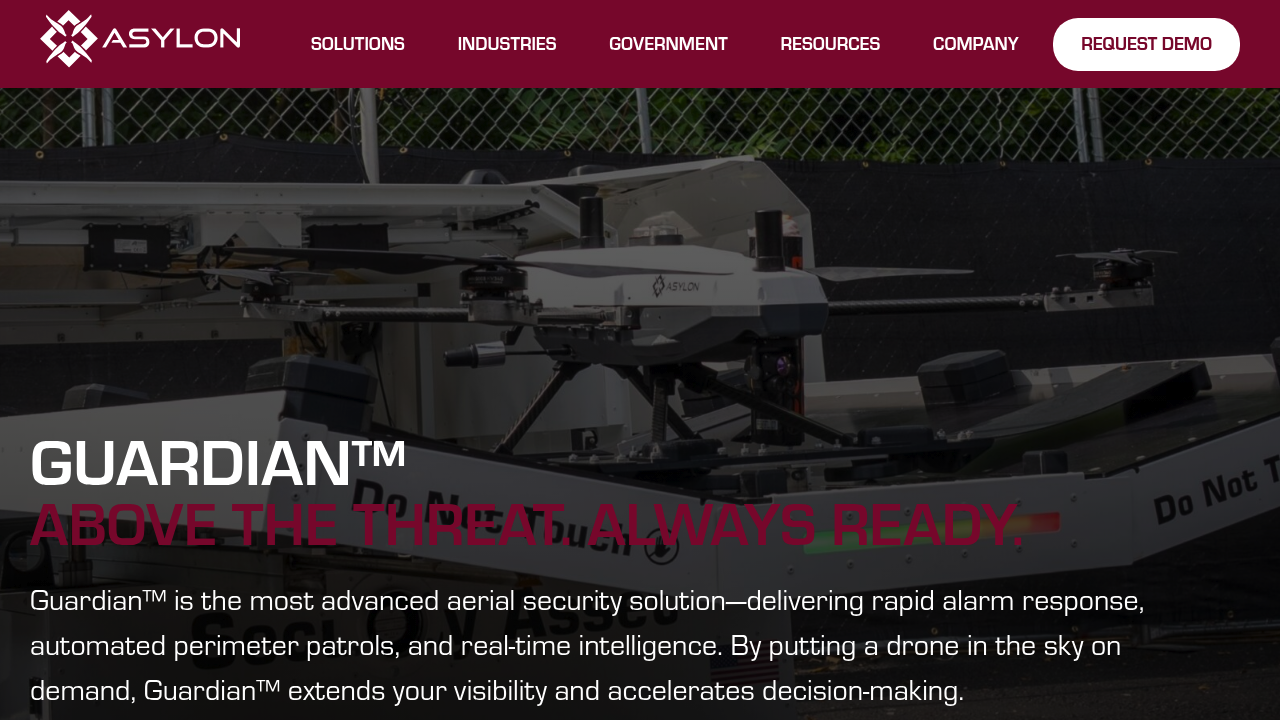
Guardian handles perimeter security through a fully automated drone that launches itself, swaps its own batteries, and reports back without anyone touching it. The system centers on an automated base station that houses the drone and handles battery swaps in under three minutes, which means the drone can patrol for 30 minutes, land, swap batteries, and launch again without manual intervention.
When an alarm triggers or a scheduled patrol comes up, the drone launches automatically from its base station. It flies pre-programmed routes at speeds up to 35 mph while streaming live video through both standard and thermal cameras. The dual camera setup captures what's happening in normal light and thermal signature simultaneously, so security teams can spot intruders even in complete darkness or through light fog.
Flight planning happens through DroneIQ software where operators map patrol routes and set trigger conditions. The drone follows these routes while maintaining encrypted communication through redundant uplinks, with optional LTE as backup if the primary connection drops. All video, telemetry, and command data travels through AES-256 encryption.
What sets this apart from typical drone security is the 24/7 Robotic Security Operations Center staffed by FAA-certified operators. When the drone detects something, RSOC operators review the live feed and decide whether to continue automated response or escalate. This human-in-the-loop model keeps the system FAA-compliant while maintaining automation benefits.
The drone handles weather reasonably well. IP45 rating means it operates in rain and keeps flying in winds up to 25 mph, though stronger gusts will ground it. The 30-plus minute flight time works for most facility perimeters, but larger properties might need multiple base stations or strategic placement to cover everything in one patrol cycle.
The system targets critical infrastructure, logistics facilities, and government sites where manual patrols fall short. A human guard walks maybe three miles per hour and can't see over buildings or through darkness without stopping to check. The drone covers the same ground at 35 mph with thermal vision and records everything.
The friction shows up in deployment complexity. You're installing a physical base station, integrating with existing security infrastructure, and coordinating with RSOC operations. This is not a plug-and-play setup. American-engineered components and FAA compliance add legitimacy but also mean navigating regulatory requirements that vary by location and airspace classification. The system works best when security teams treat it as infrastructure rather than a gadget, planning installation and integration months ahead rather than expecting immediate deployment.