#4 in AI Robot PUDU MT1 Max logo
AI Robot FREEMIUM

PUDU MT1 Max

A facilities manager at a regional airport watches cleaning crews struggle to keep terminals spotless during peak travel hours

Foot traffic never stops, debris accumulates constantly, and manual sweepers can't cover 80,000 square meters efficiently. The PUDU MT1 Max handles this autonomously—its 70 cm sweeping width and 35-liter trashbin clean…

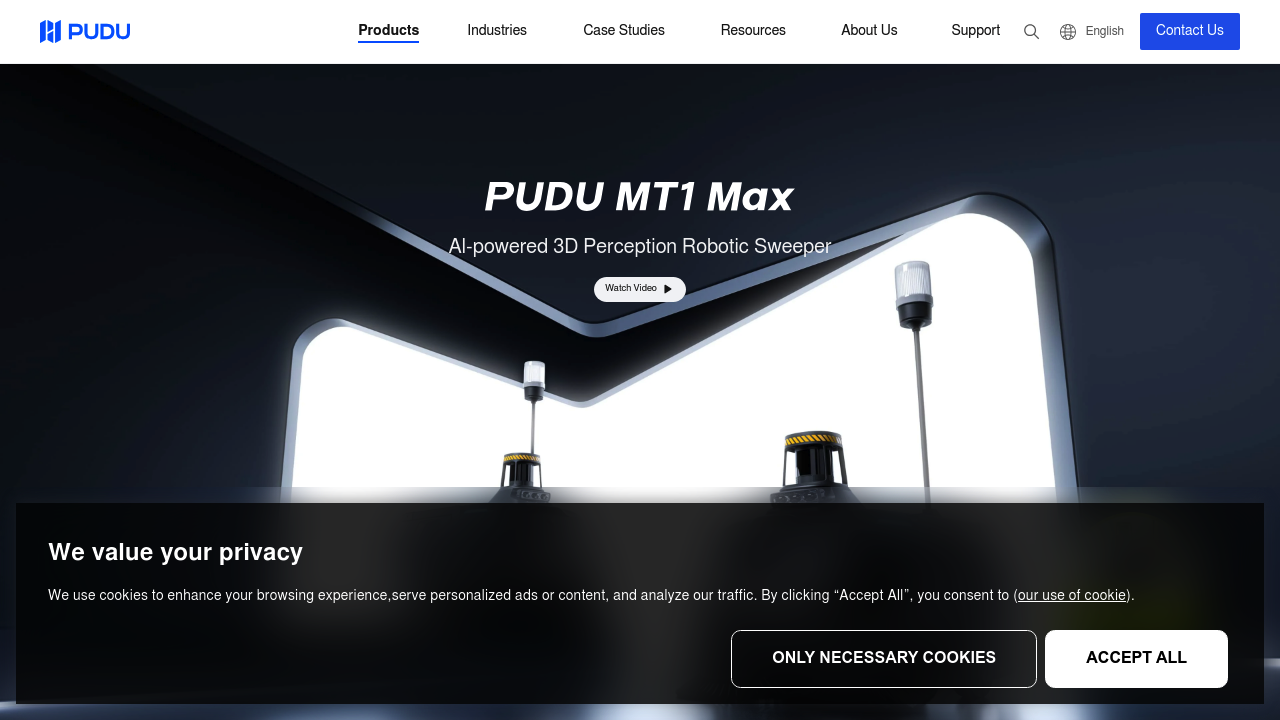
PUDU MT1 Max screenshot

A facilities manager at a regional airport watches cleaning crews struggle to keep terminals spotless during peak travel hours. Foot traffic never stops, debris accumulates constantly, and manual sweepers can't cover 80,000 square meters efficiently. The PUDU MT1 Max handles this autonomously—its 70 cm sweeping width and 35-liter trashbin clean up to 7,000 square meters per hour in spot mode. The robot picks up everything from cigarette butts to large bottles, adjusting its cleaning power based on what it detects. It runs for 8 hours straight, recharges in under 3.5 hours, then continues. No breaks needed.

The 3D perception system combines LiDAR with multi-sensor fusion to move around people, luggage carts, and service vehicles. A warehouse operations director at a distribution center uses it overnight when forklifts and workers move through loading bays. The robot dynamically avoids vehicles and stops for pedestrians without human intervention. Its edge-to-edge cleaning reaches baseboards and walls with zero-centimeter clearance. The dual-chip architecture processes environmental data in real time, letting it adapt cleaning posture when moving from smooth concrete to textured surfaces.

It connects to elevators and automatic gates through PUDU Link, meaning it cleans multiple floors or secured zones without manual escort. A maintenance supervisor at a multi-story shopping mall programs it to take elevators between levels during off-peak hours. The 1.2-meter warning light and safety projection light alert people before it rounds corners. IP54 sealing protects against dust and water spray, and water-drop sensors activate protective mode if it encounters spills.

The robot struggles in extreme weather. Don't deploy it outdoors during heavy rain or snow. An office park manager who wanted outdoor sidewalk cleaning found it inadequate for winter conditions. Indoor-only facilities get full value.

It covers areas up to 100,000 square meters, but you're maintaining a facility smaller than 20,000 square meters with light foot traffic. Manual cleaning or smaller equipment makes more sense. The 85-kilogram robot requires space for charging docks and turning radius. Tight corridors under 1 meter wide create movement problems. Facilities with stairs as primary access points between zones can't use the elevator integration effectively.

This fits large commercial spaces—airports, convention centers, warehouses, shopping malls—where cleaning demands exceed what human crews handle cost-effectively during operating hours. Small retail stores and single-floor offices don't need this capacity.


PUDU MT1 Max alternatives

See all →

Frequently asked

7 questions
How long does the PUDU MT1 Max run before needing a recharge?
The robot runs 8 hours in standard mode before requiring a recharge, with total runtime ranging from 5 to 10 hours depending on cleaning intensity. A warehouse night shift supervisor schedules it to clean loading docks and storage aisles during the entire overnight shift without interruption. It recharges in under 3.5 hours, so a distribution center manager runs it for morning operations, charges it during lunch hours, then deploys it again for afternoon cleaning. The 60 Ah battery capacity supports continuous operation across multiple shifts when paired with strategic charging windows.
Can the PUDU MT1 Max clean multiple floors in a building?
The robot connects to elevators through PUDU Link integration and travels between floors autonomously. A shopping mall facilities director programs it to clean the food court on level three, take the service elevator down to level one, then sweep the main entrance area without human escort. It coordinates with elevator controls to call the car, enter, select floors, and exit at the right level. Office buildings with restricted access zones use the e-gate integration so the robot passes through security doors during scheduled cleaning routes. Buildings relying primarily on stairs or lacking compatible elevator systems can't use this multi-floor capability.
How much area can the PUDU MT1 Max clean per hour?
The robot covers up to 2,200 square meters per hour in standard cover cleaning mode and maxes at 7,000 square meters per hour during spot cleaning mode. An airport terminal operations manager uses spot mode to rapidly clean gate areas between flight departures, clearing a 5,000 square meter zone in under an hour. A convention center director runs it in cover mode during overnight hours to methodically clean the entire 80,000 square meter exhibit hall over multiple nights. The 70 cm sweeping width and 35-liter trashbin let it work extended periods without emptying, though facilities smaller than 20,000 square meters with light debris don't benefit from this industrial capacity.
Does the PUDU MT1 Max work outdoors?
The robot handles indoor environments with IP54 sealing against dust and water spray but shouldn't operate in extreme weather. A corporate campus facilities manager wanted it to clean outdoor walkways between buildings and found it inadequate during winter months when snow and freezing rain hit. The water-drop sensors activate protective avoidance mode when encountering liquid, which triggers constantly in wet outdoor conditions. An indoor-outdoor shopping plaza uses it exclusively inside the covered retail areas and relies on traditional equipment for parking lots and exterior sidewalks. Covered loading docks and semi-enclosed warehouses work fine as long as rain and snow don't directly enter the space.
Is there a free trial or rental option for the PUDU MT1 Max?
No trial period information is available for this industrial cleaning robot. A regional hospital facilities director considering the unit for a 60,000 square meter complex would need to contact PUDU directly about demonstration or pilot programs. Industrial robotics at this scale typically involve capital purchase or lease agreements rather than consumer-style trials. The 85-kilogram robot with specialized docking requirements represents significant infrastructure investment beyond the unit itself. Facilities managers evaluating it should factor in charging station installation, staff training on the system, and integration setup for elevator and gate access before committing.
What size debris can the PUDU MT1 Max pick up?
The robot handles debris ranging from cigarette butts to large bottles through adaptive cleaning that adjusts power based on what it detects. A sports arena cleaning supervisor relies on it after events to collect everything from ticket stubs and food wrappers to empty water bottles scattered across concourses. The dual brush system automatically adjusts cleaning angle to guide different debris types into gaps and toward the 35-liter trashbin. A manufacturing plant floor manager finds it removes metal shavings, cardboard fragments, and packaging materials from production areas. Heavy sludge, liquid spills requiring mopping, or objects larger than bottle-size exceed its pickup capability and require manual intervention.
How does the PUDU MT1 Max avoid hitting people and equipment?
The 3D LiDAR combined with multi-sensor fusion creates real-time environmental maps that identify pedestrians, animals, and moving vehicles. A busy hospital corridor sees nurses, patients with wheelchairs, and meal delivery carts throughout the day, and the robot stops or reroutes when it detects these obstacles in its path. A warehouse with constant forklift traffic uses it during active shifts because the dynamic vehicle avoidance recognizes fast-moving equipment and adjusts course without stopping operations. The 1.2-meter warning light and safety projection light alert people before the robot rounds corners or enters intersections. Facilities with unpredictable obstacles like children running in shopping malls benefit from the pedestrian detection, though extremely crowded spaces during peak hours slow its cleaning efficiency.

Traffic

Estimated monthly website visits · last 8 months

148.1K visits/mo
Monthly visits
148.1K
↑ 5.3% MoM
Global rank
#249,381
RU #43,264
Category rank
#4
AI Robot
156.8K 134.9K 112.9K 91K 69K Dec 2025: 69K visits Dec 2025 Jan 2026: 79.7K visits Jan 2026 Feb 2026: 69.7K visits Feb 2026 Mar 2026: 135.5K visits Mar 2026 Apr 2026: 156.8K visits Apr 2026 May 2026: 116.5K visits May 2026 Jun 2026: 140.6K visits Jun 2026 Jul 2026: 148.1K visits Jul 2026

Reviews (0)

Write review

No reviews yet. Be the first to share your experience.