
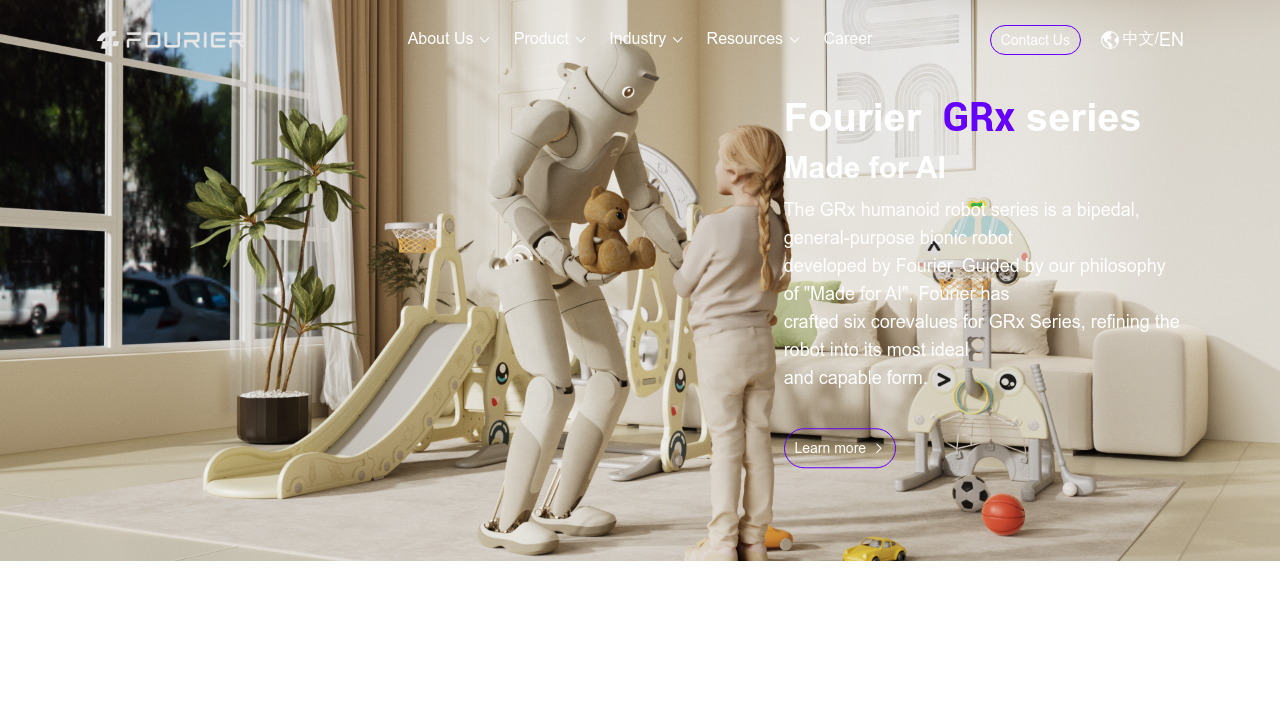
Fourier's GRx series puts bipedal humanoid robots in the hands of developers building embodied AI applications. The GR-1 model positions itself as the first mass-produced humanoid robot, built from the ground up with a "Made for AI" philosophy that prioritizes what AI developers actually need in physical form.
The robots walk on two legs and feature human-like degrees of freedom in their movement. Fourier designed the body structure around six core values they believe define the optimal robot form, though you're working with full-stack robotics technology that covers everything from motion control to the physical chassis. The versatility matters here because these aren't single-purpose machines locked into one task.
Developers get a general-purpose bionic platform. You can program movement sequences, test AI models in physical space, and experiment with embodied intelligence without building hardware from scratch. The advanced motion control system handles the complexity of bipedal balance and coordination, which is notoriously difficult to get right in humanoid robotics.
The catch is accessibility. These are sophisticated physical robots, not software tools you download and test immediately. You're dealing with hardware that requires physical space, technical expertise in robotics, and presumably significant capital investment to acquire and maintain. The initial ramp-up isn't just about understanding APIs or training models but about managing mechanical systems, troubleshooting physical failures, and coordinating software with real-world physics.
Fourier targets this explicitly at developers and AI users who need embodied AI platforms rather than pure software environments. You're not running simulations here. Real robots. Real movement. Real friction when things don't work as expected in physical space.