
VoiceBrief logo
AI Text-to-Speech FREEMIUM from $10/mo

VoiceBrief

This tool converts documents into audio lectures rather than just reading text aloud

Upload a PDF, photo of handwritten notes, or URL, and the system generates a lecture-style explanation using AI voices. The difference from standard text-to-speech is how it processes the content. Instead of…

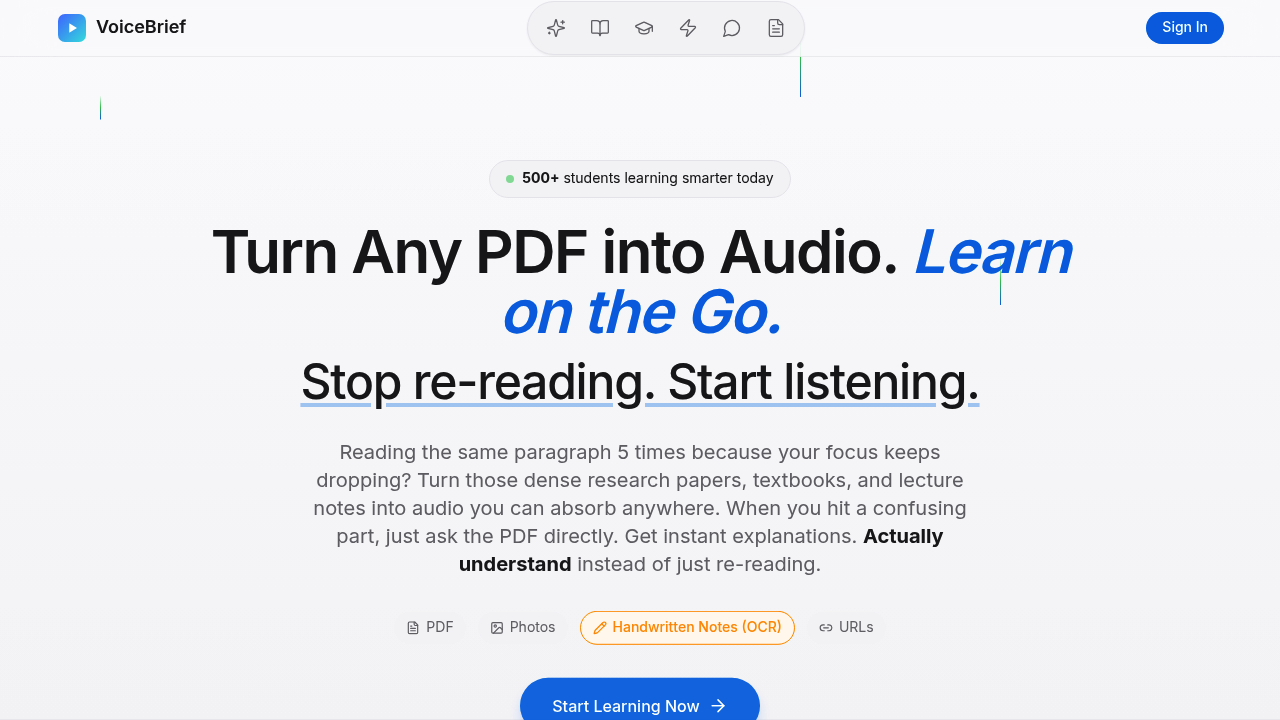
VoiceBrief screenshot

This tool converts documents into audio lectures rather than just reading text aloud. Upload a PDF, photo of handwritten notes, or URL, and the system generates a lecture-style explanation using AI voices. The difference from standard text-to-speech is how it processes the content. Instead of mechanically reading every word, it creates explanations that sound like a tutor walking through material.

The pipeline starts with document ingestion. PDFs get parsed directly. Photos and handwritten notes go through OCR to extract text. The AI then analyzes the content structure and generates conversational explanations that cover the full document, not just summaries. Premium AI voices deliver these explanations with natural prosody and pacing.

After generating audio, you can interact with the material through voice chat. Ask questions about specific concepts in your uploaded documents and get spoken responses. This creates a feedback loop where the AI references your exact content during conversations. Learn Mode lets you switch between voice and text for these interactions.

The quiz system pulls questions from uploaded material and applies spaced repetition algorithms. Questions get generated automatically based on document content. The system tracks which concepts need reinforcement.

Document coverage is complete rather than time-limited. While some competing tools cap audio at fifteen minutes, this processes entire documents regardless of length. That matters for textbooks or research papers that'd get truncated elsewhere.

The OCR handles handwritten notes, though accuracy depends on handwriting legibility. Once digitized, notes get the same lecture treatment as typed documents. You're effectively converting class notes into audio study guides.

Voice quality uses premium synthesis models. Not robotic monotone. The output mimics lecture cadence with appropriate emphasis and pausing. Still noticeably synthetic but functional for study purposes.

The service has processed over ten thousand PDFs for five hundred active users. Users report three times faster learning compared to traditional reading, though this metric's self-reported rather than independently verified. The hundred-dollar tutor savings claim similarly comes from user testimonials.

Pro plan costs nine ninety-nine monthly with a thirty-day money-back guarantee. No free tier exists based on available information.

Technical limitations aren't specified in documentation. Expect standard constraints around document complexity, file size limits, and OCR accuracy for poor-quality handwriting. The AI explanations work best with structured educational content rather than creative writing or highly technical jargon-heavy material.

No mentioned integrations with learning management systems or note-taking apps. It's a standalone service.

VoiceBrief alternatives

See all →

Frequently asked

7 questions
Can VoiceBrief read handwritten notes out loud?
The system uses OCR to digitize handwritten notes from photos, then generates lecture-style audio explanations from the extracted text. Accuracy depends heavily on handwriting legibility since poor penmanship causes OCR errors that propagate into the audio output. Once digitized, handwritten notes get the same treatment as typed documents with AI voices creating conversational explanations rather than mechanical reading. The process converts class notes into audio study guides, though you'll want reasonably neat handwriting for reliable results.
How is VoiceBrief different from Speechify or NaturalReader?
VoiceBrief generates lecture-style explanations of content while Speechify and NaturalReader perform text-to-speech reading of exact words on the page. The AI analyzes document structure and creates conversational walkthroughs that sound like a tutor explaining concepts rather than mechanically narrating text. After generating audio, you can ask questions through voice chat and get responses that reference your uploaded documents. Standard TTS tools just read aloud without interactive Q&A or content interpretation.
Does VoiceBrief have a free plan or trial?
No free tier or trial period exists based on available pricing information. The Pro plan costs nine ninety-nine per month as the entry point. VoiceBrief offers a thirty-day money-back guarantee, which functions as a risk-free testing window if you're willing to pay upfront. This differs from competitors that provide limited free access before requiring payment.
What types of documents work best with VoiceBrief?
The system handles structured educational content most effectively since the AI generates explanations optimized for learning material. PDFs, typed notes, and URLs with clear formatting get processed reliably through the pipeline. Handwritten notes work if legible enough for OCR accuracy. Expect limitations with creative writing, highly technical jargon-heavy papers, or documents with complex layouts that confuse content extraction. Textbooks and research papers process completely without length restrictions, unlike some tools that cap audio at fifteen minutes.
Can I ask questions about my uploaded documents in VoiceBrief?
Learn Mode provides voice or text chat where you ask questions about uploaded content and receive responses that reference your specific documents. The AI accesses the material you've uploaded rather than giving generic answers, creating a tutor-like interaction. This works through a feedback loop where the system pulls from your exact PDFs or notes during conversations. Questions get spoken responses using the same premium AI voices that generate the initial lectures.
Does VoiceBrief just summarize documents or cover everything?
The system processes entire documents regardless of length rather than creating summaries or excerpts. This matters for textbooks or long research papers that'd get truncated by tools with time limits. The AI generates lecture-style explanations that walk through full content, not condensed versions. While some competing services cap audio at fifteen minutes, VoiceBrief handles complete documents from start to finish.
What are the limitations of VoiceBrief's AI voices?
The premium AI voices use synthesis models that produce natural prosody and pacing but remain noticeably synthetic rather than human. Voice quality mimics lecture cadence with appropriate emphasis, making it functional for study purposes without sounding robotic. The system doesn't specify technical constraints around file sizes or document complexity limits in available documentation. OCR accuracy for handwritten notes degrades with poor penmanship, and the AI explanations likely struggle with highly specialized jargon or unconventional document structures.

Traffic

Estimated monthly website visits · last 7 months

21.2K visits/mo
Monthly visits
21.2K
↑ 20.5% MoM
Global rank
#678,775
US #181,448
Category rank
#34
AI Text-to-Speech
21.2K 16.5K 11.7K 6.9K 2.2K Jan 2026: 2.2K visits Jan 2026 Feb 2026: 3.6K visits Feb 2026 Mar 2026: 4K visits Mar 2026 Apr 2026: 4.6K visits Apr 2026 May 2026: 13.6K visits May 2026 Jun 2026: 17.6K visits Jun 2026 Jul 2026: 21.2K visits Jul 2026

Reviews (0)

Write review

No reviews yet. Be the first to share your experience.