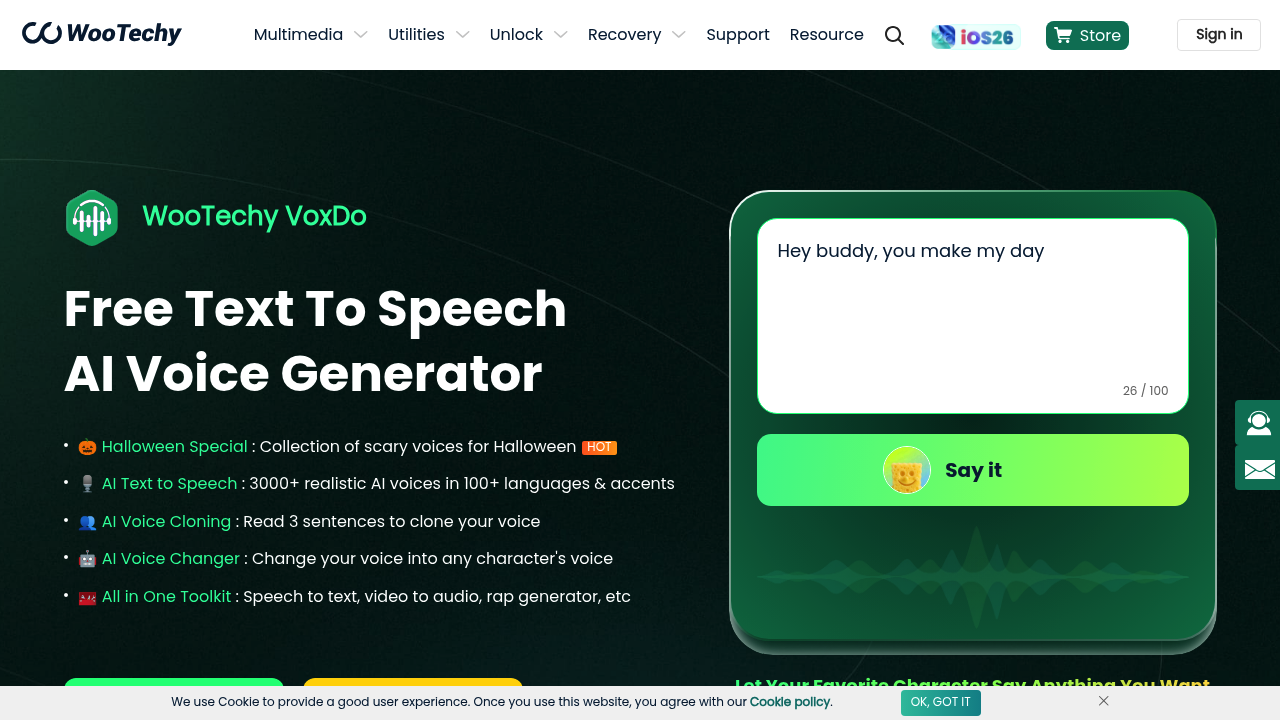
Opening WooTechy VoxDo drops you into a text-to-speech generator with over 3000 voices spread across more than 100 languages. You type or paste text into the input box, pick a voice from the library, and hit generate. The voice selection process involves scrolling through categories and previewing samples until you find something that matches what you're going for. With 3000 options, that's a lot of clicking.
The text-to-speech engine handles multiple languages and accents, so you can generate a voiceover in Spanish with a Mexican accent or English with a British inflection. The output plays back immediately after generation. Download the file and you're done. The interface doesn't require audio editing knowledge, which matters for teachers and content creators who just need quick voiceovers for YouTube videos or online courses.
Voice cloning sits in a separate section. You record yourself reading three sentences aloud, upload the audio, and the system analyzes your voice to create a custom clone. Three sentences isn't much. The speed there is notable compared to other voice cloning tools that demand longer recordings. Once cloned, you can type any text and hear it in your own voice without recording again. Podcasters and advertisers use this to batch-produce content without sitting in front of a microphone for hours.
The voice changer feature takes an existing audio file and transforms it into a character voice. Upload a recording, select a character from the library, and the software processes it. There's a Halloween collection with scary voices for seasonal content. The system also converts speech back to text and pulls audio from video files, though these feel tacked on rather than core to the experience.
Over 800,000 people use VoxDo, with millions of voiceovers generated. The marketing targets social media bloggers, TikTok creators, animation studios, and online educators who'd otherwise hire voiceover artists or record everything themselves. A free tier exists with a "Try For Free" button, though the exact limitations aren't spelled out upfront. You'll discover what's locked once you start using it.
The rap generator adds rhythmic vocal patterns to text, which feels niche but useful for music content creators experimenting with AI-generated vocals. The friction comes from navigating the massive voice library and figuring out which features live where in the interface. Everything works, but the layout doesn't guide you smoothly between text-to-speech, voice cloning, and voice changing modes.