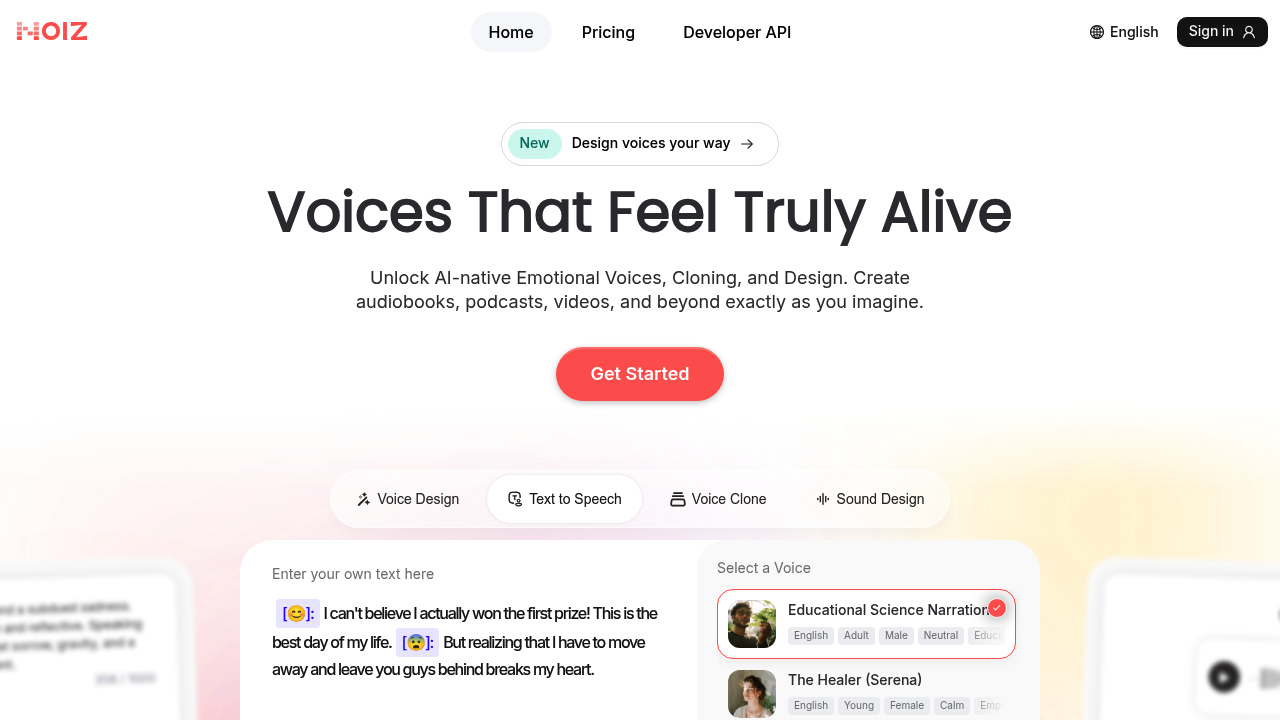
The service opens with a text box where you paste or type your script, capped at 400 characters. you will pick from over 200 voices in the library or jump straight to cloning one of your own. The voice cloning works with just three seconds of audio, which sounds convenient until you realize getting clean, usable three-second clips isn't always straightforward.
Once you've selected a voice, emotion control happens through emojis. Want sadness? Drop in a crying face emoji. Need excitement? Add a party popper. It's faster than sliding emotion sliders but feels limited when you want something between joy and calm. The one-click emotion boost option cranks up whatever you've set without fine-tuning.
The text-to-speech engine runs on their V2 model, which adds breath sounds and natural pauses. Speed control adjusts pacing without warping the voice into chipmunk territory. Tone customization lets you shift pitch and warmth, though the interface doesn't preview these changes before generating, so you're tweaking and regenerating until it sounds right.
Voice design creates entirely new voices from text descriptions or images. Type "warm British narrator" or upload a photo and the system generates something close. Results vary wildly. Sometimes you get exactly the vibe you wanted, other times it's generic and needs multiple attempts.
Multilingual dubbing translates and dubs videos in one click while supposedly preserving the original voice's emotional character. The feature works across languages but the 400-character limit becomes annoying for longer scripts. You'll need to break content into chunks and stitch audio files together afterward.
The Japanese-specific model handles that language separately, suggesting the main engine struggles with certain phonetics. Video dubbing adds translation on top of voice generation, but syncing audio to lip movements isn't automatic. You're managing timing yourself.
Sound design sits alongside voice features but isn't explained clearly in the interface. The OpenClaw Skills feature lets you clone voices with whisper and charm characteristics, though what "charm" means technically remains vague.
An API exists for developers wanting to build voice generation into their own apps. The character limit carries over there too, making it clunky for audiobook creators processing full chapters. Content marketers cranking out short social videos fit better than podcasters working with long-form scripts.