
A game developer needs 20 furniture pieces for a virtual apartment but doesn't want to spend days modeling each object in Blender. She photographs a chair from her living room, uploads it to TRELLIS 3D AI, and gets a fully textured 3D asset in GLB format within minutes. This system generates detailed geometry and PBR textures from that single photo, giving her a ready-to-import model with proper lighting properties. She downloads it, drops it into Unity, and moves on to the next object.
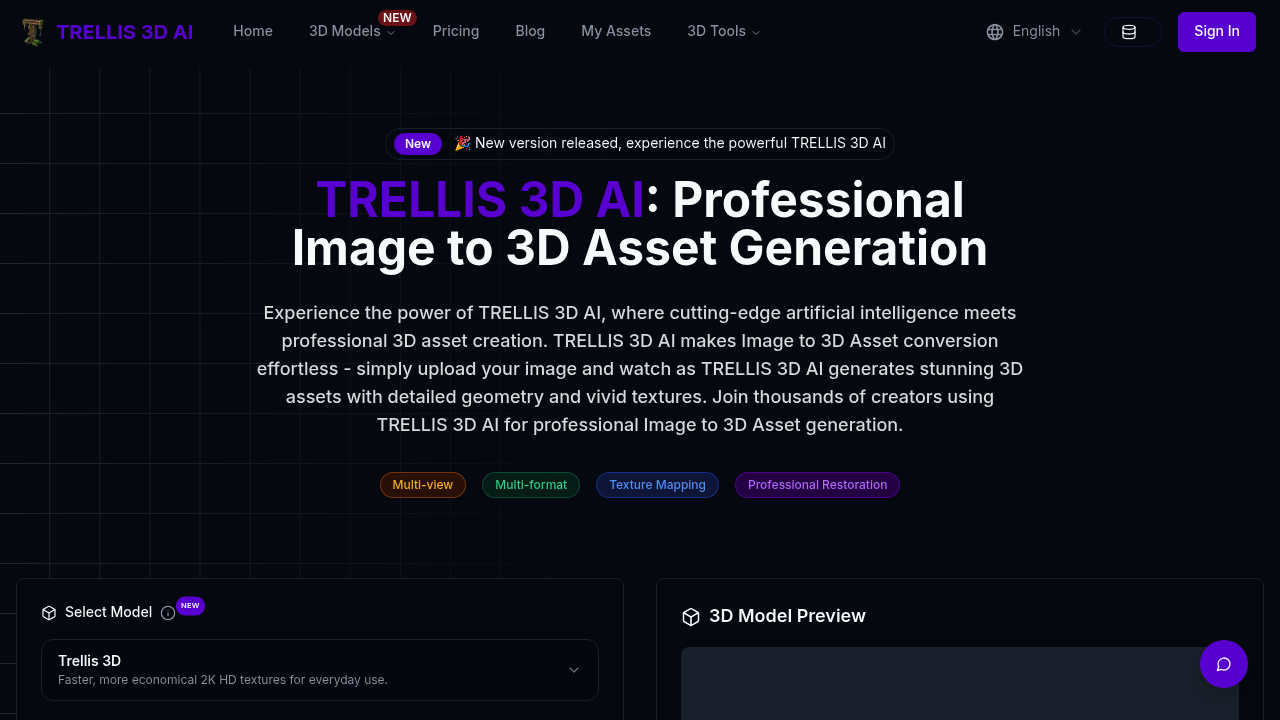
TRELLIS 3D AI converts images into professional 3D assets using Structured LATents technology. You upload one or multiple photos of an object. It generates the 3D model with textures. The system maintains structural elements that basic converters miss, producing assets that actually look like the source material instead of melted approximations.
An architect photographs a decorative vase at an antique shop for a client presentation. He uploads the image, selects high mesh density and HD texture settings, then downloads a 2K textured model in USDZ format for his iPad presentation. The browser preview shows exactly what he'll get before downloading. No software installation needed. He adjusts the mesh density to medium because the high setting created too many polygons for his presentation file size.
TRELLIS spits out models in GLB, OBJ, STL, GLTF, USDZ, and PLY formats. You pick your texture size between Fast, Standard, or HD. Mesh density goes Low, Medium, or High. Each generation costs 3 credits regardless of settings. The browser preview lets you rotate and inspect before committing to a download. Local editing capability means you can tweak the asset after generation without round-tripping to external software.
A product designer working on an e-commerce site needs 3D models of 50 kitchen gadgets. She subscribes to the Plus plan for 1000 credits monthly, which gives her roughly 333 generations. That's plenty for her current project batch. She runs 10 conversions simultaneously, hitting her concurrent task limit. The Basic plan would've bottlenecked her at 3 concurrent tasks. She uploads JPEG and PNG files under 20 MB each, getting multi-format downloads she owns outright.
This breaks when you need more than photos can provide. If your object has complex internal structures or transparent elements, a single image won't capture enough data. Multi-view uploads help but don't solve everything. The credit system means heavy users burn through allocations fast. Three credits per generation adds up when you're iterating on a design 15 times. Basic subscribers get 300 credits monthly, so that's 100 generations tops. Pro users get 4000 credits for 48 dollars monthly with unlimited concurrent tasks, better for production environments.
TRELLIS won't integrate with your existing pipeline automatically. There's no API mentioned. No team features for collaborative workflows. You're manually uploading images and downloading files. That works fine for individual creators but gets tedious in studio environments where 12 people need shared asset libraries.
Someone prototyping a mobile game with 200 unique props should consider this. Someone needing one-off 3D scans for client presentations fits well. Someone building a massive asset library who needs version control, team permissions, and automated batch processing should look elsewhere. The 20 MB file size limit blocks high-resolution source material. Enterprise plans offer custom solutions for organizations, but you'll need to contact them directly for specifics.