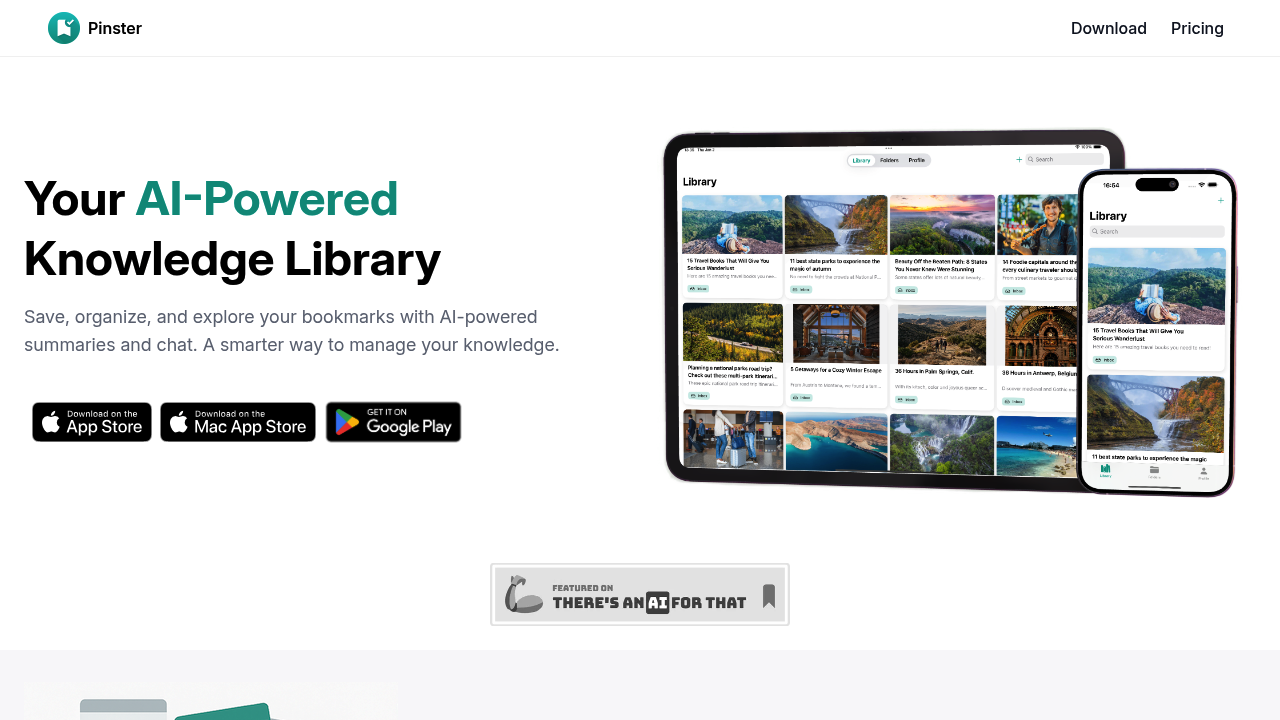
Your browser bookmarks become a searchable knowledge base. Everything you've read—remembered. Pinster saves links, documents, and images. Then AI summarizes the content. You can chat with it later. You're building a personal library that answers questions.
The chat feature? It's like having a research assistant who's read everything you saved. Ask it to find that fermentation article from three months ago. Ask it to compare arguments across different sources. The AI pulls from your saved content—no digging through folders required. Teachers juggling research papers and lesson planning materials get real use here. Students drowning in reference material can finally find things.
Organization happens automatically. Smart tags and nested folders do the work. Pinster categorizes bookmarks as you save them. Smart Lists sort items by metadata (no manual sorting needed). Web Archive preserves pages so links don't die later. You can add notes to items if the AI summary misses something important.
The free version lets you save unlimited items. Organize them into folders with tags. That's decent. But the useful features—chatting with your knowledge base, PDF uploads, auto-summarization, advanced search—require the Pro plan. It's $6.99 monthly or $59.99 yearly. Browser extensions work with Safari, Chrome, and Firefox. Everything syncs across devices.
If you save five links a month and rarely revisit them? This is overkill. But content creators and researchers who accumulate hundreds of sources actually need this kind of retrieval system.