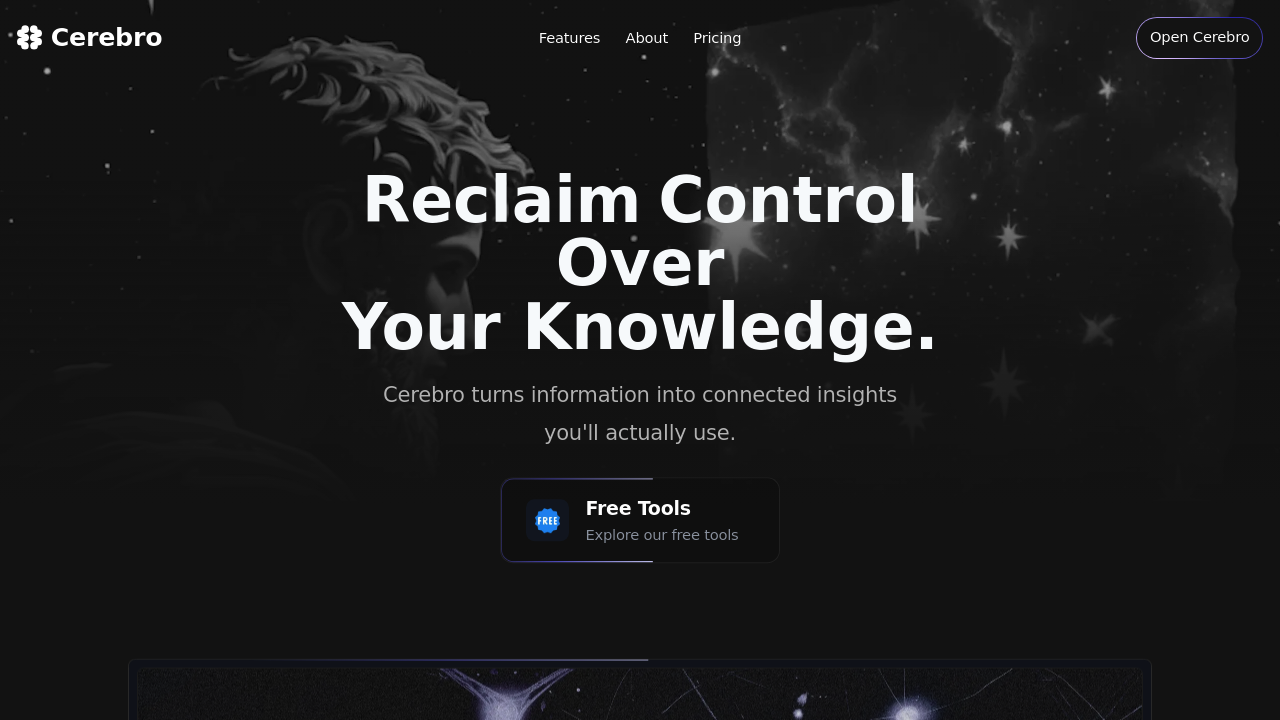
This platform promises to turn your scattered reading pile into a searchable knowledge base. Drop in a YouTube link, paste an article URL, or upload a PDF and it'll extract what matters. The AI assistant Nova answers questions about everything you've saved, pulling exact quotes from sources instead of vague summaries.
The knowledge network visualization caught attention. It maps connections between different pieces of content automatically, showing where ideas overlap across articles, videos, and documents. Good for spotting patterns you'd miss reading linearly. Natural language search works without keyword guessing—ask "what did that podcast say about sleep quality" in plain English.
Content extraction quality varies wildly — videos work well for transcribed content. Dense academic papers sometimes get oversimplified. The summarization feature skips nuance that might matter for technical material. No way to edit or refine what the AI extracts, so you're stuck with its interpretation.
Missing critical features for serious knowledge work. Can't collaborate or sharen'tebooks with teammates. No mobile app means you're desktop-only. Browser extension doesn't exist, so capturing content mid-browse takes extra steps. Integration list is empty—it doesn't connect to note-taking apps, reference managers, or productivity tools people already use.
Target users need high content volume to justify the workflow change. Researchers tracking dozens of papers might benefit. Casual readers collecting a few articles weekly won't see much value. This platform assumes you're drowning in content and need AI rescue.
Facts mention freemium availability and free tools but specifics aren't public. The actual feature split between tiers remains unclear. Worth testing if you're managing serious content volume, but don't expect it to replace established research workflows yet.