
A YouTube creator records a voiceover in English, then realizes her international audience needs Spanish and French versions. She's got the translated audio tracks but re-filming each version isn't happening. She uploads her original video to LipSync Video, drops in the Spanish audio, and the AI automatically adjusts her lip movements to match the new words. The French version takes another five minutes (three language versions done without touching a camera).
This service handles several specific video types beyond basic dubbing. A pet Instagram account with 200K followers uses the AI Pet Lip Sync feature to make their golden retriever appear to narrate stories. An educator turns historical photos into talking lessons with Talking Photo. A baby products brand creates podcast-style content where infant footage syncs with explanatory audio through the AI Baby Podcast feature. Cartoon animators skip frame-by-frame mouth animation by uploading character videos and letting the AI Cartoon Lip Sync match mouths to voice tracks.
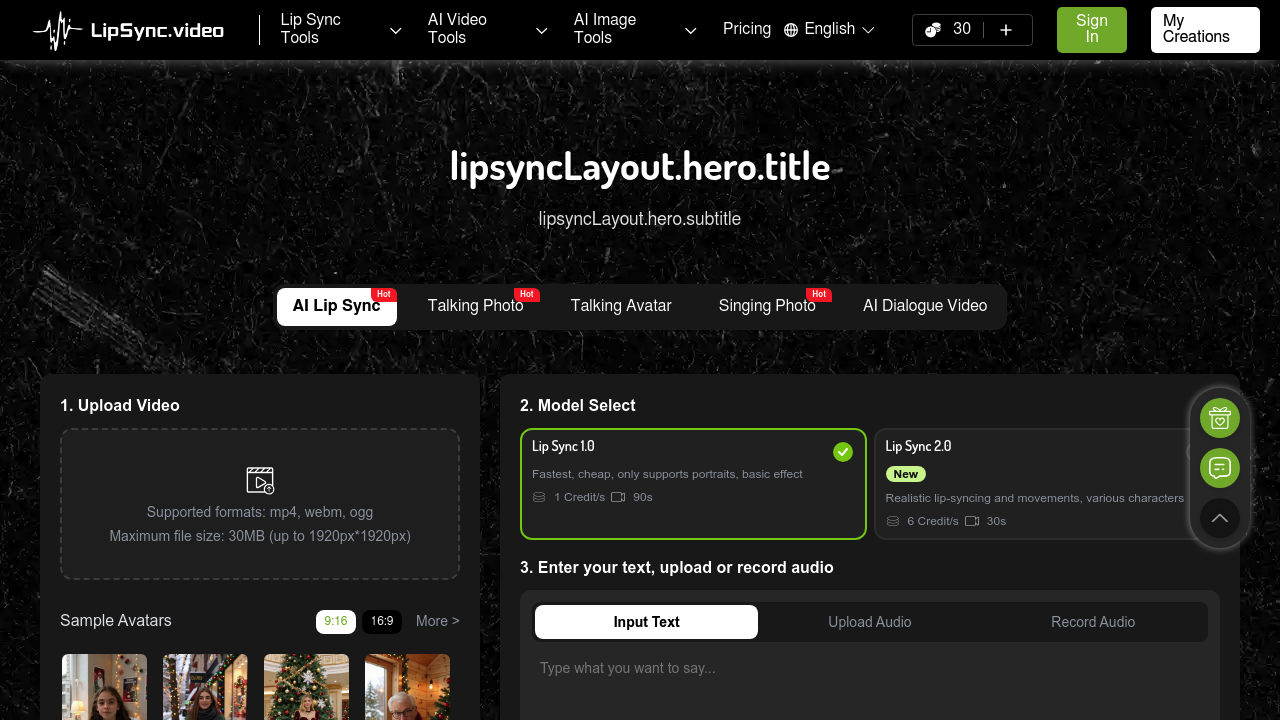
Two model options handle different needs. Lip Sync 1.0 runs at 1 credit per second, handles up to 90 seconds of footage, but only works with portrait shots and delivers basic results. Lip Sync 2.0 costs 6 credits per second, maxes out at 30 seconds, but produces realistic movements and handles various character types beyond portraits. The credit-based system means users pay per second of processing rather than monthly subscriptions. A free tier provides credits to test the service before committing.
Text-to-speech integration lets creators type scripts up to 1000 characters instead of recording audio. The subtitle generator adds captions automatically. Background customization and template libraries speed up production for social content in 9:16 or 16:9 formats. Multiple voice styles and expressions give options beyond straightforward narration.
The 30MB file size limit and 1920x1920px maximum resolution block high-resolution professional video work. Videos must be mp4, webm, or ogg formats. That 30-second cap on the better model restricts longer content to the basic version. Lip Sync 1.0's portrait-only limitation means full-body shots or wide angles will not process correctly.
This works for social media managers cranking out quick vertical videos, TikTok creators localizing content, and marketers testing messages across languages. It fits pet influencers adding personality to animal footage and educators breathing life into static images. It does not work for filmmakers needing cinema-quality lip sync, professional translators requiring perfect accuracy, or anyone working with 4K footage exceeding the resolution limits. Long-form content creators will hit duration walls fast.