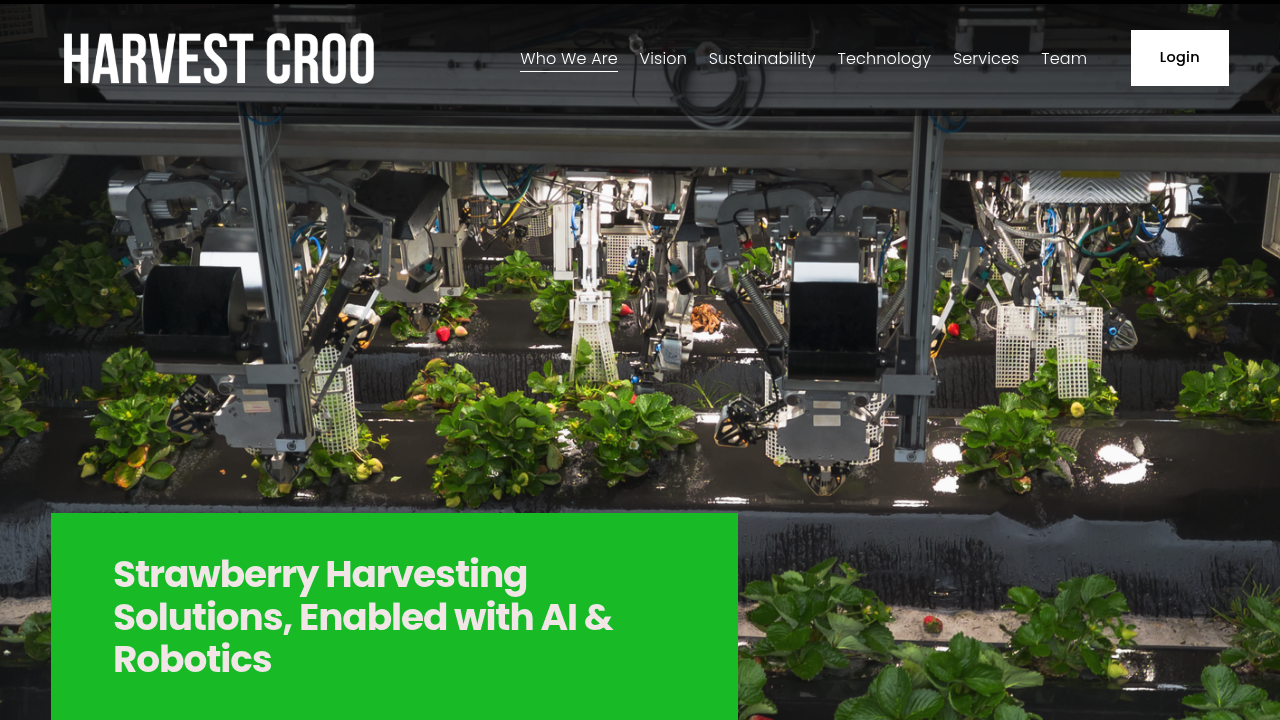
Automated strawberry harvesting through AI-powered robotics addresses a gap that's existed for decades in specialty crop farming. While grain-based fields have relied on machine harvesting for years, fruits and vegetables present distinct challenges that kept human labor dominant until now.
The system handles 3 core functions: crop management, harvesting, and packing. Each strawberry gets assessed for ripeness using computer vision before robotic arms pick and pack it. This technology guarantees pick quality and maintains food safety compliance throughout the automated process.
Strawberry growers represent the primary user base, though the technology aims to expand across the global agricultural community. The company chose strawberries as their first specialty crop deliberately, using it as a testing ground before scaling to other produce types that share similar harvesting complexities.
The service includes ripeness accuracy verification and environmentally friendly harvesting methods. Robots work alongside existing farm infrastructure without requiring complete operational overhauls. The pick quality guarantee means growers can't rely on the system to match human-level selection standards for market-ready fruit.
No free tier exists. The system doesn't offer API access or browser extensions. Mobile app availability isn't specified in available documentation.
The agricultural robotics space faces a fundamental challenge: each crop type demands different handling mechanisms. What works for strawberries won't automatically transfer to tomatoes or peppers. This means expansion beyond strawberries will require substantial additional development rather than simple configuration changes.
Growers looking for multi-crop automation will need to wait. The current focus remains on strawberry operations exclusively, with no public timeline for additional crop support.