Document Extract logo

Document Extract

You land on Document Extract ready to turn a messy PDF invoice into clean JSON data

The interface asks you to upload your document or image. You drop in a scanned receipt, an insurance form, or a multi-page contract. The AI-powered OCR gets to work. The extraction happens fast. Within seconds, you're…

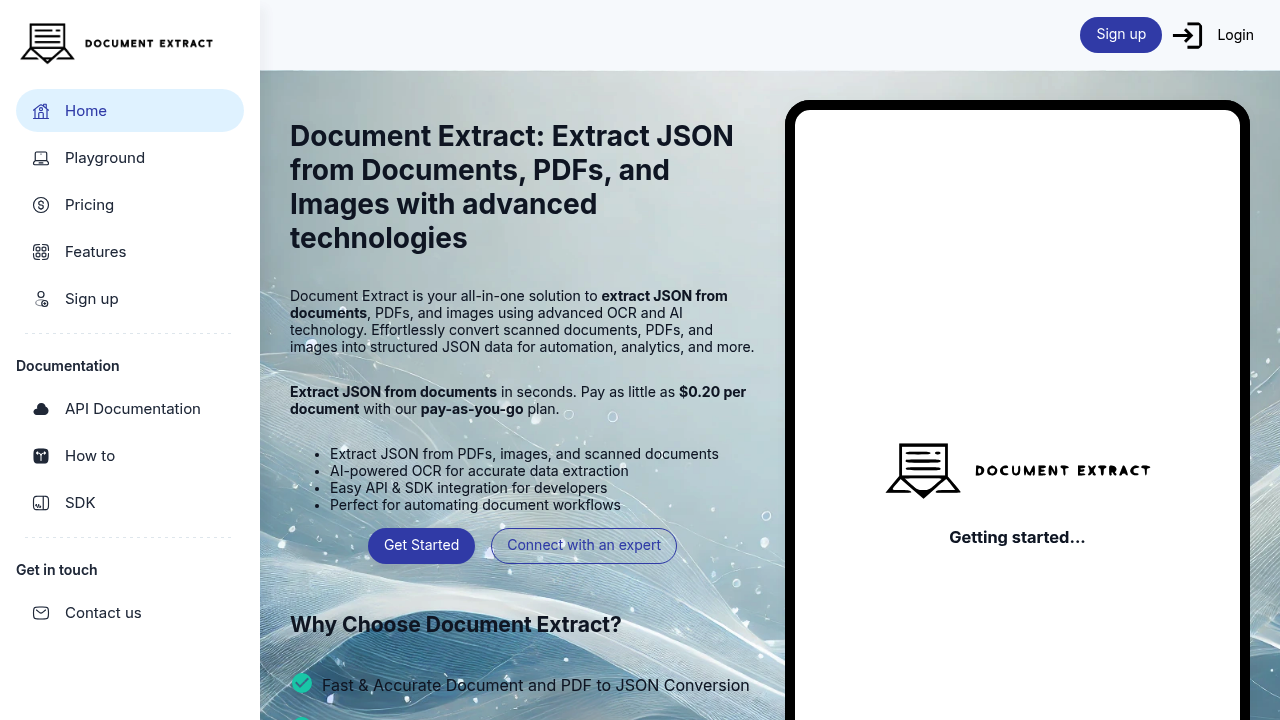
Document Extract screenshot

You land on Document Extract ready to turn a messy PDF invoice into clean JSON data. The interface asks you to upload your document or image. You drop in a scanned receipt, an insurance form, or a multi-page contract. The AI-powered OCR gets to work.

The extraction happens fast. Within seconds, you're looking at structured JSON output instead of locked-up text in a PDF. Fields are identified and organized. Names, dates, amounts, addresses — all pulled into a format your application can actually use. The accuracy impresses, especially on scanned documents where traditional tools fumble over low-quality images or weird fonts.

Developers can skip the web interface entirely. The API and SDK let you build document processing directly into your workflow. You send a document through an API call and get JSON back without manual intervention. This matters when you're processing hundreds of invoices daily or need to extract data from customer uploads in real-time.

The automation piece works well for repetitive document workflows. Instead of someone manually typing out form data or invoice details, Document Extract handles the conversion from unstructured documents to structured data. You can pipe this into databases, analytics tools, or whatever system needs the information.

Where things get less clear is customization for highly specific document types. If you're working with industry-specific forms that have unusual layouts, you might wonder how much tweaking is available to train the extraction on your particular format. It handles standard documents confidently but specialized use cases aren't fully explained.

The pay-as-you-go model charges twenty cents per document. No monthly subscription hanging over your head. You start with five dollars in credits, which covers 25 basic requests, and you don't need to hand over a card to try it. This works if your document volume fluctuates — you're not paying for capacity you don't use during slow months.

The conversion speed impresses. JSON appears quickly even from complex PDFs. But if you're expecting visual previews showing exactly where each extracted field came from in the original document, that level of transparency isn't obvious. You get the data but less insight into how confident the system is about each extraction.

For teams automating document intake or building products that need to digest PDFs and images, Document Extract delivers the core function without forcing you into rigid monthly tiers. Just upload, extract, and move on.


Document Extract alternatives

See all →

Frequently asked

7 questions
How do I convert a PDF to JSON?
You upload your PDF to Document Extract through the web interface or send it via API. The AI-powered OCR scans the document and identifies fields like names, dates, amounts, and addresses. Within seconds you get structured JSON output with all the extracted data organized and ready to use. The conversion works on scanned documents, images, and multi-page files without manual data entry.
Is Document Extract free?
Document Extract gives you five dollars in credits when you sign up, which covers 25 basic document requests without requiring a credit card. After that you pay twenty cents per document with no monthly subscription. You only pay for the documents you actually process, so if you extract ten documents one month and none the next, you're just charged for those ten.
What can I extract from documents with Document Extract?
Document Extract pulls structured data from PDFs, scanned documents, images, and forms into JSON format. It identifies and extracts fields like names, dates, amounts, addresses, and other text elements from invoices, receipts, contracts, insurance forms, and similar documents. The OCR handles low-quality scans and unusual fonts better than basic text extraction tools. You get organized data instead of locked-up text sitting in an unusable PDF.
Can I use Document Extract with my own application?
Developers can integrate Document Extract through the API or SDK instead of using the web interface. You send a document through an API call and receive JSON back without manual steps. This works for building document processing into your product, handling customer file uploads, or automating workflows that process invoices or forms at scale. The API handles the extraction so your application gets structured data immediately.
How accurate is Document Extract on scanned documents?
The AI-powered OCR handles scanned documents and low-quality images more reliably than traditional extraction tools, picking up text even when fonts are unusual or image quality drops. Fields get identified and organized into JSON quickly across invoices, receipts, and forms. Where things get murky is with highly specialized industry forms that have unusual layouts — the tool handles standard document types confidently but customization options for training it on specific formats aren't clearly explained.
How much does Document Extract cost per document?
Document Extract charges twenty cents per document on the pay-as-you-go plan with no monthly fees. You start with five dollars in free credits that cover 25 basic requests without needing a credit card. If you process 100 documents one month, you pay twenty dollars. If you process zero the next month, you pay nothing.
How long does it take to extract data from a PDF?
The extraction happens within seconds after you upload a document. You drop in a PDF or scanned image and the JSON output appears quickly, even for complex multi-page files. The speed works well for real-time applications or processing customer uploads on the fly. What you don't get is visual feedback showing exactly where each field was pulled from in the original document or confidence scores for each extraction.

Traffic

Estimated monthly website visits · last 0 months

Not enough historical data for a chart yet.

Reviews (0)

Write review

No reviews yet. Be the first to share your experience.