
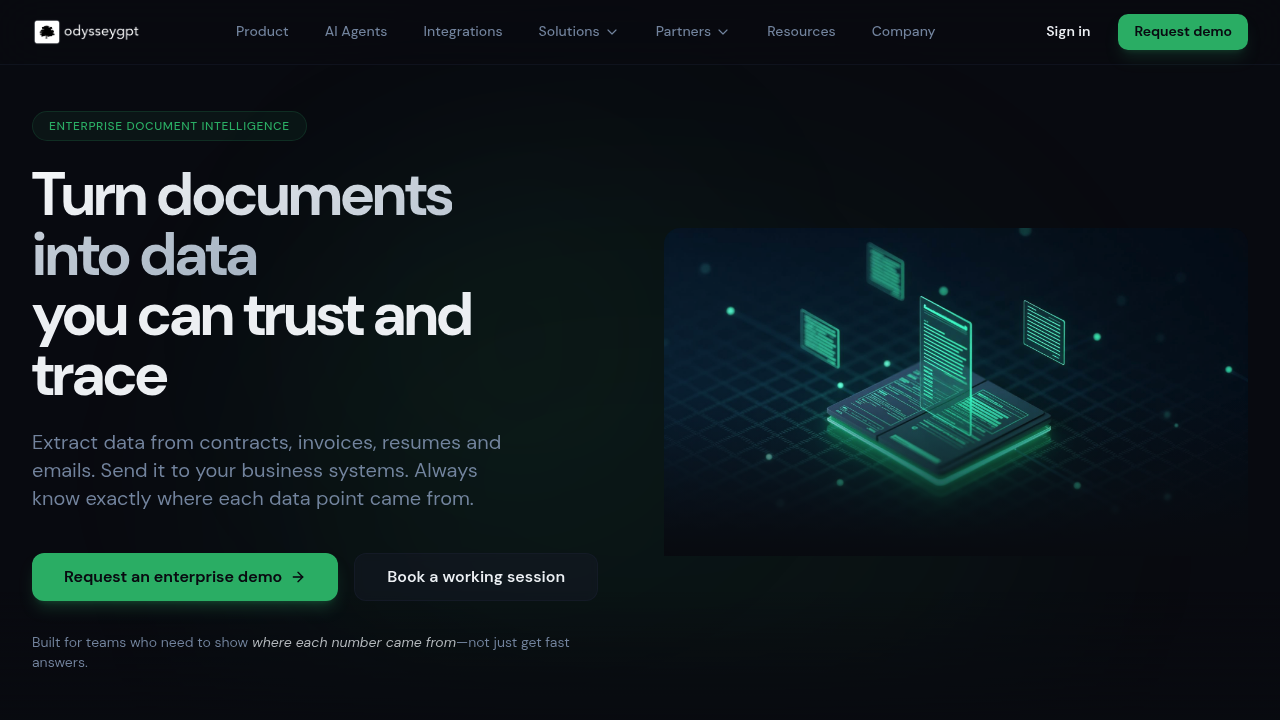
This enterprise document intelligence system treats unstructured documents as data sources that need extraction pipelines with full traceability. The system processes contracts, invoices, resumes, emails, and support tickets by running them through three sequential AI agents: intake and classification, extraction and structuring, then validation and checking.
The citation-backed architecture links every extracted value to its exact source location. When the system pulls a payment term from an invoice or a contract date from a legal agreement, it maintains a reference to the specific page and paragraph where that information originated. You can click any data field and jump directly to the source text. This isn't just about getting answers quickly. it is about proving where numbers came from.
The extraction pipeline handles different document types with specialized logic. For contracts, it identifies clauses, dates, parties, and terms. Invoice processing breaks down line items, taxes, and payment terms, then validates them against existing vendor records and purchase orders. Resume parsing converts unstructured candidate information into structured profiles that flow into applicant tracking systems. Support tickets get auto-tagged with extracted product names, version numbers, and error codes.
The system flags exceptions when data doesn't match expectations or existing records. These exceptions route to human reviewers through configurable approval workflows. Every workspace supports role-based access, and the system logs every question, answer, and data export for audit purposes. This audit trail matters for compliance teams who need to reconstruct how decisions were made.
Integration architecture connects to NetSuite, Salesforce, Workday, Greenhouse, Zendesk, and Jira, plus broader categories of HRIS, ATS, CRM, accounting, and ticketing systems. The solution also connects to legal tools, compliance software, business intelligence platforms, and case management systems. Documents flow in, structured data flows out to these systems.
The company claims review speeds improve five to ten times compared to manual processing. That performance gain comes from automating the reading and initial structuring, not from eliminating human oversight. The validation agent and exception flagging assume humans still make final calls on ambiguous cases.
Built by New Odyssey, this system emphasizes transparency over pure speed. The technical limitation inherent in any document intelligence system is accuracy on edge cases. Unusual document formats, poor scan quality, or non-standard terminology will reduce extraction confidence. The citation system helps catch these issues since reviewers can verify suspicious extractions against source text.