
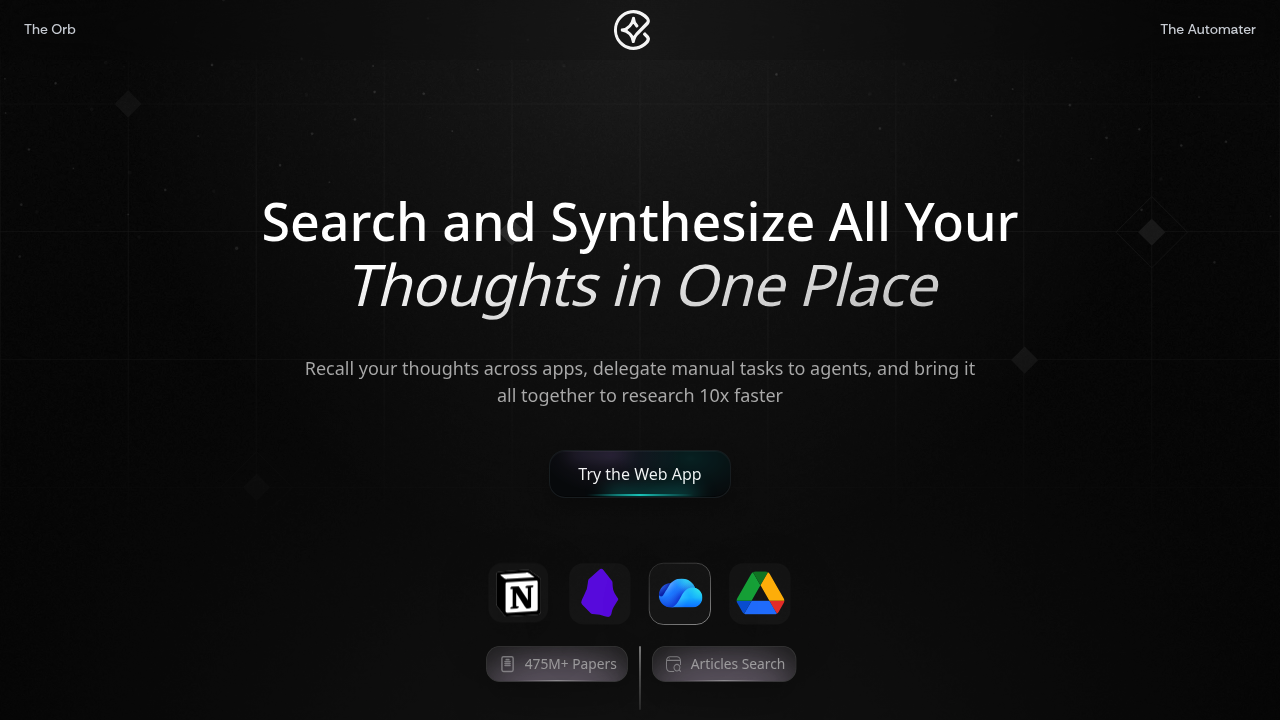
Opening Constella drops you into a system that ditches the usual file cabinet metaphor entirely. Instead of hunting through folders or scanning document titles, you search for thoughts the way they actually exist in your head, fragmented, connected, scattered across different apps and contexts.
The interface centers around something called The Orb, which acts as your main entry point. You can pull up information from multiple sources at once without switching between apps or tabs. That scattered research from last week, the note you left in one app, the document sitting in another — they all surface together when you search. The system's built to remember context across these different places rather than treating each app as its own isolated silo.
When you need to actually do something with all that information, The Automater steps in to handle repetitive tasks. You can delegate manual work to agents instead of clicking through the same sequences yourself. It's meant to free up time, though the extent of what these agents can actually handle isn't spelled out in detail.
For researchers, there's access to over 475 million papers through the articles search feature. That's a massive database to pull from when you're trying to track down specific studies or build out a literature review. This feature claims research happens ten times faster this way, though that kind of speed boost obviously depends on what you're comparing it to.
Stella Messages serves as the AI assistant woven throughout. You get twenty messages per day on the paid plan, which might feel restrictive if you're the type who fires off dozens of queries when you're deep in a project. That daily cap could interrupt your flow right when you need it most.
The app works on both desktop and mobile, so you can capture thoughts or search for information regardless of where you're. There's also a local-only option that keeps everything on your device if you're privacy-conscious or just don't want your data syncing to the cloud.
The free tier gives you all essential features but locks you into local-only mode. The paid plan runs six bucks a year and opens up the desktop experience, mobile app, and those twenty daily messages from Stella. That's unusually cheap for an annual subscription, though it's worth noting what you're actually getting for that price versus staying local.
Constella targets a wide spread — professionals, researchers, creatives, founders, people with ADHD who struggle with traditional organization systems. Anyone tired of forgetting where they saved something might find this approach refreshing.