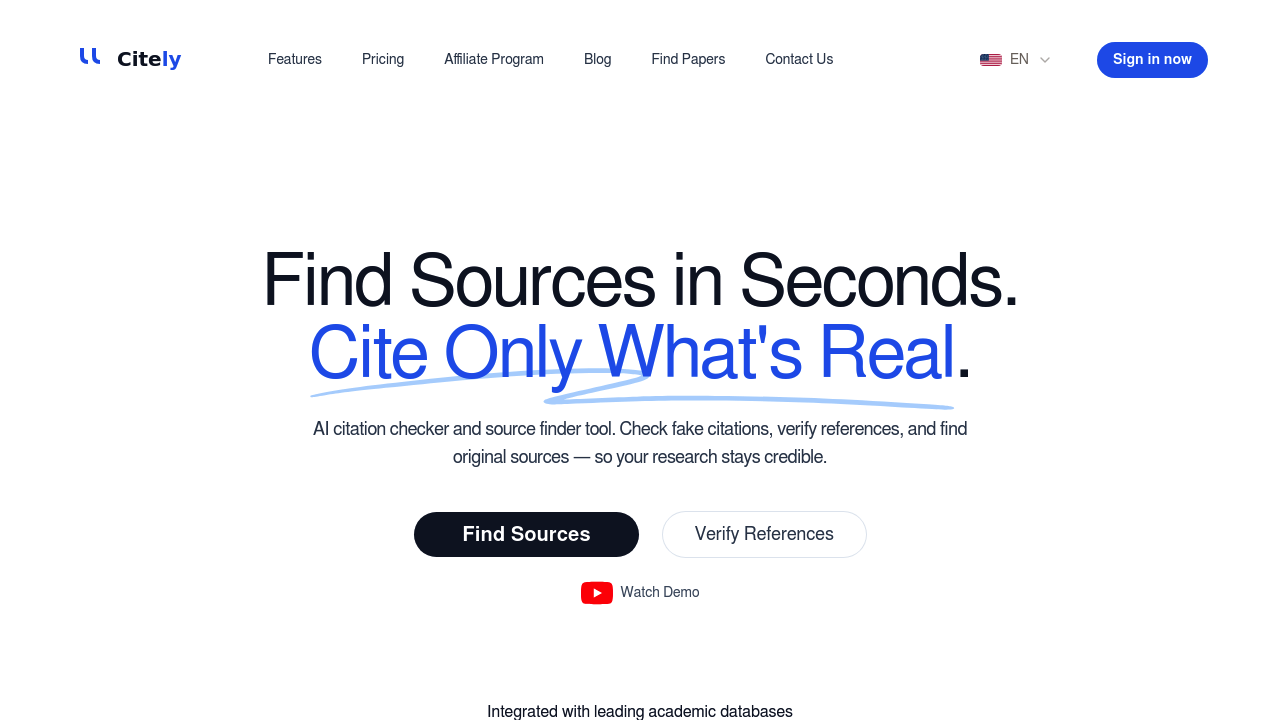
Academic citation fraud poses real problems for researchers who unknowingly reference fabricated papers. Citely tackles this verification challenge head-on with AI algorithms that scan citations and flag ones requiring closer examination. This system connects directly to CrossRef, PubMed, arXiv, and Google Scholar to cross-reference every citation against authoritative academic databases.
The AI Source Finder sits at the center of Citely's functionality. When you need to verify a reference or locate an original source, it searches across these four integrated databases simultaneously. The advanced search algorithms prioritize peer-reviewed sources, pulling results from trusted academic repositories rather than general web content. This matters when you're building a bibliography and need confidence that every listed paper actually exists in the scholarly record.
Citation detection runs automatically once you input your references. The AI examines each citation's format and metadata, comparing details against database entries to identify mismatches or suspicious patterns. When it finds a citation that doesn't align with known publications, it marks that reference for manual review. This automatic flagging saves researchers from manually checking hundreds of citations one by one.
The AI Research Assistant adds conversational support to the verification process. You can ask questions about specific citations, request guidance on validating sources, or get help interpreting verification results. The chat interface handles citation-related queries while the background algorithms continue checking references.
Fake reference detection represents Citely's specialized focus. This platform specifically targets fabricated academic papers, those invented citations that slip into bibliographies through carelessness or deliberate fraud. By cross-referencing against established databases, it catches references to papers that never went through peer review or never existed at all.
Students writing dissertations benefit from catching citation errors before submission. Academics preparing manuscripts for journal publication can verify every reference meets editorial standards. Researchers conducting literature reviews gain confidence their foundational sources actually exist in the scholarly record. Professors reviewing student work can quickly identify bibliography problems that suggest either sloppy research or academic dishonesty.
Citely's value shows most clearly in high-stakes academic contexts where citation accuracy affects credibility. A single fake reference in a published paper damages author reputation and journal integrity. Citely positions itself as preventative infrastructure, catching these problems before they reach publication or peer review. The database integrations provide the verification backbone while the AI handles the pattern recognition that flags suspicious citations worth investigating further.