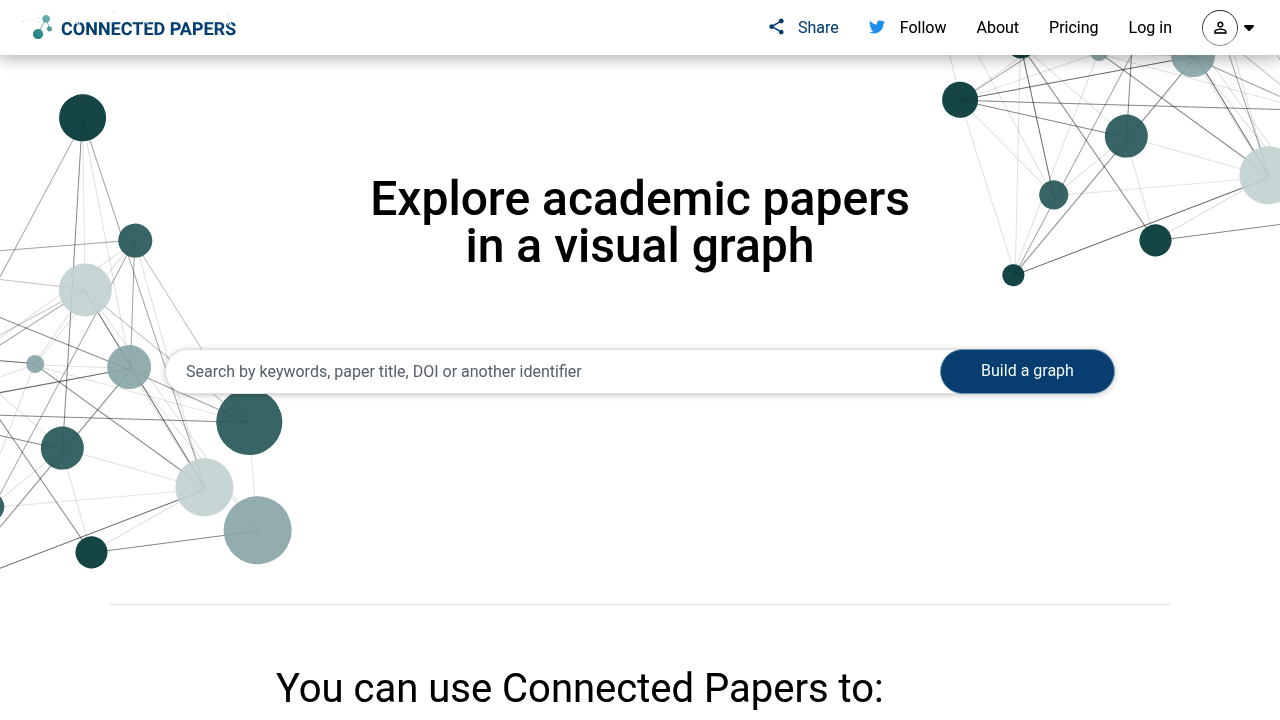
Connected Papers analyzes roughly 50,000 papers to build each similarity graph it creates. Paste a DOI or paper URL. Get a visual network showing related research based on overlapping citations rather than direct citation chains.
The graphs cluster similar papers together using force-directed visualization. Papers with highly overlapping references sit close to each other even when they don't cite each other directly. You can trace the shortest path from any paper back to your starting point.
Say you're a machine learning researcher exploring transformer architectures. You'd input a key transformer paper and Connected Papers would surface related work on attention mechanisms. Neural language models too. Architectural innovations that share similar citation patterns round out the results. Prior works view helps you find foundational papers while derivative works point toward recent developments.
Multi-origin graphs let you compare multiple papers simultaneously. Connected Papers draws from hundreds of millions of papers in its database through Semantic Scholar integration. It accepts URLs from arXiv. PubMed works. Semantic Scholar links go right through.
You get five free graphs monthly with full features included. The free limit hits quickly if you're doing serious literature exploration. Academic plans run $6 monthly for unlimited graphs while business accounts cost $20 monthly.
Biology students use Connected Papers to map unfamiliar research territories. Philosophers do too. Researchers across scientific fields rely on it. The saved papers feature and graph history help you track your exploration over time.