
Literfy logo
AI Research Papers FREEMIUM from $19/mo

Literfy

Literfy is an AI literature review generator that combines paper search with review writing in one workflow.

A single query runs across Google Scholar, PubMed and Semantic Scholar, and Literfy generates the search expressions for you. Results can be filtered by year, venue and citation count, saved to a library and exported as…

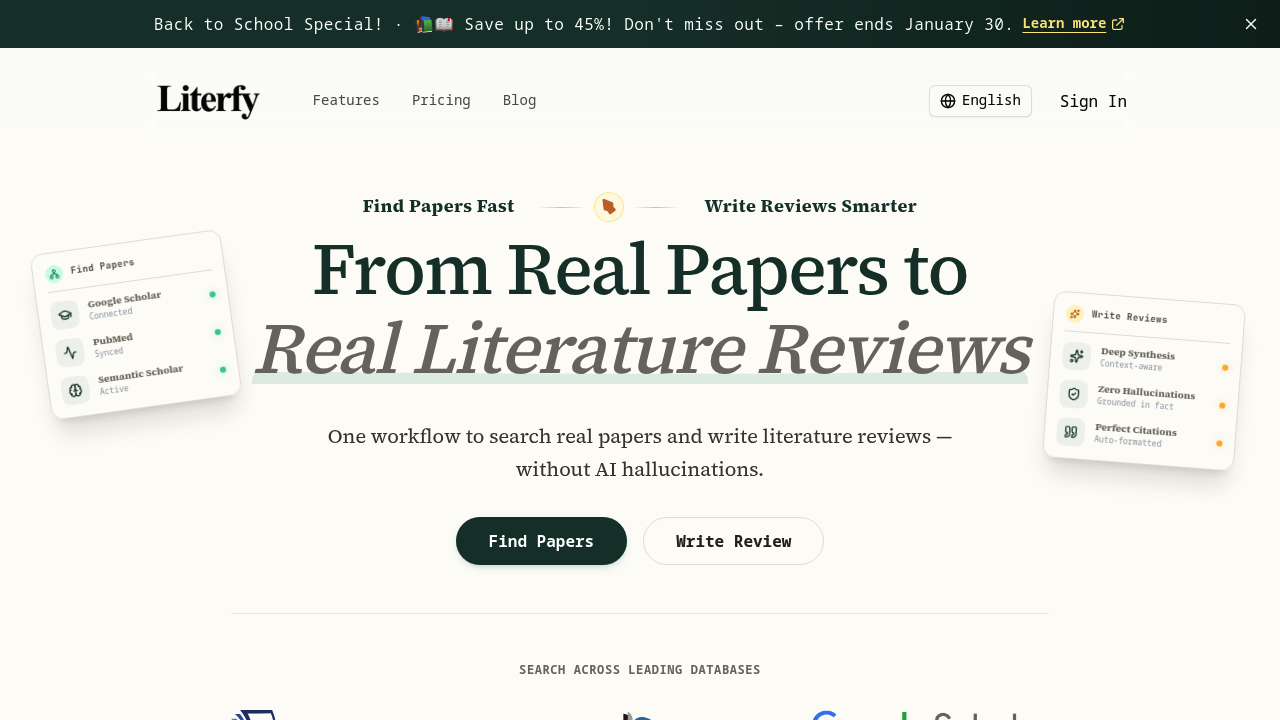
Literfy screenshot

Literfy is an AI literature review generator that combines paper search with review writing in one workflow. A single query runs across Google Scholar, PubMed and Semantic Scholar, and Literfy generates the search expressions for you. Results can be filtered by year, venue and citation count, saved to a library and exported as BibTeX or PDFs. From the papers you save, it builds an outline and drafts review sections with linked citations, so every claim traces back to a real source rather than an invented reference.

Literfy fits people who write literature reviews as part of their work: PhD candidates preparing a thesis chapter, master's students facing a first systematic review, postdoctoral researchers drafting related-work sections, and oncology or social science researchers who need to scan a large body of papers quickly. Librarians who help others build search strategies can use the generated search expressions as a starting point. It also suits anyone who writes in LaTeX, since citations export in BibTeX form that drops into Overleaf.

A typical workflow starts with a research question typed into the search box. Literfy returns papers from three databases, and you shortlist the seminal ones. The outline builder then turns the shortlist into a section-by-section structure that you can edit and reorder by dragging. A full draft follows, with an introduction and thematic sections that cite the saved papers. Topic clusters help you spot gaps in your sources before peer review, and the export step sends references to reference managers or Overleaf. Teams preparing grant background sections or related-work chapters for conference papers use the same loop.


Literfy alternatives

See all →

Frequently asked

6 questions
How does Literfy find papers?
Search expressions are generated from your question and then run on Google Scholar, PubMed and Semantic Scholar together. Results can be filtered by year, venue and citation count and saved to a personal library.
Who is Literfy built for?
Academics, graduate students and research librarians who write literature reviews. Fields mentioned by its users include information science, oncology and history.
Can Literfy write a full literature review?
It builds an outline from the papers you saved and then generates a draft with an introduction and thematic sections. Each summary carries citations linked to the source paper, and you can edit the outline section by section.
What export options does Literfy offer?
Citations export as BibTeX that is ready for Overleaf, and PDFs can be exported when needed. Search results can also be exported straight from the search view.
What are the limits of Literfy's search?
Coverage is limited to the three connected databases: Google Scholar, PubMed and Semantic Scholar. Papers that none of them index will not appear, so specialist archives need to be searched separately.
How do I get started with Literfy?
Type a research question into the Find Papers search, pick your sources and shortlist results. A free trial is advertised, and the saved papers then feed the outline and writing steps.

Traffic

Estimated monthly website visits · last 9 months

6.3K visits/mo
Monthly visits
6.3K
↓ 44.6% MoM
Global rank
#3,073,342
US #3,061,345
Category rank
#25
AI Research Papers
39.8K 29.8K 19.9K 9.9K 0 Nov 2025: 0 visits Nov 2025 Dec 2025: 0 visits Dec 2025 Jan 2026: 88 visits Jan 2026 Feb 2026: 21.4K visits Feb 2026 Mar 2026: 16.5K visits Mar 2026 Apr 2026: 39.8K visits Apr 2026 May 2026: 15.5K visits May 2026 Jun 2026: 11.4K visits Jun 2026 Jul 2026: 6.3K visits Jul 2026

Reviews (0)

Write review

No reviews yet. Be the first to share your experience.