
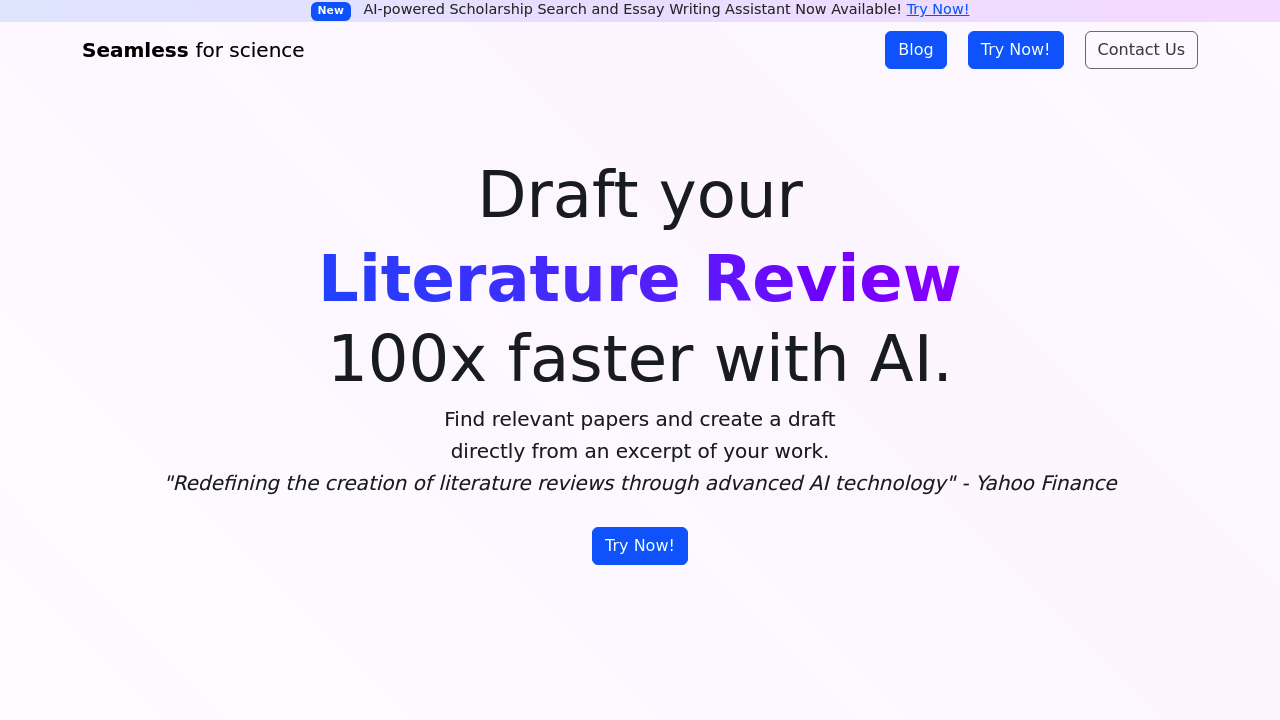
Students writing literature reviews usually face a brutal choice: spend days hunting through academic databases or let an AI hallucinate references that don't exist. Seaml.es tries to split that difference by connecting language models to Semantic Scholar's database of real research papers. You describe what you're researching and it generates a literature review with actual citations you can verify.
The service runs on three core tools. The literature review generator searches scientific papers and drafts analysis sections in what they claim is about an hour instead of a week. The scholarship search crawls databases for funding opportunities based on your profile and lets you save searches with reminders when new matches appear. The essay assistant provides real-time feedback while you write applications and checks whether your draft aligns with specific scholarship requirements.
Does it actually work? Over 20,000 students and researchers apparently use it. The grounding in Semantic Scholar's database means you're getting references to papers that actually exist, which matters more than most people realize. The system checks your scholarship essays against requirements automatically, which could save you from obvious misalignments before submitting.
Here's where it gets limited. The training focuses exclusively on scientific data, so if your research touches fields Semantic Scholar doesn't cover well, you'll hit gaps. Seaml.es uses a credit system for access but the facts don't specify how many credits you get or what they cost. That's frustrating when you're trying to budget for academic tools. You can't tell if casual use is affordable or if serious research will drain credits fast.
The scholarship search lets you add opportunities via URL, which suggests the built-in database isn't complete. Saved searches help, but you're still doing manual discovery work. The essay feedback sounds useful for non-native English speakers especially, though "advanced language enhancement" doesn't tell you much about what it actually fixes.
The comparison to general chatbots makes sense. Those tools confidently cite papers that don't exist. Seaml.es at least pulls from a real database. But that database has limits and the credit system creates uncertainty about ongoing runs.
Best fit — grad students doing lit reviews in well-covered fields. Undergrads hunting scholarships who need essay help. Researchers who want citation groundwork done faster. Less useful for interdisciplinary work or anyone needing transparent pricing before committing. This software solves a real problem but leaves basic questions unanswered.