#4 in AI Audio Enhancer Auphonic logo
AI Audio Enhancer FREEMIUM from $8/mo

Auphonic

Small teams building audio content don't need a dedicated sound engineer

Auphonic handles the technical work automatically. It processes everything from podcast episodes to educational videos without requiring any audio expertise from creators. Content gets the full treatment here. Noise…

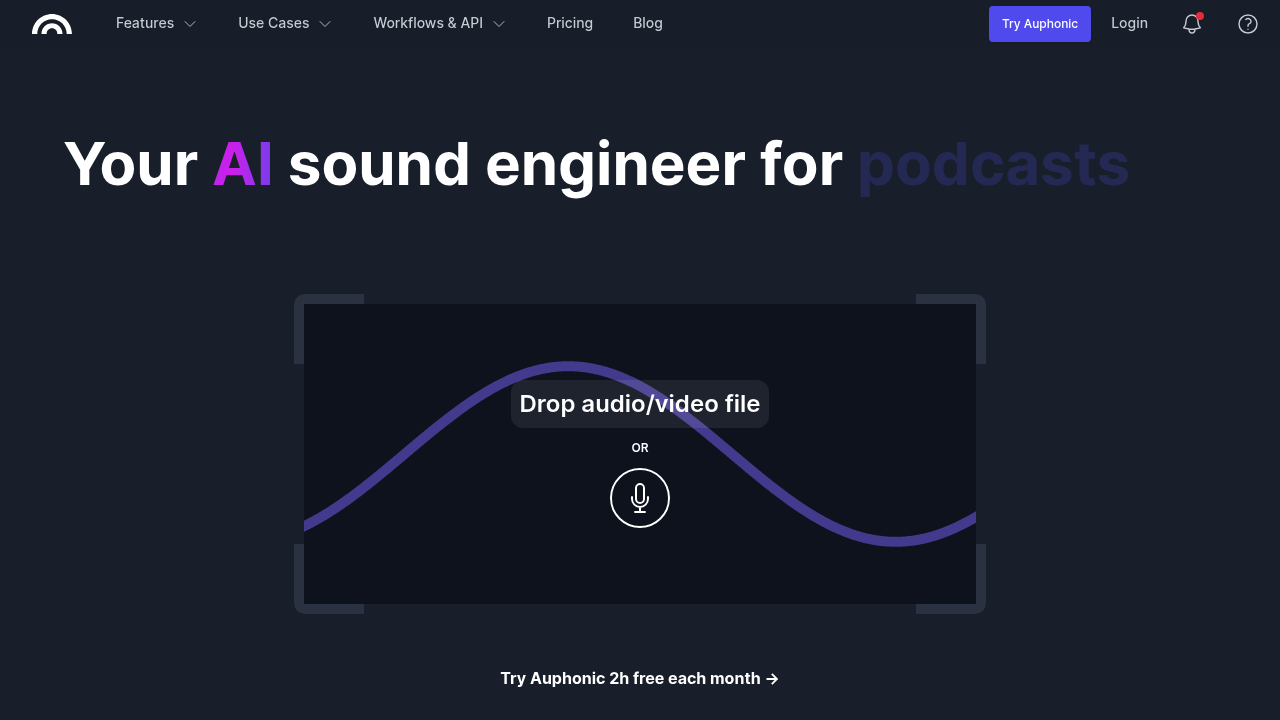
Auphonic screenshot

Small teams building audio content don't need a dedicated sound engineer. Auphonic handles the technical work automatically. It processes everything from podcast episodes to educational videos without requiring any audio expertise from creators.

Content gets the full treatment here. Noise reduction happens behind the scenes. Intelligent leveling too. Automatic EQ adjustments round it out. Auphonic cuts filler words and silence gaps while normalizing loudness to meet broadcasting standards.

A YouTube educator recording lectures at home can upload raw footage and get back polished audio that meets professional standards. The denoising editor lets you pick exactly where noise reduction kicks in — rather than applying blanket processing to entire files.

Recent updates show active development. Auphonic added RMS-based loudness normalization for Audible submissions and automatic music segment cutting. There's also a new status page and API improvements for breath timing exports.

Multitrack processing handles complex productions while the Speech2Text feature generates automatic show notes. Watch folders monitor directories for new uploads and process files automatically. Publishing workflows can push finished content directly to hosting platforms without manual file transfers.

Auphonic targets content creators across podcasting, education, video production, audiobooks, and radio. Missing pricing details makes it hard to budget for ongoing projects. Integration with Audible and ACX simplifies audiobook production workflows for independent authors and publishers.

Auphonic alternatives

See all →

Frequently asked

7 questions
How does Auphonic's denoising editor work differently from automatic processing?
The denoising editor lets you pick specific sections where you want noise reduction applied -- instead of hitting the whole file uniformly. You get control over which parts need cleaning while leaving other sections alone. It's super useful when background noise changes throughout a recording or you want to keep certain ambient sounds.
Can Auphonic handle multitrack recordings like interviews with multiple microphones?
Yep, Auphonic handles multitrack productions automatically. It works with complex setups where different speakers are on separate tracks. The system applies noise reduction, leveling, and EQ to each track while keeping the overall balance intact.
What's the difference between Auphonic's RMS and LUFS loudness normalization?
Auphonic recently added RMS-based loudness normalization specifically for Audible audiobook submissions (they use different standards than broadcast content). LUFS normalization follows broadcasting standards for podcasts and video. The system automatically picks the right type based on where you're planning to distribute.
Does the Speech2Text feature in Auphonic generate timestamps for show notes?
Yes, it creates automatic show notes with timing info. Recent API improvements also added breath timing exports -- giving you detailed data about pauses and breathing patterns. This helps with creating precise chapter markers or making editing decisions.
How do watch folders work for automated Auphonic processing?
Watch folders monitor specific directories on your system and automatically process any new audio files that show up. Drop a file into the monitored folder and Auphonic picks it up, runs it through your preset processing chain. The finished file can then get automatically published to your chosen hosting platforms -- no manual work needed.
What broadcasting standards does Auphonic normalize audio to meet?
Auphonic normalizes loudness to meet professional broadcasting standards using LUFS measurements. It handles the technical requirements for different platforms automatically. For audiobooks, it applies the specific RMS-based standards that Audible and ACX require.
Can I integrate Auphonic directly with audiobook publishing platforms?
Yes, Auphonic integrates with Audible and ACX for direct audiobook workflow management. Independent authors and publishers can process their recordings and push them straight to these platforms -- no manual file transfers needed. The system applies the correct audio specs for audiobook submission automatically.

Traffic

Estimated monthly website visits · last 9 months

968.2K visits/mo
Monthly visits
968.2K
↓ 0.4% MoM
Global rank
#43,201
US #46,297
Category rank
#4
AI Audio Enhancer
972.3K 944.1K 916K 887.8K 859.7K Nov 2025: 965.9K visits Nov 2025 Dec 2025: 940K visits Dec 2025 Jan 2026: 925K visits Jan 2026 Feb 2026: 859.7K visits Feb 2026 Mar 2026: 909.5K visits Mar 2026 Apr 2026: 878.2K visits Apr 2026 May 2026: 963.1K visits May 2026 Jun 2026: 972.3K visits Jun 2026 Jul 2026: 968.2K visits Jul 2026

Reviews (0)

Write review

No reviews yet. Be the first to share your experience.