
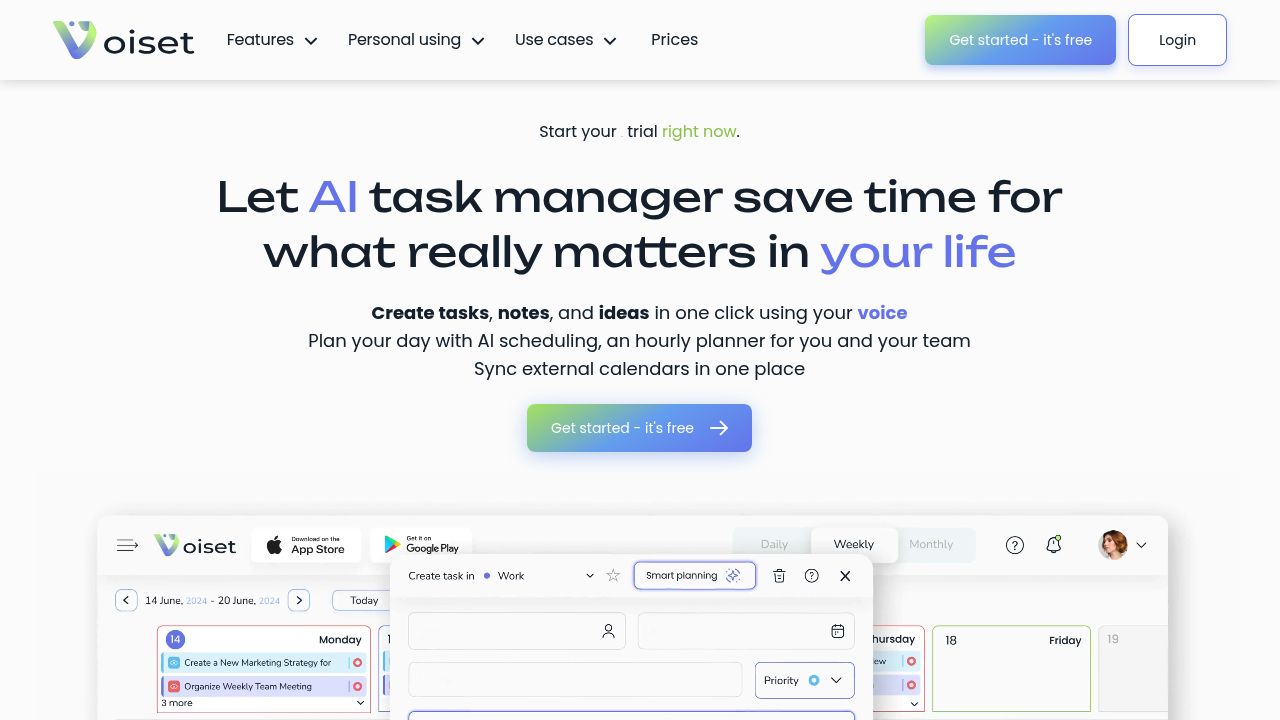
Speaking into your phone to capture a fleeting thought transforms it into a scheduled task with assigned priority before you've even finished your sentence. Voiset converts voice input into organized tasks, notes, and calendar entries through AI scheduling that syncs with Google Calendar, Outlook, and Zoom. The system assigns tasks automatically, suggests priorities, and distributes work across shared workspaces where personal errands sit alongside project deadlines. More than 4,000 businesses rely on it to reclaim up to two hours daily, cutting morning planning routines by 30 minutes and eliminating five to ten missed reminders each week. This system learns user habits to adapt scheduling around actual workload patterns, functioning as a round-the-clock planning assistant.
Small business owners juggling client meetings and operational tasks find the voice-first approach particularly useful when hands are occupied. Real estate agents moving between property showings use voice memos and status marking to update task progress without stopping to type. Students managing coursework across multiple subjects benefit from automatic priority suggestions that surface urgent assignments. Field teams—construction crews, delivery drivers, maintenance workers—mark task statuses and record updates through voice while on location, with changes instantly visible to coordinators back at the office. The shared workspace structure accommodates both solo users organizing personal schedules and teams distributing responsibilities across members and physical locations.
The voice assistant handles task creation during commutes, walks between meetings, or any moment when pulling out a keyboard feels impractical. Notes spoken aloud convert automatically into actionable tasks with suggested time slots and deadlines, removing the mental overhead of deciding when something should happen. Calendar synchronization means tasks created through voice appear alongside existing appointments, giving a unified view of available time. Messenger notifications keep teams updated without requiring constant app checking. For roles requiring documentation—service calls, site inspections, client interactions—voice memos capture details that would otherwise require stopping work to type, saving roughly half the time typically spent on information entry while maintaining thorough records.