
You write test cases in plain English. Verex converts them into automated browser tests. It eliminates the traditional cycle—manual scripting and constant code maintenance—that bogs down QA teams.
Evaluation tokens act as currency for test execution. One token covers one step in an end-to-end browser test. You can trigger tests through the UI. You can also fire them directly from Slack, Teams, or your CI/CD pipeline. When tests run, Verex captures detailed screenshots. It generates instant reports. Something breaks? It automatically logs bugs to Jira or Trello with all the context developers need.
QA engineers benefit most. Instead of spending 50+ hours monthly writing test scripts, you get fully automated creation. Verex generates its own test data too (no more manual setup for different scenarios). Onboarding takes two minutes according to Verex.
The free plan gives you 200 evaluation tokens—a one-time credit. Tests max out at six steps and five minutes per run. You're limited to one team member. Average tests consume four to ten tokens. Those 200 credits won't last long if you're serious about continuous testing.
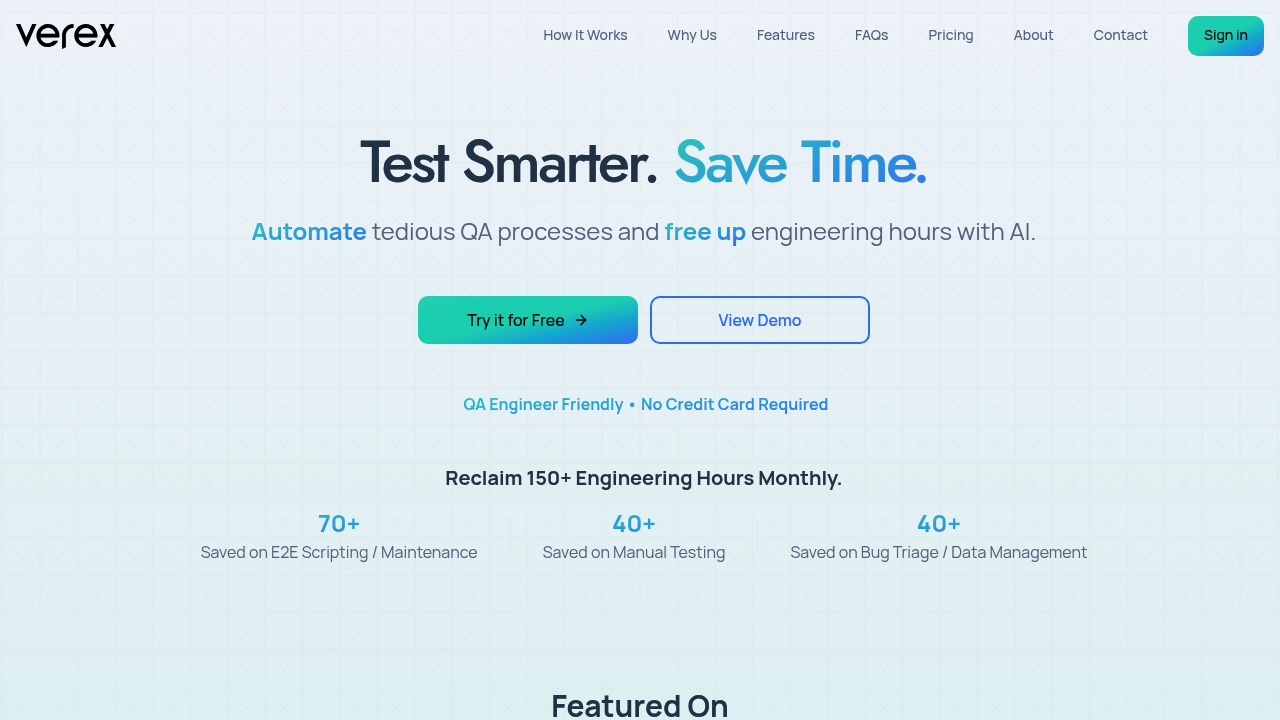
Companies report saving 150+ engineering hours monthly after switching. Bug resolution speeds up by three times. Visual debugging tools show exactly where things went wrong. You don't need to reproduce issues manually. Verex integrates with GitHub, GitLab, Jenkins, and other standard development tools.