
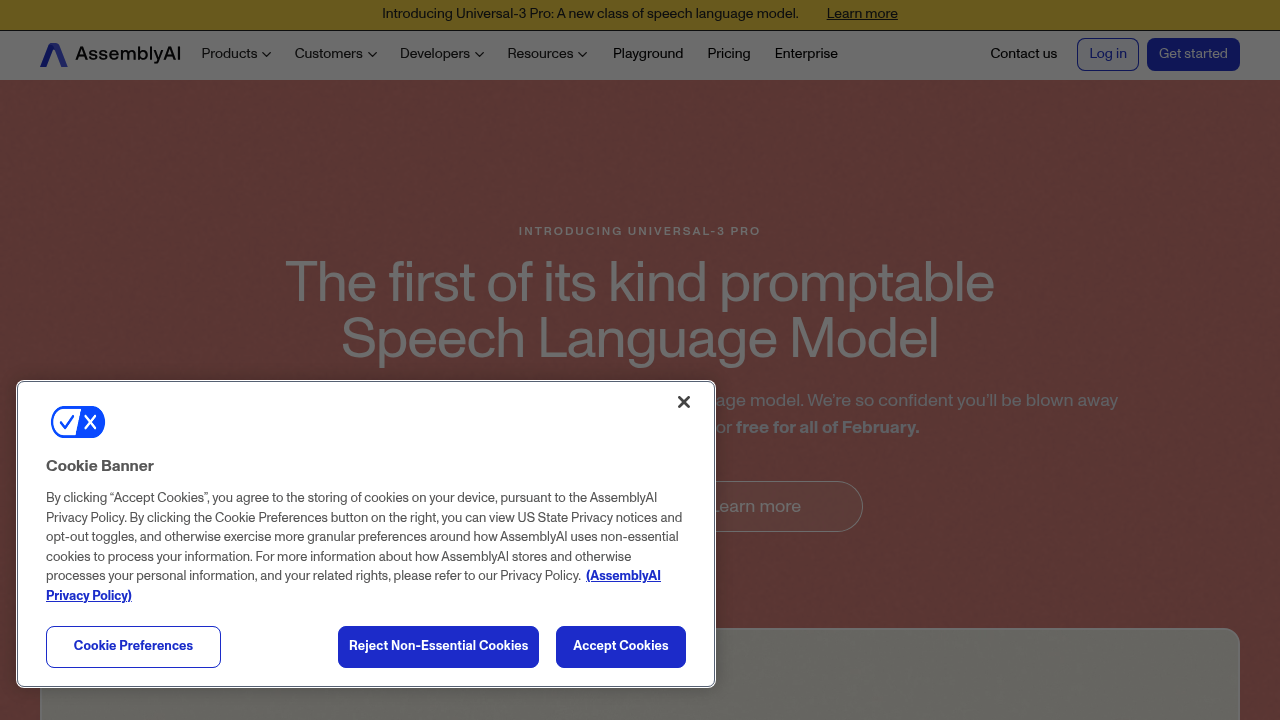
Speech recognition APIs often struggle with accuracy across different accents, background noise, and audio quality. Universal-3 Pro by AssemblyAI tackles these challenges head-on with what appears to be their latest speech-to-text model. Specific performance metrics aren't available though.
Universal-3 Pro works through API calls. Mobile apps can use it. Desktop applications too. Developers can integrate it without worrying about platform limitations.
A podcast producer working with international guests would find this useful — they could send audio files from remote interviews and get transcriptions back without manual cleanup work.
The API approach means you're not tied to a specific interface or device. Mobile developers building voice note apps can use the same endpoints as desktop teams creating meeting transcription software. This flexibility matters when you're building across platforms.
Without concrete pricing details or feature specifications, it's hard to evaluate the value proposition fully.
The "Pro" designation suggests this isn't their entry-level offering, which typically means better accuracy but higher costs. AssemblyAI has been in the speech recognition space for years, so Universal-3 Pro likely builds on their existing infrastructure. The company positions this as an upgrade to previous models, though the actual improvements remain unclear from available information.