Speed matters more than you'd think here. Speechmatics processes speech in under a second. It hits 90% accuracy in English. It runs 60% faster than its closest competitor. When you're building a voice agent that needs to feel conversational rather than robotic—that latency difference becomes the whole ballgame.
You get support for 55+ languages with solid accent handling. Speechmatics tracks multiple speakers in real-time through diarization. Your agent knows who said what and when. It handles noisy environments and overlapping speech without falling apart. Custom dictionaries let you teach it domain-specific terms. Unusual names that'd trip up generic models? No problem.
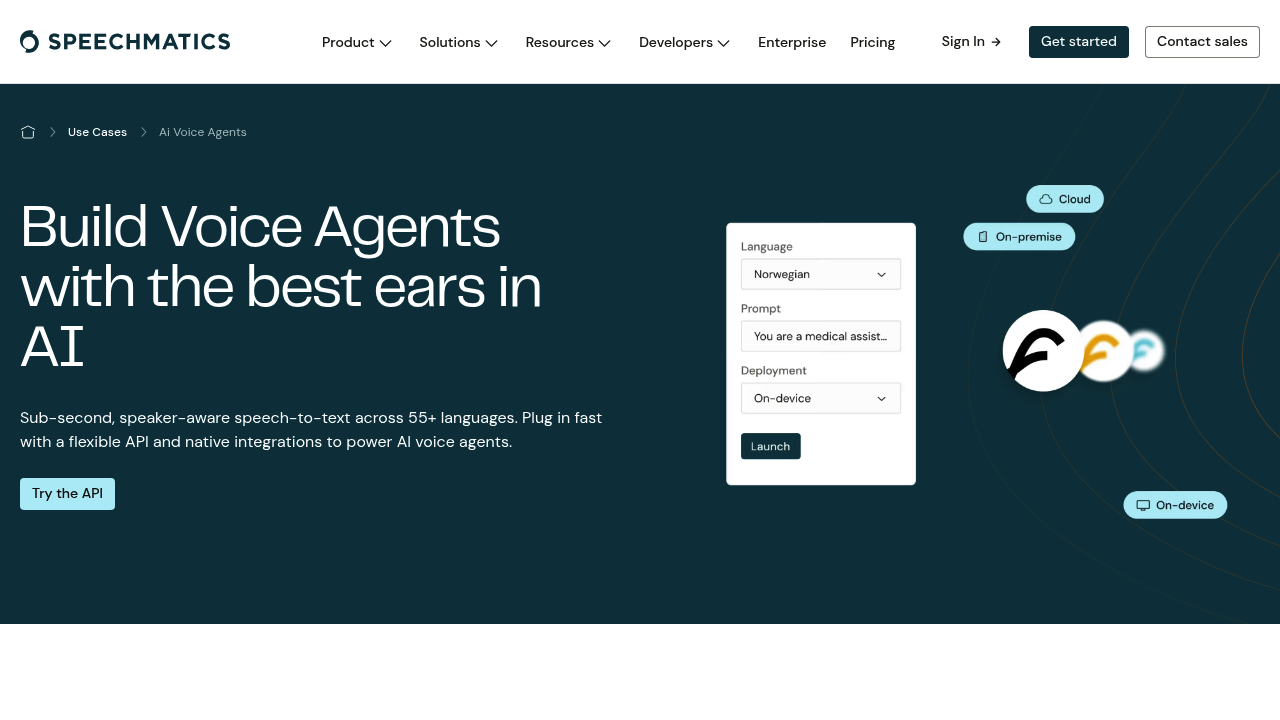
Deployment flexibility runs the full spectrum—cloud, your own cloud infrastructure, on-premises, or directly on-device. It scales automatically during traffic spikes (no manual intervention needed). Simple APIs and SDKs for Python, JavaScript, and React get you running quickly. Native integrations with LiveKit, Pipecat, and Vapi mean less glue code.
A contact center manager building 24/7 support automation would find this useful. Healthcare developers working on voice-driven EHR updates would too. Restaurant chains automating drive-thru ordering? Same story. Entity formatting and custom dictionary features shine when you're dealing with addresses. Alphanumerics get handled well. Industry jargon that standard speech recognition mangles? Speechmatics processes it correctly.
If you're building a simple voice interface that doesn't need multi-speaker tracking—you're probably paying for capabilities you won't use. Sub-second responses might be overkill for your use case. The G2 recognition (Highest Adoption Fall 2024, Most Likely to Recommend Winter 2025) suggests the developer experience holds up in production environments.