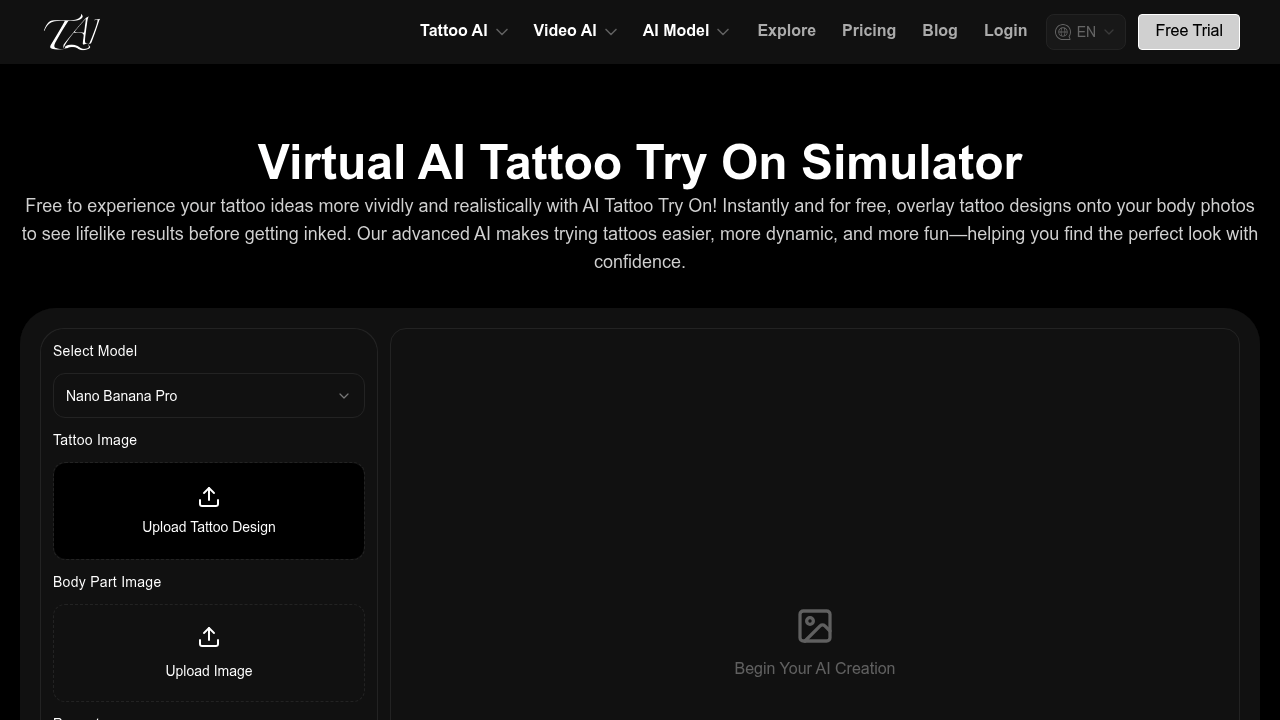
Using intelligent image recognition and pattern mapping, Tattoo AI Design | Try On simulates how tattoo designs will appear on your actual body before you commit to permanent ink. Upload a photo of yourself, select or generate a tattoo design through text prompts, and this application overlays the artwork with automatic adjustments for angle, skin tone, and body contours. It recognizes specific body parts including forearms, upper arms, back, legs, neck, and abdomen, fitting designs precisely to match natural curves and proportions. Beyond try-on capabilities, it generates custom tattoo artwork from text descriptions and even creates tattoo videos. Free users receive 60 initial credits plus 20 daily credits for normal-quality generations, while paid plans start at $9.99 monthly for 4000 credits with high-quality output, watermark removal, and commercial usage rights.
This service serves people considering their first or next tattoo who want confidence before visiting a studio, as well as tattoo artists who need professional presentation tools for client consultations. Artists can showcase multiple design variations quickly, helping clients visualize placement and style options without hand-drawing mockups or relying on verbal descriptions alone. This software also fits independent designers creating tattoo concepts for portfolios or social media content, and individuals exploring body art aesthetically without immediate commitment to the needle.
The try-on simulator works for typical tattoo decision workflows: comparing sleeve designs on your forearm, testing whether a back piece suits your body frame, or evaluating how neck tattoos integrate with existing ink. Tattoo studios can incorporate this system into consultation sessions, letting clients experiment with size adjustments and color variations in real time rather than committing based on flat sketches. The text-to-design generator handles requests for specific styles or symbolic elements, producing custom artwork that feeds directly into the try-on feature. Users maintain 15-day generation history on free accounts or 365-day archives with paid subscriptions, allowing gradual refinement of ideas over weeks or months. The credit system accommodates both casual exploration and professional workflows requiring dozens of iterations per project.