
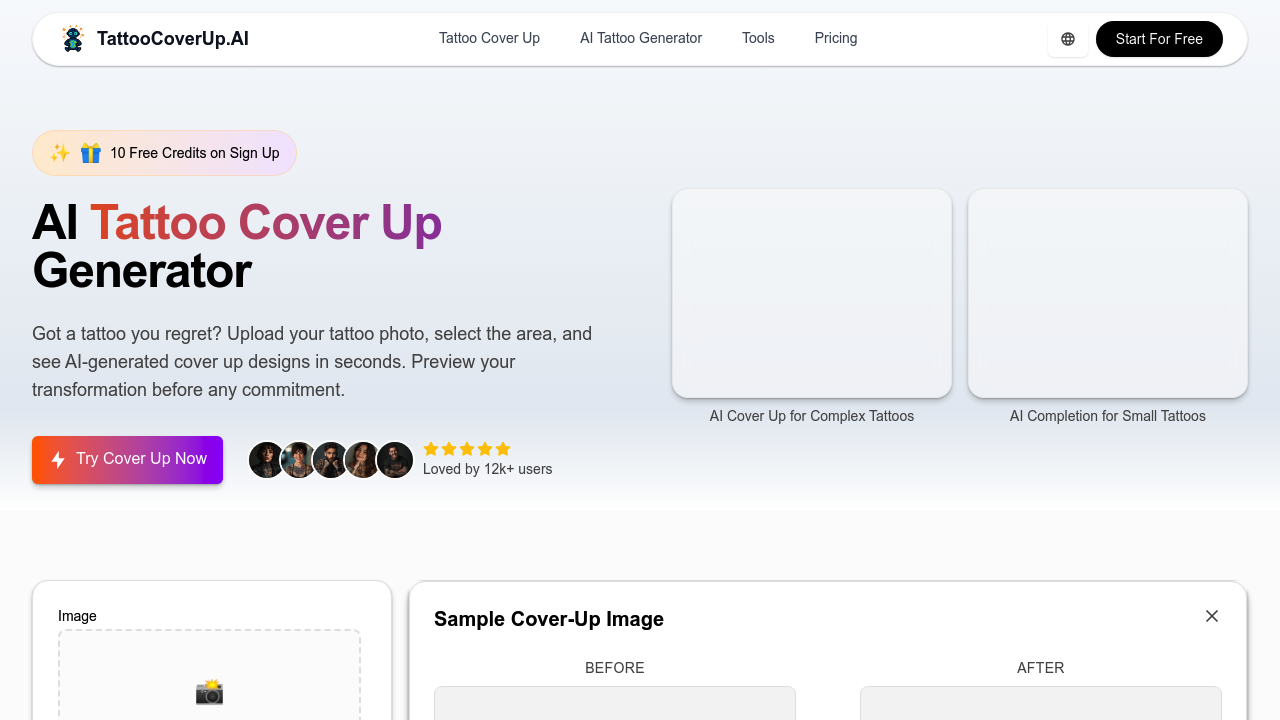
Upload a photo of your unwanted tattoo, select the area you want covered, and this system spits out AI-generated cover-up designs in seconds. That's the pitch. The execution? More complex than the marketing suggests.
The system understands tattoo cover-up principles (color theory, size requirements, placement logic). You get a rectangle selection tool to mark exactly what needs hiding. Pick from 23 styles ranging from Traditional and Neo Trad to Cyberpunk and Trash Polka. The AI applies designs directly onto your photo so you see what a cover-up might actually look like before booking an artist.
Two model tiers exist. Standard runs fast and costs 9 credits per generation. Pro delivers higher quality output but requires a Standard+ subscription. The system handles small tattoos with an AI completion feature and tackles complex pieces with dedicated cover-up logic. You can input custom ideas to guide the generation.
What actually works: The style variety's solid. 23 options give range most tattoo explorers need. The direct photo preview beats abstract concept art — you're seeing proposed coverage on your actual skin. File support covers JPEG, PNG, and WEBP up to 10MB. The AI grasps that cover-ups need to be larger and darker than the original ink, which matters.
Where it stumbles: That 10MB file cap's tight for high-res photos. You need clear shots or the AI can't work properly. The credit system feels opaque — 9 credits for Standard generation, but how fast do credits burn through experimentation? Pro styles lock behind a subscription tier with zero pricing transparency. The limitation list mentions "1 free use" after initial credits run out, but doesn't clarify renewal terms or restrictions.
You get 10 free credits at signup. One generation on Standard model eats 9 credits. That's basically one real attempt before deciding if you're paying. The facts claim 12,000+ users love it, but that number lacks context. Loving what? The free preview? The paid results?
Best fit: Someone researching cover-up options before committing thousands to actual tattoo work. The preview capability has value there. Worst fit: Anyone expecting production-ready tattoo stencils. This generates ideas and rough visualizations, not artist-ready templates.
The system does one thing clearly — shows what covering your tattoo might look like across different styles. Whether those previews match what a skilled artist would actually design? That's the gap between AI output and human expertise no system admits upfront.