
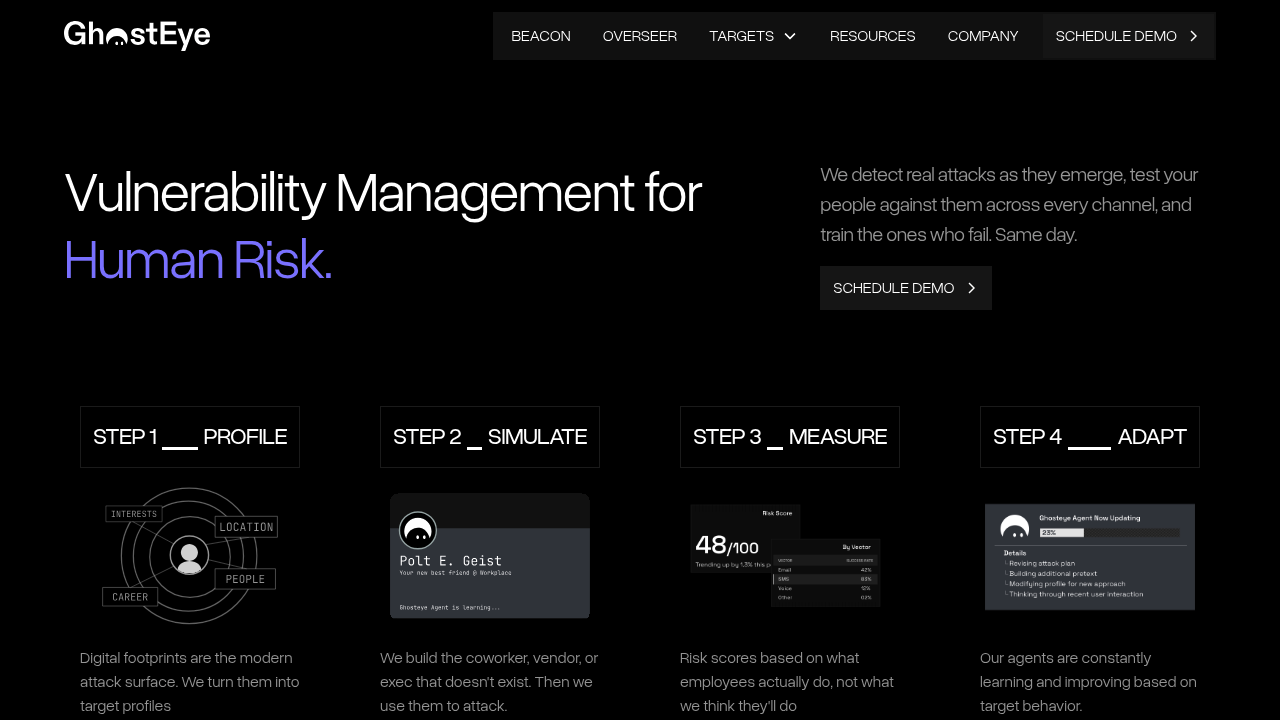
Your employees face the same attacks real hackers deploy right now. Ghosteye watches for threats targeting your organization—then runs simulations based on those exact tactics. Someone fails? Training happens that same day.
IRIS builds human exposure maps by scraping digital footprints and identity fragments. This reveals who's most vulnerable and why. Then Ghosteye creates disturbingly realistic attacks: fake coworkers, vendors requesting wire transfers, executives demanding urgent action.
Here's the interesting part—AI voice agents actually call your help desk and attempt social engineering. Password resets. MFA bypass attempts. Access grants. If your outsourced support team falls for it, you'll know before actual attackers exploit the same weakness.
These agents adapt based on responses. They learn. They improve their approach mid-simulation. You're not getting canned scenarios from 2019. Risk scores come from actual behavior (not theoretical predictions). Training uses spaced repetition to build lasting habits instead of checkbox compliance.
Traditional security awareness training feels like watching corporate videos from the 90s—generic warnings, static templates. Everyone knows they're being tested. Ghosteye operates differently. It mirrors real attacker reconnaissance and tactics across every channel employees actually use.
The downside? This level of realism might make some workers paranoid about legitimate communications. But that's the trade-off when simulations match what hackers actually do. No sanitized scenarios. No obvious tells. Just real-world attack patterns adapted to your organization's specific vulnerabilities.