
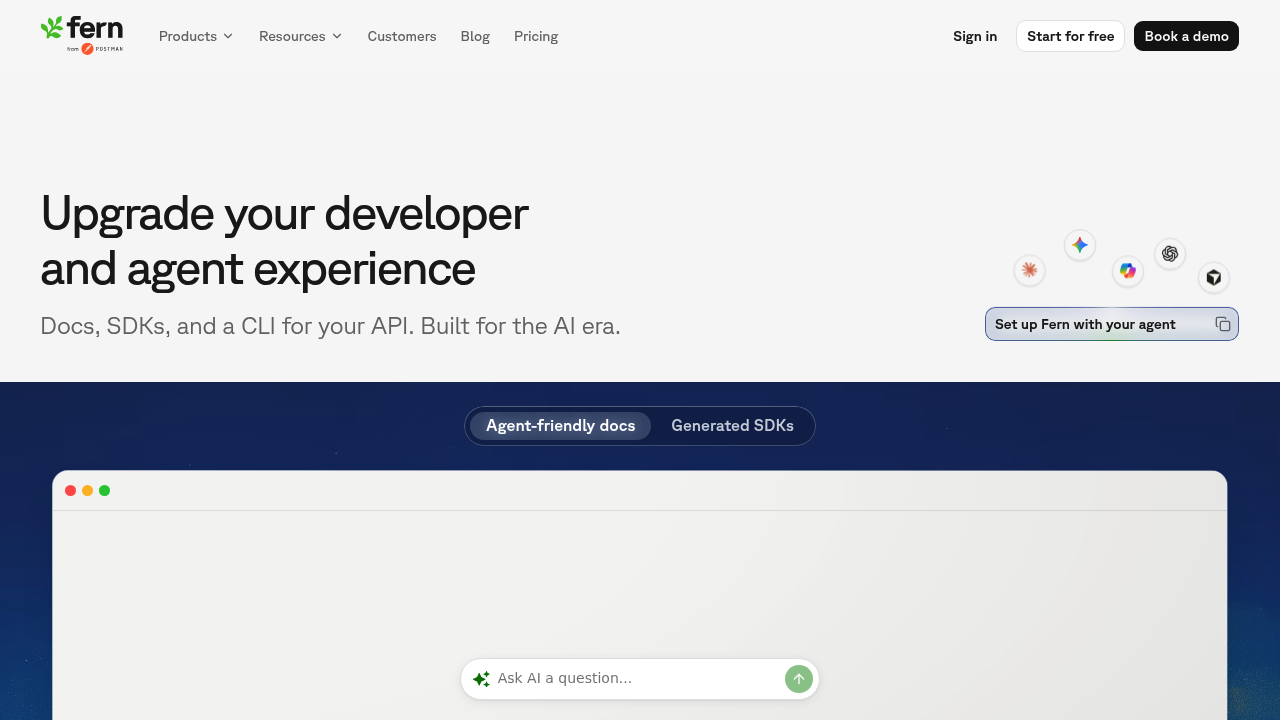
Fern is a developer platform that produces documentation websites, client libraries and a command-line interface for an API from one definition. It accepts OpenAPI, GraphQL, AsyncAPI and gRPC specs and covers REST, WebSockets and server-sent events. Docs come with search, an Ask AI assistant, an MCP server and llms.txt so that coding agents can read them, and the SDKs are generated for several languages. A trust center lists SOC 2 compliance, and a free start option is offered. Fern also provides a changelog view, versioned navigation and API reference pages with a built-in request console.
The product is for API providers: developer-experience engineers, technical writers, platform teams and startups that want polished docs without maintaining them by hand. Companies whose customers integrate through SDKs gain from having typed clients generated whenever the API changes. Engineering managers who care about how AI agents consume their documentation can check an agent-readiness score and tune content for it.
Typical workflows include publishing a branded docs site at docs.yourcompany.com with an interactive API reference, generating TypeScript and other SDKs on each release, and keeping changelogs current. A team launching a voice agent API, for example, can document endpoints such as create agent and let developers try requests in the browser. Customers also use AI-enhanced code examples and search to cut the time to a first API call, while agents fetch markdown versions of pages to write integration code and open pull requests. Public usage figures cite over 20 million docs pages served per year and more than 15,000 SDKs generated, which shows the scale of teams publishing through it.