ReadMe logo
AI Developer Tools FREEMIUM from $250/mo

ReadMe

ReadMe builds interactive API documentation that developers can read, test and search.

You import an OpenAPI file by URL or upload, then write guides, recipes, a changelog and discussion forums in a WYSIWYG editor, in Markdown, or from your own IDE through bi-directional sync with GitHub and GitLab. An…

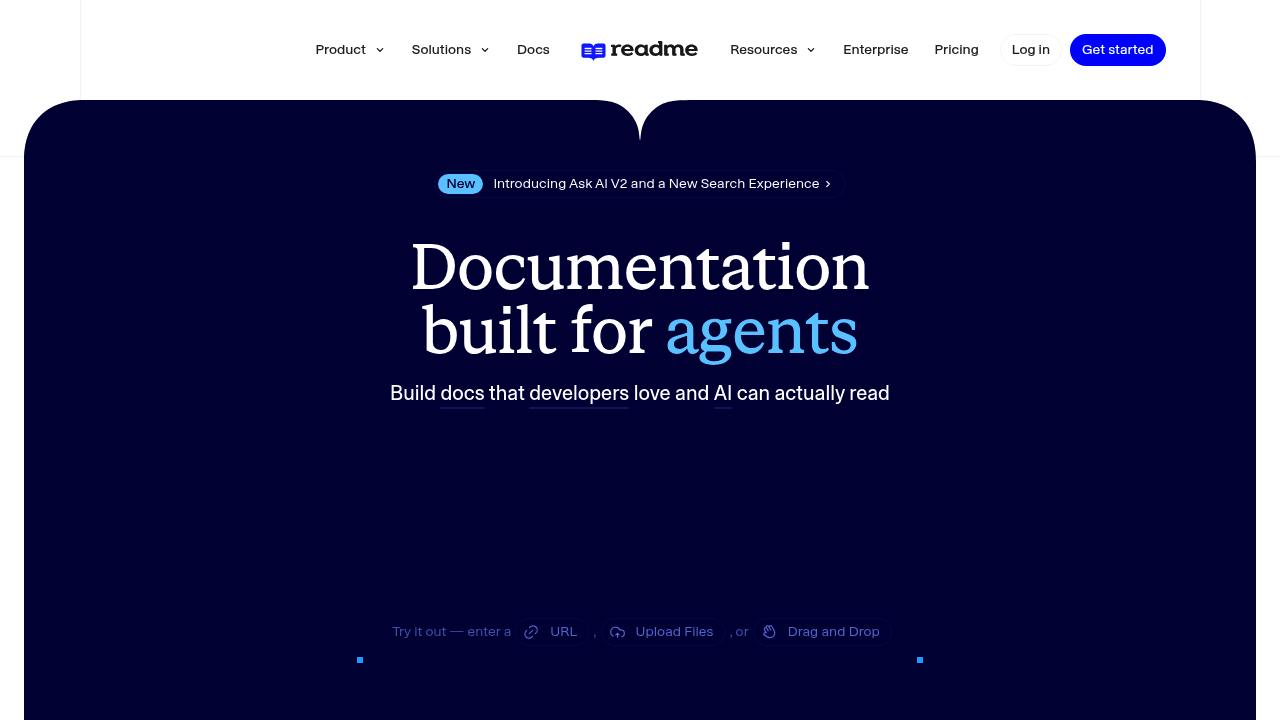
ReadMe screenshot

ReadMe builds interactive API documentation that developers can read, test and search. You import an OpenAPI file by URL or upload, then write guides, recipes, a changelog and discussion forums in a WYSIWYG editor, in Markdown, or from your own IDE through bi-directional sync with GitHub and GitLab. An Ask AI search assistant, an AI Linter that enforces your style guide, and a built-in MCP server and LLMs.txt file keep the docs usable by AI agents as well as people. The Starter plan is free for one project with a custom domain, an interactive API reference and usage metrics. Pro costs $250 per month billed annually, and Enterprise is custom priced.

The product suits API companies, developer relations teams, technical writers and product managers who treat documentation as part of the product. Small startups can publish a branded docs site on the free Starter plan without a developer building a portal. Growing teams on Pro get multiplayer editing, branching and reviews, private docs and custom MDX components so several writers can work in parallel. Larger organizations use Enterprise for multiple combined projects, SSO, role-based access, audit logs and dedicated support. Engineers who prefer working in a repository can keep docs in Git and let writers edit in the browser.

Typical uses include launching a public API reference with a try-it console, writing step-by-step recipes that walk through common integrations, and publishing a changelog so customers see releases as they ship. Teams migrate existing docs from another platform by importing an OpenAPI file or Markdown, then review proposed edits on shared branches before merging. Companies add a help center or SDK documentation beside the API reference, connect Google Analytics, Segment, Slack or Zendesk, and use usage metrics to see which endpoints and pages developers actually read. An MCP server lets coding assistants query the docs directly.

ReadMe alternatives

See all →

Frequently asked

6 questions
How does ReadMe keep documentation in sync with a code repository?
It offers bi-directional sync with GitHub, GitHub Enterprise Server and GitLab. Writers can edit in the browser while engineers work in their IDE, and branches can be reviewed, approved and merged inside ReadMe.
Who is ReadMe built for?
API providers, developer relations teams, technical writers and product teams that publish documentation for external developers. Customers include NVIDIA, Amazon and PagerDuty.
Can ReadMe generate an interactive API reference from an OpenAPI file?
Upload an OpenAPI (OAS) file or import it by URL and ReadMe builds an interactive API reference with an in-browser try-it experience. Guides, recipes and a changelog sit beside it in the same project.
What does ReadMe cost?
Starter is free at $0 per month for one project and one published version. Pro is $250 per month billed annually, while Enterprise is custom priced and annual only. The Ask AI add-on is $150 per month.
What are the limits of the free Starter plan?
The free tier covers one project and one published version, and leaves out teammates, branching and reviews, private docs, a landing page and custom MDX components. Those start on Pro, so a team that needs multiple writers has to upgrade.
Does ReadMe work with AI assistants?
An MCP server and LLMs.txt are included from the Starter plan so AI agents can read the docs. Ask AI, the AI Linter and the AI writer agent are available on higher tiers or as add-ons.

Reviews (0)

Write review

No reviews yet. Be the first to share your experience.