Weaviate logo

Weaviate

Search that understands meaning

67 views
Visit weaviate.io
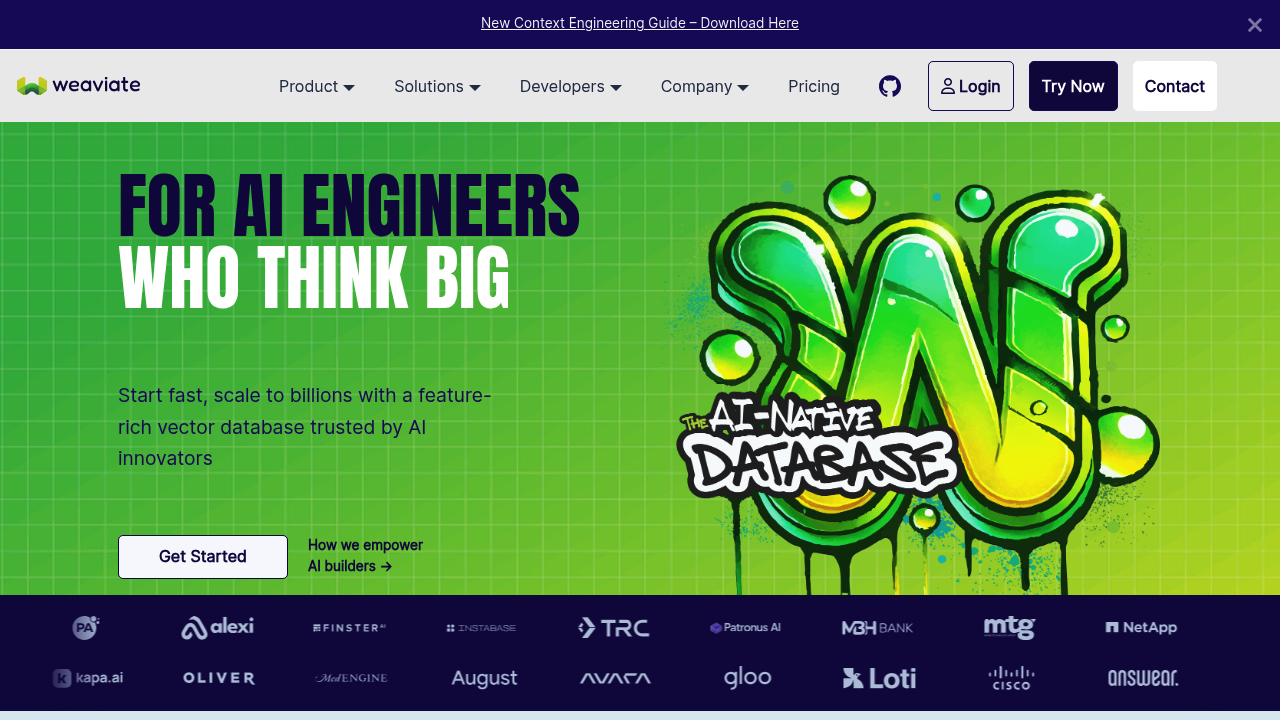
Weaviate screenshot

Build AI search systems that actually understand what users mean — not just what they type. Weaviate stores data as vectors. It runs searches that grasp context and meaning. Think customer service chatbots finding relevant info across thousands of documents. Or recommendation engines matching products to actual user intent.

Weaviate handles pure vector searches. Hybrid approaches too. These combine traditional and semantic methods. Built-in embeddings mean you don't need separate services. Database Agents automatically interact with your data. No manual intervention required.

AI engineers building production applications get the most value here. A machine learning engineer at an e-commerce company could use Weaviate to power product recommendations that understand "comfortable running shoes for rainy weather" rather than just matching keywords.

Over 50,000 developers already use it. Weaviate manages 42 million vectors in production. It processes 450 different data types. Those numbers suggest it can handle real-world scale.

You'll get Python SDKs. Go too. TypeScript and JavaScript. Plus GraphQL and REST APIs. Cloud integrations include AWS. Google Cloud. Snowflake. Databricks. Multi-tenant support means you can serve different customers from the same instance.

Don't expect this to work well if you're just getting started with AI. Simple keyword search? Look elsewhere. Weaviate makes sense when you're building sophisticated AI experiences that need to understand meaning — not just match text. The complexity pays off when you need search that actually gets what users want.

Frequently asked

7 questions
How does Weaviate's vector storage work differently from traditional databases?
Weaviate stores your data as mathematical vectors -- not rows and columns like regular databases. This means it actually understands what your content means. Search for 'comfortable running shoes for rainy weather' and it'll find relevant products even when they don't use those exact words.
Can I use my own embedding models with Weaviate or am I stuck with theirs?
You're not stuck at all! Bring your own models or use theirs -- totally up to you. The built-in ones are convenient since you don't need to manage separate services. But if you've got custom models that work great for your specific domain, just plug those in.
What's the difference between pure vector search and hybrid search in Weaviate?
Pure vector search only cares about semantic meaning. Hybrid search mixes that with old-school keyword matching. So when someone searches for a specific product name, hybrid makes sure exact matches pop up alongside similar items.
How much data can Weaviate actually handle in production?
Right now, Weaviate's managing 42 million vectors across all users in production. It handles 450 different data types too. The multi-tenant setup means you can serve multiple customers from one instance without things getting slow.
Do I need to know GraphQL to use Weaviate effectively?
Nope, GraphQL isn't required. You've got REST APIs if that's more your style. There are also SDKs for Python, Go, TypeScript, and JavaScript -- just pick whatever works with your current setup.
What happens with Weaviate's Database Agents and how much control do I have?
Database Agents run on autopilot with your data. They handle stuff like ingesting new content and optimizing queries. You set the rules and parameters, then they execute everything based on what you've configured -- no babysitting needed.
Is Weaviate overkill for simple search features?
Yeah, probably. If you just need basic keyword search, Weaviate's way more complex than necessary. It's designed for AI apps that need to understand user intent and context. Simple e-commerce filters or document searches? Traditional tools work just fine.

Reviews (0)

No reviews yet. Be the first to share your experience.

Similar tools

See all →