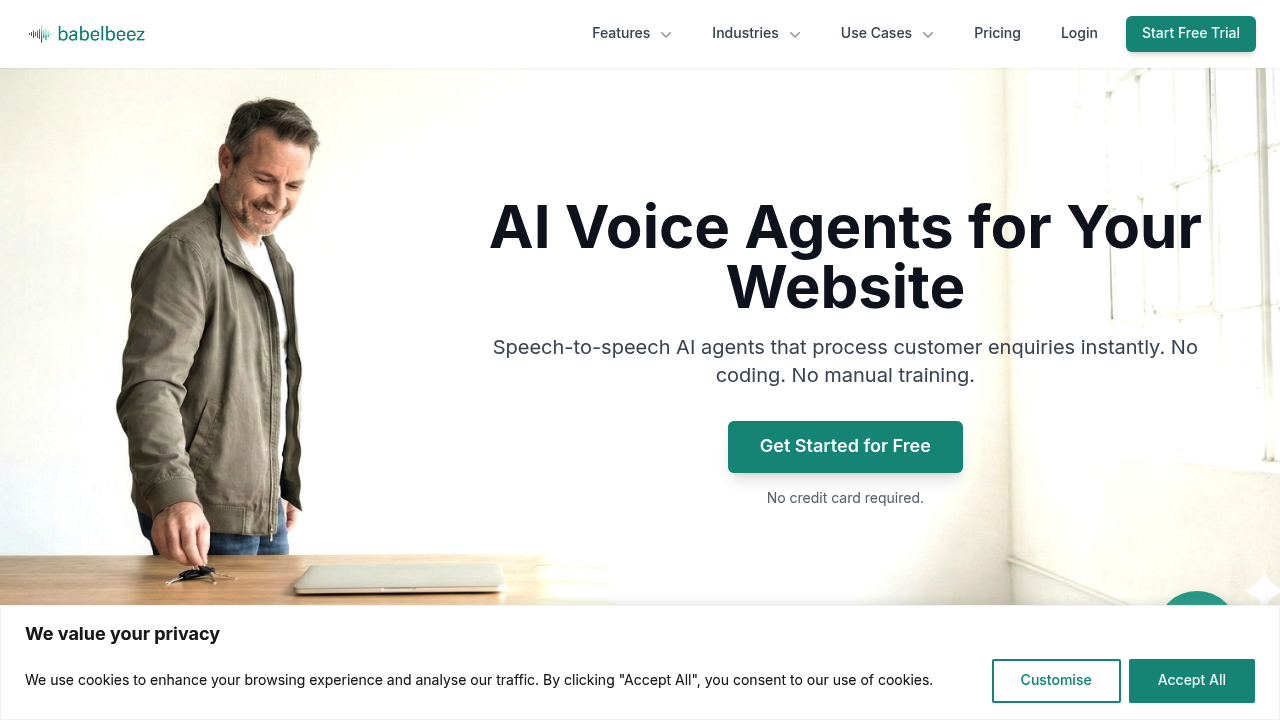
Babelbeez puts AI voice agents directly on websites to handle customer enquiries, support requests, and sales conversations through speech-to-speech interactions. This system automatically crawls your site to build its knowledge base, eliminating manual training, and supports multilingual conversations with automatic language detection. It offers preconfigured agent roles including Customer Service, Appointment Scheduler, Support, and Sales, plus workflow automation through webhook integration with Zapier, Make, and n8n. Babelbeez extracts entities like emails, names, and intent types, connects to tools like Calendly through its App Directory, and provides white-label options with SDK access. Setup takes five minutes using a one-line code snippet. A free plan includes three voice agents, roughly 30 voice minutes, and crawling of 10 webpages with full site crawl capability, plus trial access to automations and MCP apps.
This solution targets small and medium businesses looking to enhance website engagement without technical expertise or dedicated development resources. It serves business owners who want to automate customer interactions but lack the budget or infrastructure for traditional call centers. Teams handling appointment scheduling, customer support, or sales inquiries can deploy these agents without coding knowledge. The solution fits businesses that need instant response capabilities but don't have staff available around the clock, and companies wanting to test voice automation before committing to larger implementations.
Babelbeez works for e-commerce sites handling product questions and order status inquiries, service businesses managing appointment bookings through voice instead of forms, and support teams triaging common questions before human escalation. This tool integrates with existing workflows through webhooks, letting extracted customer data flow into CRM systems or trigger actions in connected apps. Businesses can upload PDF documents to give agents specialized knowledge beyond what's on the website, useful for technical documentation or policy information. The voice-first approach claims to be three times faster than text chatbots, making it suitable for users who prefer speaking over typing. Companies can maintain brand consistency through white-label deployment while keeping conversations encrypted end-to-end.