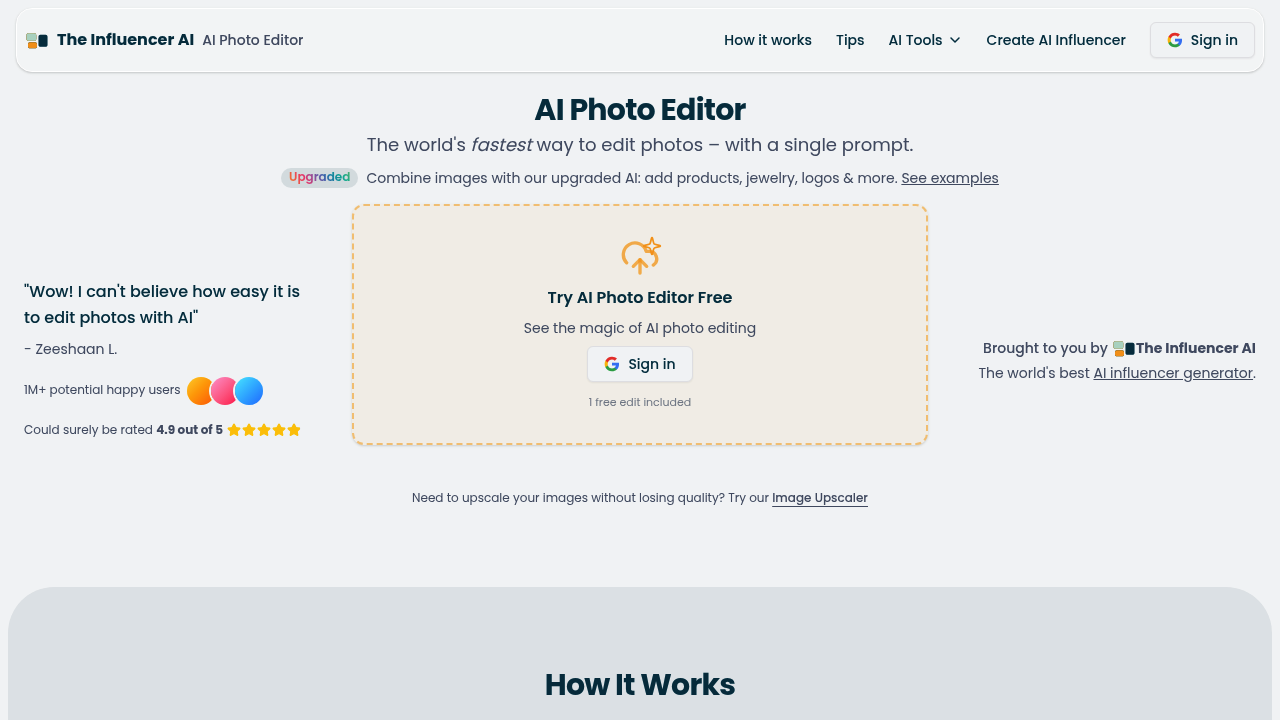
Text prompts replace traditional photo editing tools in this AI-powered editor built for quick visual transformations. Users type what they want changed and the system handles the technical execution, from swapping backgrounds to inserting objects into existing photos.
The core editing approach centers on single-prompt modifications. Type a description of the desired change and the software processes the request without requiring layer manipulation or manual selection tools. This method works for adding jewelry to product shots, placing logos on images, or inserting products into lifestyle scenes. The system handles image combining and merging, letting users overlay photos or insert one image into another through text instructions rather than manual positioning.
Background replacement happens through the same prompt-based system. Users describe the new background and the software generates the swap. Style transformations convert photos into different aesthetic formats, including vintage poster looks or photorealistic conversions from other image types. This service includes a profile view generator that creates side-angle versions of subjects and an image upscaler for resolution enhancement.
File handling accepts JPG, PNG, and WebP formats with a 6MB maximum size limit. This service implements daily data deletion, removing all uploaded photos and associated information at the end of each day. This privacy approach means images never get retained beyond 24 hours or used for training purposes. Quick submit functionality works through Cmd or Ctrl + Enter keyboard shortcuts.
New users get one free edit included upon signing in. This service markets itself to 1M+ potential happy users with a projected rating of 4.9 out of 5, though these represent aspirational rather than verified metrics.
The 6MB file size cap restricts high-resolution professional photography. Format support excludes RAW files and other specialized image types. The single free edit creates a hard stop for experimentation without payment commitment. Users report needing multiple attempts when combining images to achieve desired results, particularly with complex compositions. The software performs best with clean, well-lit item photos featuring transparent or simple backgrounds, meaning cluttered or poorly lit source images produce inconsistent outputs.
Content creators building social media posts find the quick editing useful for mockups. Ecommerce businesses use it for product staging without photoshoot costs. Marketers generate visual content variations without design software expertise. Anyone needing fast photo modifications for digital content can skip traditional editing software learning curves, though the prompt-based approach requires clear communication of visual goals rather than precise manual control.