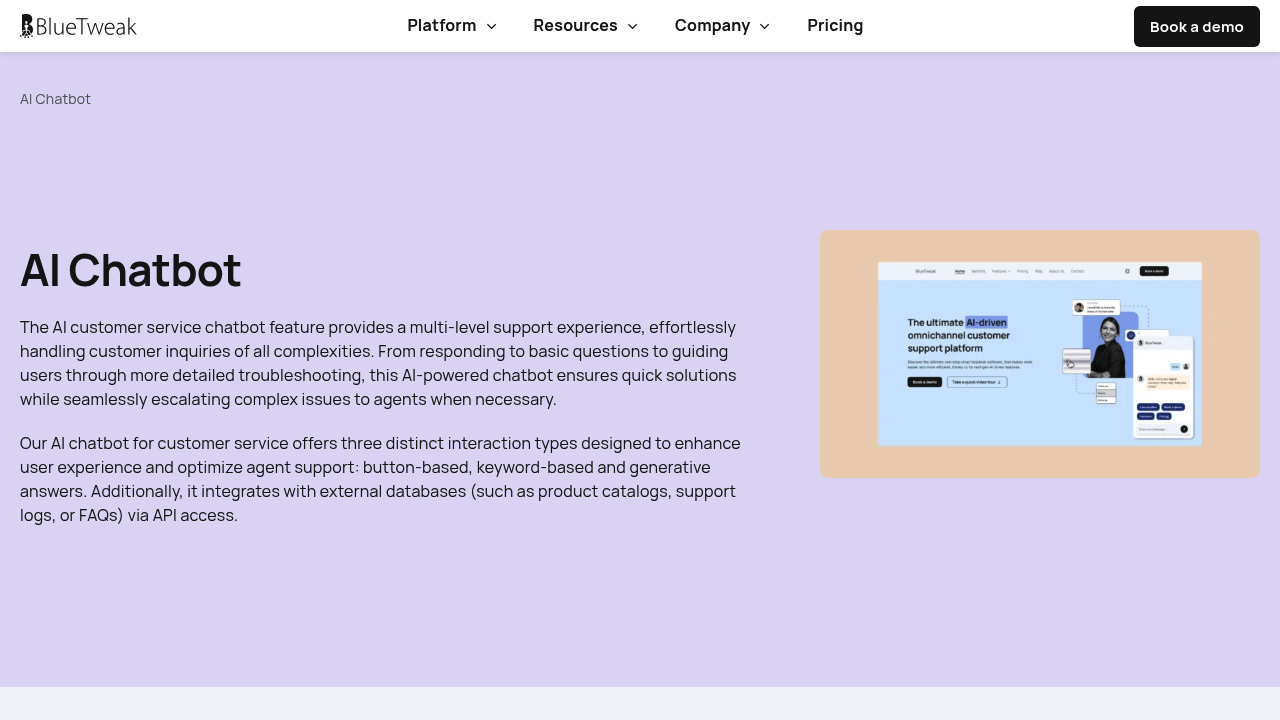
BlueTweak doesn't say who built the natural language processing engine powering its chatbot, which matters when you're trusting AI to handle customer conversations that could make or break retention. This system also skips mobile apps and browser extensions, locking you into whatever web interface it provides.
But the three-tier interaction model actually makes sense — button-based flows handle straightforward stuff like order tracking. Keyword detection catches mid-level questions without forcing customers through menus. Generative responses tackle the weird, specific problems that slip through predefined options. Most chatbots pick one approach. This one switches between all three based on what the customer needs.
The API connections do real work. The system pulls from product catalogs, support ticket histories, and FAQ databases to answer questions with actual data instead of generic placeholders. When someone asks about a specific product feature or past support case, the bot references the source material directly. That's different from chatbots that only know what you manually fed them during setup.
Human handoff happens without customers repeating themselves. The transition includes conversation context, so agents see what the bot already tried. Works around the clock, which helps if your customers span time zones or shop at odd hours.
Built for businesses that can't scale human support fast enough to match inquiry volume. If you're drowning in repetitive questions but still need humans available for edge cases, the multi-level approach handles both. Just know you're committing to a system without clear pricing information up front, and you won't find out what the database integrations actually cost until you talk to their team.