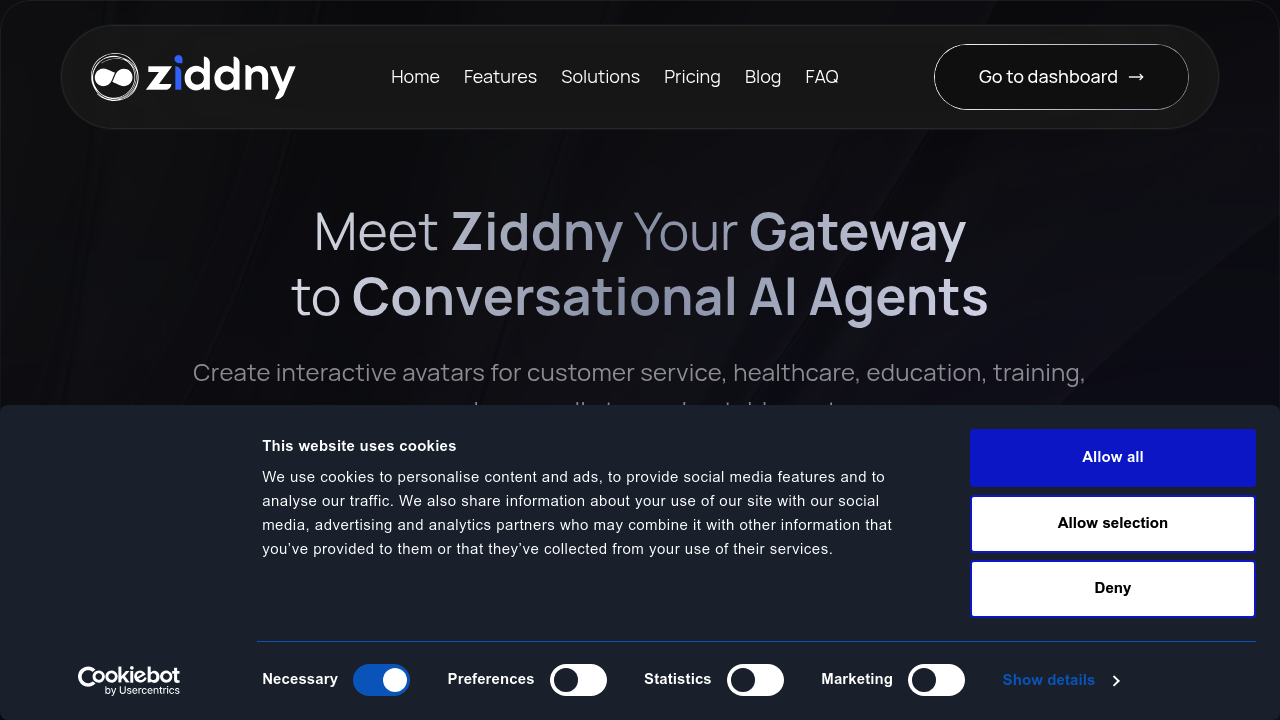
You land on Ziddny and immediately pick an avatar style. It gives you realistic, stylish, futuristic, voice-only, or fully custom options. Each avatar comes with natural emotions and gestures built in, so you're not staring at a robotic face. It speaks in over 40 languages.
Setting up the knowledge base happens next. You feed it documents, FAQs, whatever information the avatar needs to answer questions. The system lets you customize prompts that control how the avatar analyzes conversations and generates summaries. You can tell it exactly what data points to capture during sessions, which matters when you're tracking specific customer issues or patient symptoms.
The avatar goes live through a few paths. You embed it on your website using a script tag. Or you generate a shareable custom URL. Public links work for anyone, private ones stay locked down for internal teams. The avatar appears on screen with cards that display alongside the conversation, helpful when you need to show forms or additional information while someone's talking.
Real-time monitoring shows you what's happening during sessions. Active conversations, engagement metrics, how people interact with the avatar. Post-session summaries generate automatically, pulling out key points without you rewatching entire conversations. Team collaboration features let multiple people manage avatars and review sessions together.
The friction shows up in the customization depth. While you get five avatar styles, tweaking specific facial features or gestures isn't straightforward if the presets don't match your brand. The knowledge base integration works, but there's no mention of connecting to existing CRM systems or helpdesk tools. You're feeding information manually rather than pulling from platforms you already use.
Industry templates exist for healthcare patient guidance, HR interview simulations, education tutoring, and storytelling for young learners. These give you starting points instead of building from scratch. The healthcare version can guide patients through procedures, while the HR one simulates interview scenarios for training. The education avatar adapts its teaching style based on how students respond.
Session tracking captures engagement but doesn't break down where conversations fail. You see someone dropped off, but pinpointing the exact question or response that caused it takes digging through transcripts. The summaries help but they're only as good as the prompts you wrote.
Plans start at five dollars monthly with pay-as-you-go options when you exceed limits. The entry price keeps it accessible for small teams testing conversational AI before committing to expensive enterprise solutions.