
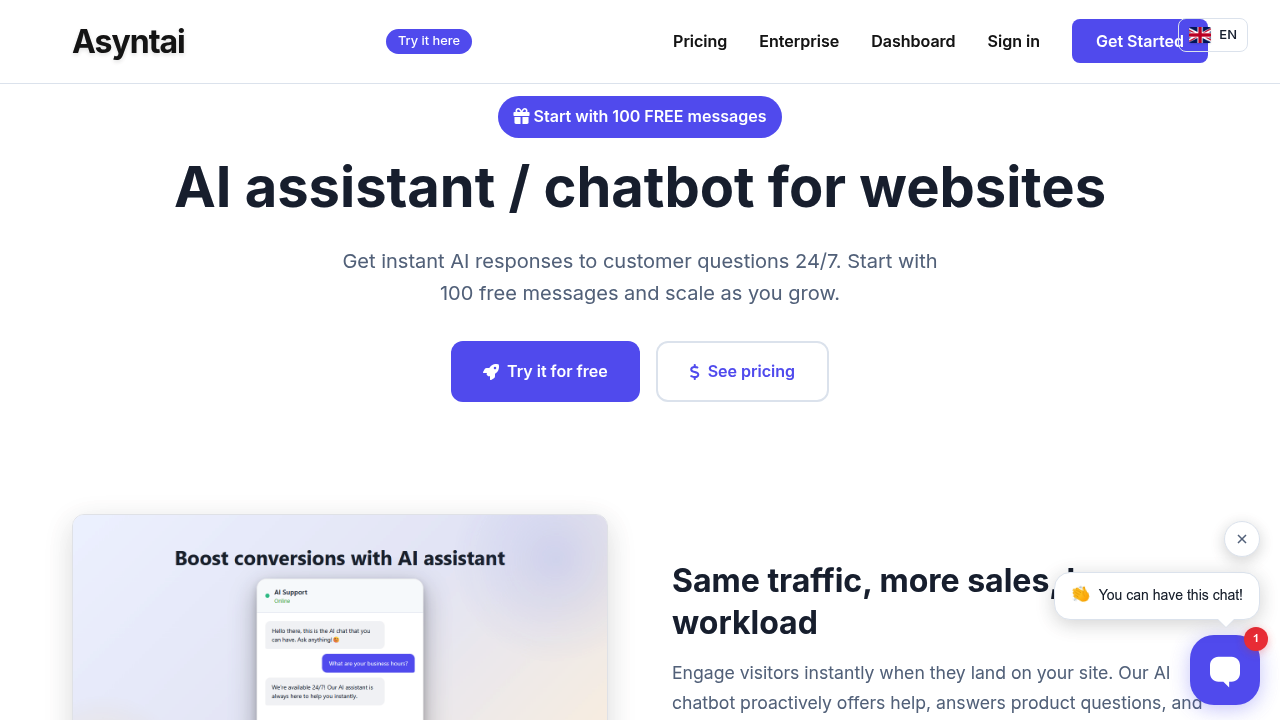
A small e-commerce store owner refreshes their inbox Monday morning to find 47 customer emails asking the same three questions about shipping times, return policies, and product compatibility. They spend two hours typing variations of the same answers. Asyntai drops a chatbot onto their website that answers these questions instantly by pulling information from their FAQ pages, product descriptions, and uploaded policy documents. The system proactively greets visitors when they land on the site and walks them through the buying process without human intervention.
The chatbot learns from whatever content gets fed into it. You can point it at your website and it'll crawl up to 50 pages on the free plan, or upload PDFs, videos, URLs, and text documents to build its knowledge base. A freelance consultant running a WordPress site with detailed service pages can let the bot scan everything and handle initial client questions about pricing tiers, project timelines, and availability. An OpenCart store manager uploads their entire product catalog and return policy, then watches the bot field questions about sizing, materials, and exchange procedures while they focus on fulfillment.
The conversation history shows exactly what customers asked and when. One company reported a 70% reduction in support workload after implementing it. That's useful for spotting knowledge gaps. If fifteen people ask about a feature that isn't clearly explained on your site, you will see it in the logs.
Customization covers appearance, behavior, and how the bot responds. You can test everything in real-time before making it live. The system works across 50 plus languages and integrates with basically any platform through a JavaScript snippet. Beyond the obvious ones like Shopify and WordPress, it hooks into Drupal, TYPO3, Craft CMS, Strapi, even specialized systems like Bagisto and Sylius.
Doesn't work well when questions require human judgment. A therapist booking consultations or a lawyer handling case specifics won't get much value because the bot cannot make judgment calls or provide personalized advice. It also hits walls with complex product configurations that depend on multiple variables or customer-specific situations.
Message limits define the boundaries. The free plan caps at 100 messages monthly for one website with 50 crawled pages and one team seat. That works for a personal blog or very small business testing the waters. The Starter plan jumps to 2,500 messages per month across two websites with 250 crawled pages and two seats for 39 dollars monthly, or 35 bucks if you pay annually.
These caps matter for high-traffic sites. A busy online store might burn through 2,500 messages in days during a sale. Same issue with the website limit if you run multiple storefronts or separate brand sites. The crawled pages restriction means large content libraries get truncated unless you manually upload the most important documents.
Works best for businesses with well-documented products and policies who get repetitive questions. Bad fit for services requiring consultation, complex B2B sales with custom quotes, or anything where the right answer depends on factors the customer hasn't shared yet. Also skip it if your support volume stays low enough that manual responses take less time than maintaining the bot's knowledge base.