Versuno logo
AI Developer Tools FREEMIUM from $15/mo

Versuno

An AI engineer at a fintech startup builds a customer support chatbot

She stores the main prompt in a code comment, tweaks it through Slack messages with her PM, and keeps a Google Doc with older versions. When the bot starts giving inconsistent responses, she can't remember which changes…

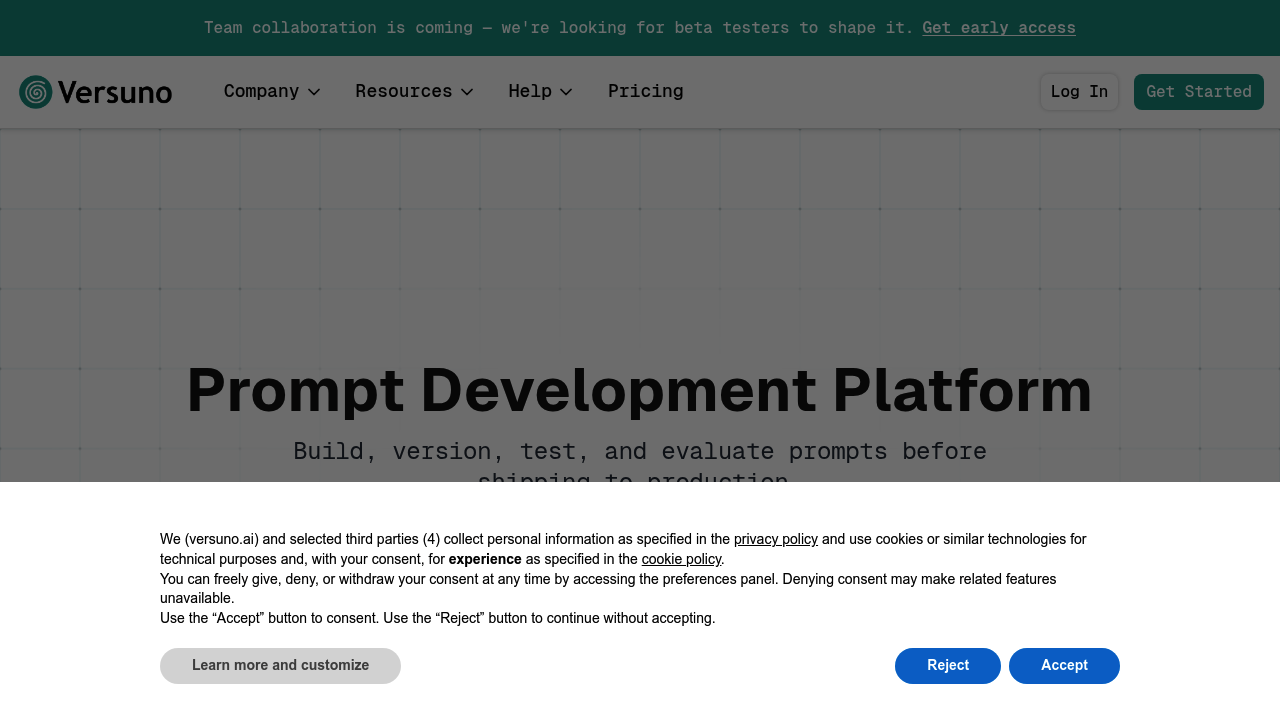
Versuno screenshot

An AI engineer at a fintech startup builds a customer support chatbot. She stores the main prompt in a code comment, tweaks it through Slack messages with her PM, and keeps a Google Doc with older versions. When the bot starts giving inconsistent responses, she can't remember which changes caused the regression or who approved the latest persona adjustment. No audit trail exists.

Versuno turns prompts into managed production assets with full version control. The engineer composes her chatbot prompt from reusable components—a customer service persona, company context, and system instructions—each tracked separately. She makes changes in Draft mode, runs side-by-side tests across multiple AI models, then moves the prompt to Testing. Her PM reviews inline diffs showing exactly what changed. Quality scores flag potential issues before deployment. Every modification logs who changed what and why. She can roll back instantly if needed.

This system supports testing against 50+ different models without vendor lock-in. Prompts get encrypted in transit and at rest. The asset-centric architecture means she builds a library of reusable components instead of copying variations everywhere. Development states mirror software workflows: Draft, Testing, Reviewed, Ready to Ship. Teams avoid scattered prompt storage across Notion pages, code repos, and chat threads.

A solo developer building an AI writing assistant uses the free plan to structure his prompts and track iterations. He doesn't need the upcoming team collaboration features yet. An enterprise compliance team can't use Versuno because it doesn't include the specific audit logging requirements they need. There's no mobile app or browser extension for quick edits outside the main interface.

The comparison to software development discipline matters most for teams shipping AI features at scale. A marketer testing different AI copy generators once a week won't benefit from lifecycle management overhead. A consultant using prompts for client deliverables doesn't need structured version control for one-off projects.

Versuno fits teams treating AI features as core product components requiring the same rigor as code. It doesn't fit casual AI users or teams satisfied with informal prompt management. The free plan offers real functionality, not just a limited preview. Team features are coming but currently in beta testing. Versuno prevents prompt chaos through structured asset management rather than treating prompts as disposable text snippets stored wherever is convenient at the moment.

Versuno alternatives

See all →

Frequently asked

7 questions
Does Versuno have a free plan?
Versuno offers a free plan with real features, not a limited trial. A solo developer building an AI writing tool uses it to structure prompts and track iterations without paying. The free tier includes core functionality like version control, prompt composition, and testing access. Team collaboration features are coming in beta but the individual workflow works fully on the free plan. It's designed for builders who need structured prompt management without immediate team coordination.
How does Versuno compare to storing prompts in Notion or Google Docs?
An AI engineer at a SaaS company currently keeps prompts in a Google Doc with her PM editing via Slack. When their chatbot regresses, she can't identify which change broke it or who approved modifications. Versuno applies software development discipline with inline diffs, automatic change tracking logging who changed what and why, and instant rollback capability. A marketing team testing ChatGPT prompts weekly wouldn't benefit from this overhead. Versuno fits teams treating AI features as production code requiring audit trails and structured reviews, not casual experimentation.
Can I test prompts across different AI models in Versuno?
A product team building an AI assistant tests their prompt across 50+ models side-by-side in Versuno without vendor lock-in. They compare GPT-4, Claude, and open-source models simultaneously to find the best performance before committing. The model-agnostic design means switching providers doesn't require rebuilding their prompt infrastructure. Quality scores flag potential issues across different model responses. This matters for teams evaluating model costs and capabilities, not someone committed to a single AI provider already.
What does Versuno not include for enterprise teams?
A compliance team at a healthcare company can't use Versuno because it lacks their specific audit logging requirements beyond basic change tracking. There's no mobile app, so a developer traveling can't make quick prompt edits from their phone. Browser extension support doesn't exist for testing prompts directly in other tools. Team collaboration features are currently in beta testing rather than production-ready. Enterprise SSO integration isn't mentioned in available features. It works for startups and product teams with standard security needs, not organizations requiring specialized compliance infrastructure.
How does prompt version control work in Versuno?
A fintech engineer updates her customer support bot's persona component while preserving the original system instructions. Versuno tracks the full history with inline diffs showing exactly what text changed between versions. She tags the update with why the change happened, creating an automatic audit trail of who modified what and when. If the new persona creates problems, she rolls back to the previous version instantly rather than hunting through Slack messages. A consultant doing one-off client projects wouldn't need this overhead since they're not iterating on production prompts repeatedly.
What are reusable prompt components in Versuno?
An AI startup builds a library of versioned components: customer service personas, brand voice contexts, and system instructions. Their engineers compose different chatbots by mixing these components rather than copying entire prompts and modifying them everywhere. When they update the company context component, every prompt using it inherits the change with full tracking. Each component gets its own version history and testing workflow. A marketer creating unique prompts for different campaigns wouldn't benefit since their prompts don't share common elements worth extracting.
Who should use Versuno versus just keeping prompts in code?
A product team at an AI-first startup treats their prompts as production assets requiring review cycles and testing before deployment. They use Versuno's development states (Draft, Testing, Reviewed, Ready to Ship) matching their software workflow. Their prompts go through PM review with inline diffs and quality validation before shipping. A solo developer building a weekend project keeps prompts in code comments because the structured lifecycle overhead exceeds their needs. Versuno fits teams where prompt failures impact customers and multiple people need visibility into changes, not individual builders working alone.

Traffic

Estimated monthly website visits · last 0 months

Not enough historical data for a chart yet.

Reviews (0)

Write review

No reviews yet. Be the first to share your experience.