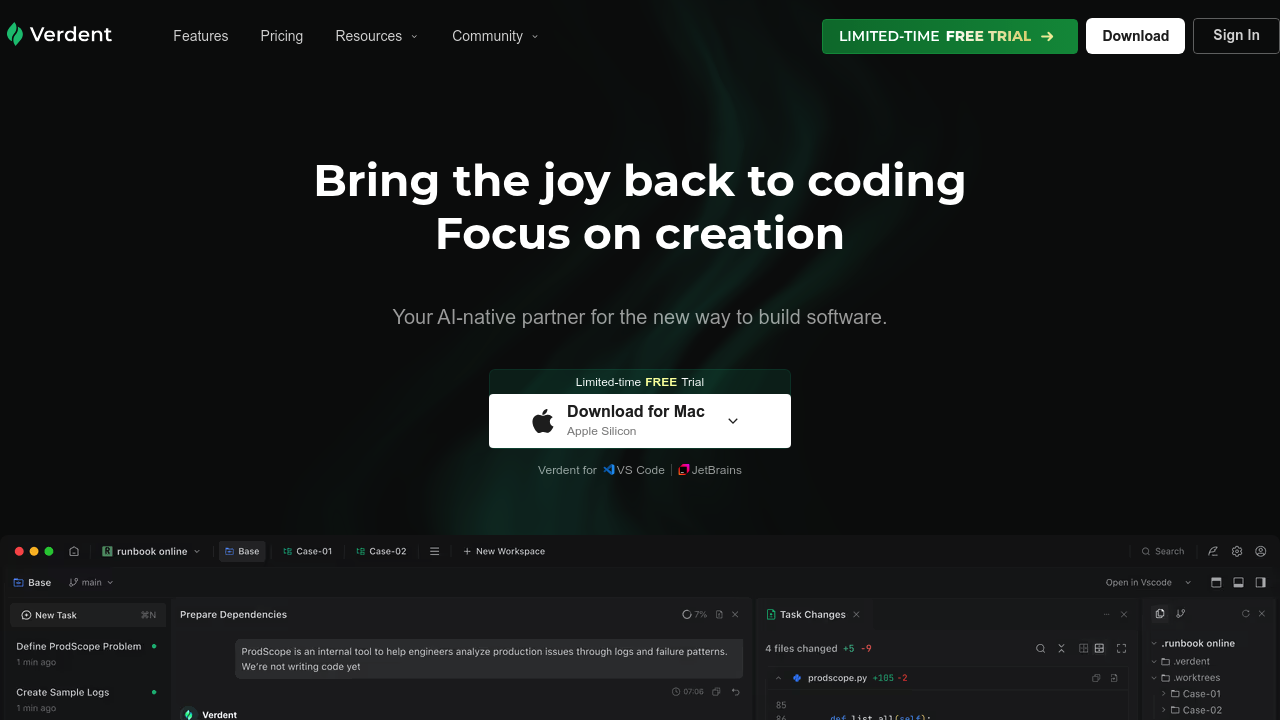
Verdent AI operates as a multi-agent coding system where several AI assistants work in parallel rather than sequentially. Each agent gets its own isolated git worktree, which means they're technically working in separate branches that won't conflict with each other's changes. This parallel architecture lets you spin up multiple coding tasks at once without the typical merge conflicts you'd see if agents shared the same workspace.
The chat interface presents code changes with highlighting and summaries before you confirm anything. No automatic file modifications. When you describe something vaguely, clarification mode kicks in and asks follow-up questions to nail down specifics before generating code. Plan Mode converts rough concepts into structured technical plans without jumping straight to implementation.
The system supports custom instructions and lets you adjust reasoning depth on the fly. You can toggle planning mode depending on whether you need quick edits or architectural work. It connects with VS Code and JetBrains, so you're working inside familiar development environments rather than switching to a separate tool.
Beyond coding, it'll generate documentation from disorganized notes and run data analysis on large datasets. The prototype feature builds interactive demos from descriptions. Verdent Desktop gives you a dashboard view of all active projects and their parallel tasks.
The credit system works similarly to how Windsurf used to handle flow credits. There's a trial available to test the multi-agent approach.
Technical constraints center on the git worktree dependency. Your project needs to support that branching structure. The parallel agents work best when tasks are truly independent. If you're making interconnected changes across multiple files, the isolation can create coordination overhead rather than speed gains.