
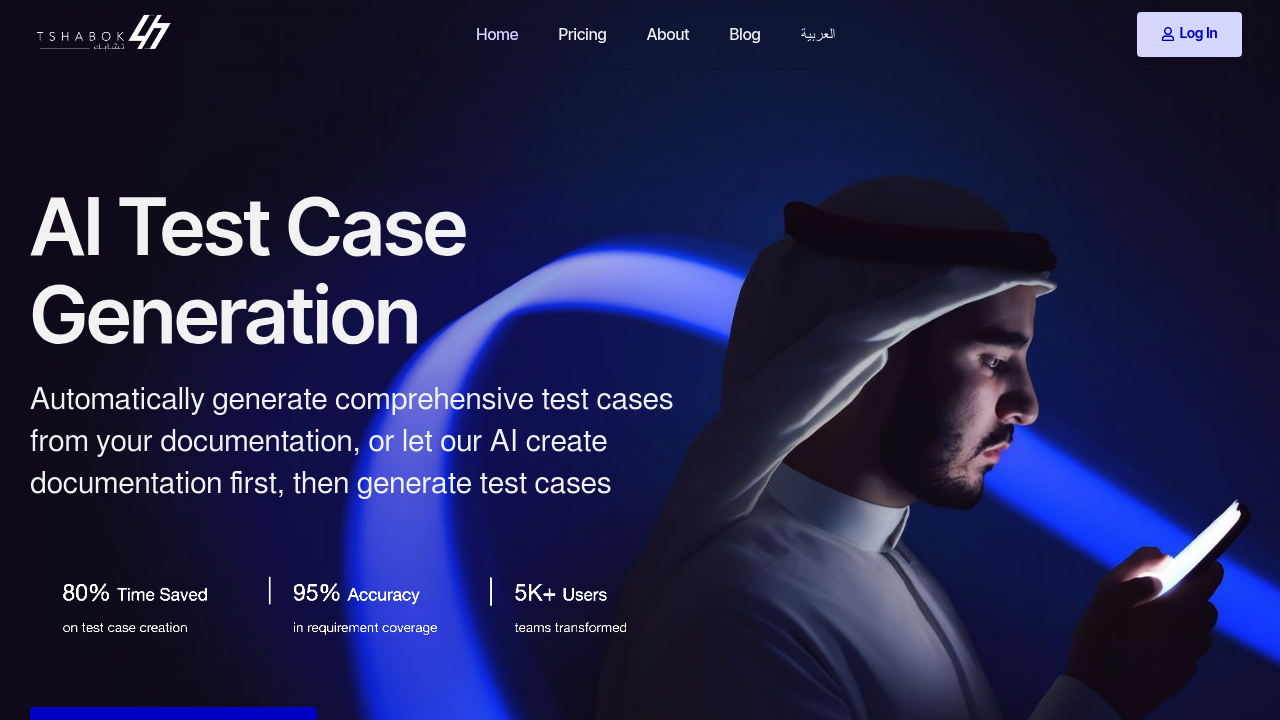
Tshabok AI converts software requirements into test cases by processing documentation or web content through language models trained to identify testing scenarios. The system accepts two input types: existing documentation files or URLs pointing to requirement specifications. When you feed it a URL, it first scrapes and analyzes the content to generate structured documentation, then uses that output as the basis for test case creation.
The data pipeline starts with requirement parsing. The AI breaks down specifications into discrete functional components, user workflows, and business logic rules. It maps dependencies between features and identifies edge cases by analyzing conditional statements, data validation rules, and error handling patterns in the source material. This contextual understanding lets it generate test cases that cover both happy paths and failure scenarios.
Test cases include preconditions, step-by-step execution instructions, expected results, and priority classifications. The system claims 95% accuracy in requirement coverage, meaning it catches most testable scenarios from the input documentation. When requirements change, you can regenerate test cases rather than manually updating existing ones. This software claims to reduce creation time by 80%, producing hundreds of test cases in minutes compared to manual methods that take days.
Output formats match standard test management conventions. Cases export directly to test management platforms, though the specific integrations aren't detailed. This suggests API-based connections or file format exports like CSV or JSON that third-party tools can import.
The free website health checker operates separately from the core test generation feature. It crawls URLs to detect broken links and missing images, then runs AI analysis on the site structure. This functions as both a standalone utility and a lead-in to the main product.
Over 5,000 users or teams have adopted this service, suggesting deployment at some scale. The target audience spans QA leads, developers, product managers, and CTOs, indicating Tshabok addresses both tactical testing work and strategic test planning.
Technical limitations aren't specified in available information. The requirement analysis quality depends on how clearly the input documentation describes functionality. Vague or incomplete specs will produce correspondingly incomplete test coverage. The system cannot test the actual software, it only generates the test case documentation that human testers or automation frameworks then execute.
This software offers a free tier, though the specific feature limitations or usage caps of that tier aren't documented. The distinction between free and paid access isn't detailed.