
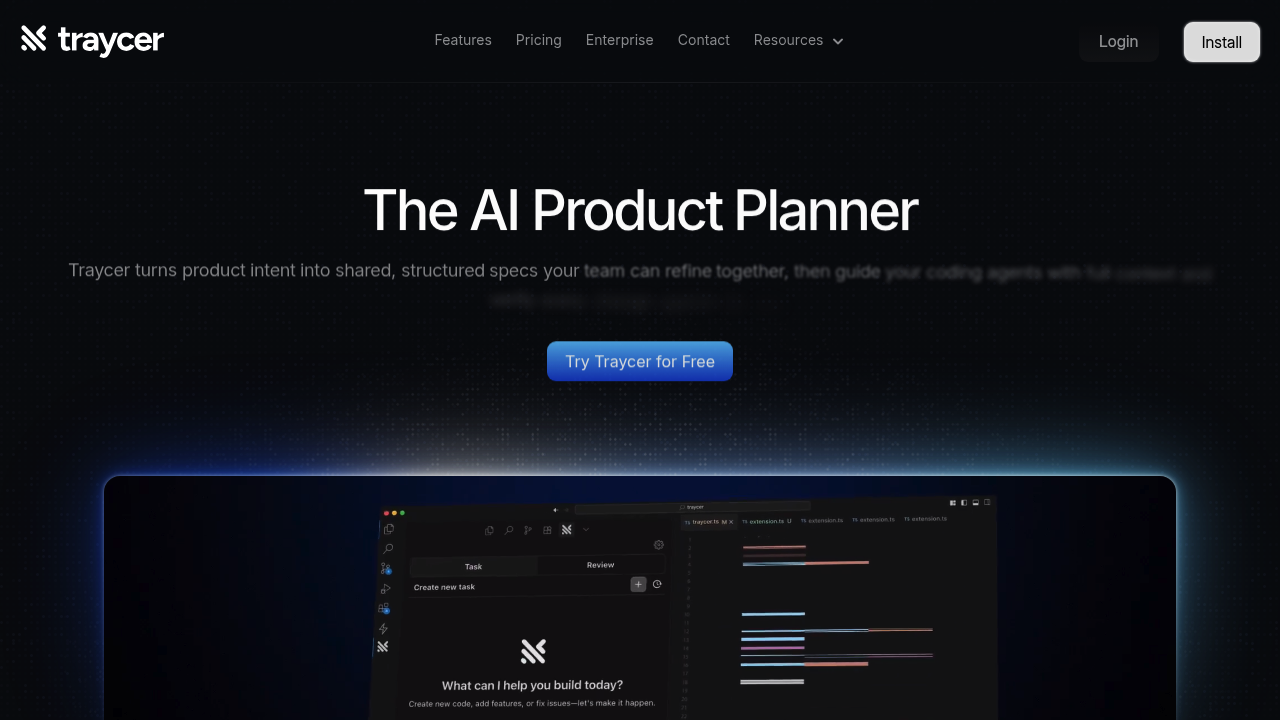
Traycer verifies AI-generated code against your original plan. That's what sets it apart. Most AI coding assistants drift from what you actually wanted—Traycer catches that drift before it becomes a problem.
Start by describing what you want to build. Traycer converts your description into proper specs (PRDs, technical documentation, wireframes). Everything gets structured into Epics, Tickets, and Phases. Then you hand off the full context to whatever AI coding agent you're using. Works with Cursor, Claude Code, Windsurf, and Cline through a one-click handoff.
After your AI agent generates code, Traycer scans the codebase. It compares changes against the plan—flags discrepancies—categorizes them by severity. This verification step is where things get useful. AI agents work fast but they'll take shortcuts. They'll misinterpret requirements if you aren't careful.
Epic Mode handles larger development work. One user claimed they finished a five-month project in six days using it. Sounds optimistic, sure. But Traycer does help non-technical founders bridge the gap between idea and implementation. Engineers working on complex codebases will appreciate the shared Artifacts feature. Real-time editing and instant sharing keep teams aligned.
Over 100,000 users rely on Traycer. A free plan exists. The three-step workflow (Plan, Execute, Verify) makes sense conceptually—though you'll still need to know what you're building. Won't replace product thinking. Just structures it better for AI agents to consume.