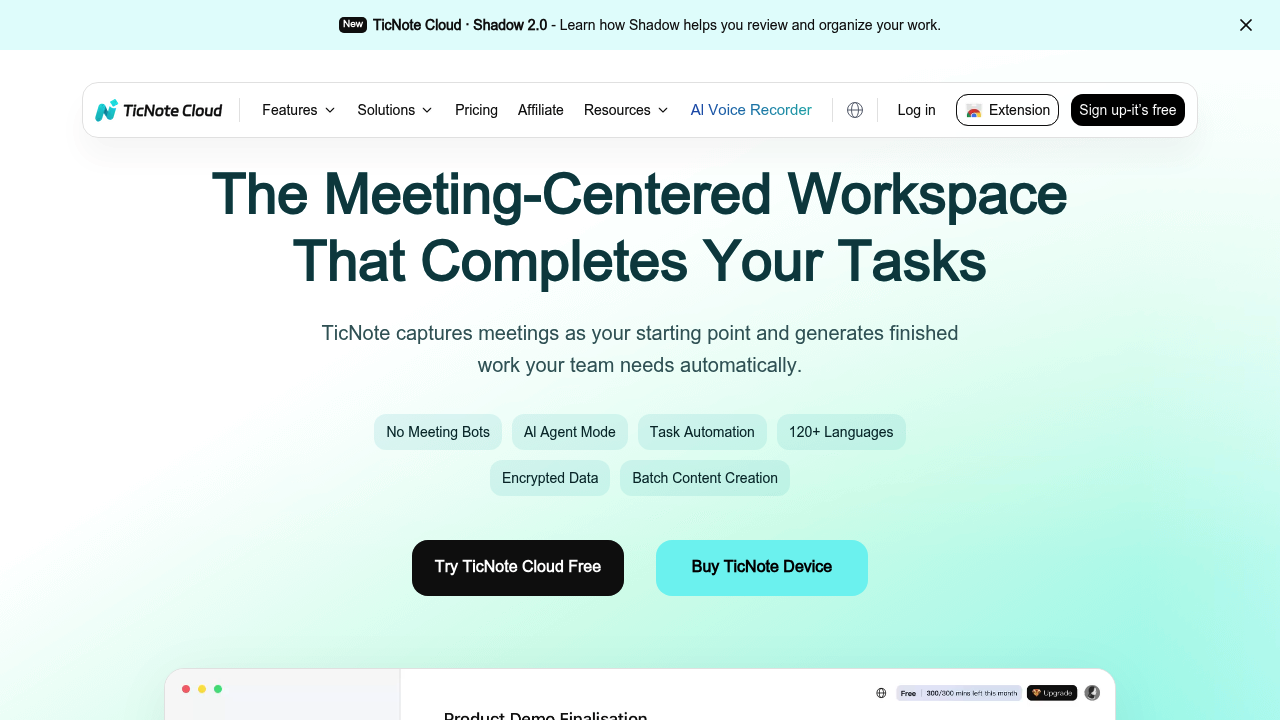
TicNote Cloud captures meeting conversations through on-device AI recording, eliminating the need for visible meeting bots that join calls. This system processes audio locally, generating real-time transcripts in over 120 languages while participants talk. Once a meeting concludes, it automatically produces summaries highlighting key discussion points and action items, then goes further by creating mind maps and executing tasks through its Shadow AI agent. Users access over 100 pre-built templates designed for specific meeting formats, from product reviews to sales calls, and can export finished summaries to share with colleagues who weren't present.
The workspace targets professionals whose calendars fill with back-to-back meetings: product managers coordinating feature releases, engineering managers running sprint planning sessions, and sales teams conducting client calls. Investment analysts use it to document due diligence conversations, while AI architects capture technical requirement discussions. Marketing teams record campaign strategy sessions, and product designers document user research interviews. This solution fits teams that need meeting intelligence without the awkwardness of bot participants appearing in video conferences or the time drain of manual note-taking.
Inside daily workflows, TicNote Cloud handles the full meeting documentation cycle. A product manager launches the recorder with one click during a stakeholder meeting, receives a transcript and summary within two minutes of the 45-minute discussion ending, then uses the extracted action items to update project management tools. Sales professionals record discovery calls, generate follow-up summaries for prospects, and build a searchable knowledge base of customer conversations through automatic linking and smart tagging. The batch content creation mode lets marketing teams transform multiple recorded brainstorming sessions into campaign briefs simultaneously. Its pattern recognition identifies recurring themes across conversations, helping teams spot trends in customer feedback or internal discussions. Version history preserves earlier meeting interpretations when context shifts, while encrypted data storage maintains confidentiality for sensitive strategy sessions or client information.